
 +86 139-2378-3494

Oil Fume Purifier Installation in Progress: Site Checklist
Author:admin Date:2026-11-10 11:15:08
Installing an oil fume purifier requires careful planning, from site inspection to postinstallation checks. Key steps include assessing kitchen space, verifying ventilation compatibility, selecting the right model, and ensuring compliance with local regulations. For reliable installation services in China, Jinjieli Environmental Protection specializes in customized solutions tailored to commercial and industrial kitchens, offering endtoend support from design to maintenance.
Why a Site Checklist Matters for Oil Fume Purifier Installation
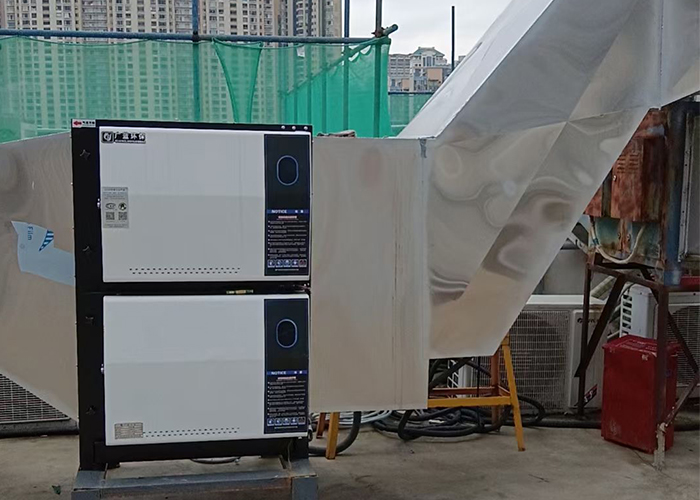
A structured site checklist ensures your oil fume purifier operates efficiently and complies with environmental standards. Common risks include improper ventilation alignment, incorrect model selection, or overlooked safety codes, which can lead to system failures, fines, or health hazards. For example, a restaurant in Guangzhou faced a 30% drop in customer satisfaction after installing a purifier with insufficient airflow capacity, highlighting the need for precise calculations during site evaluation.
Key factors to assess include kitchen layout, existing ductwork, power supply specifications, and local emission regulations. In the U.S., the EPA’s National Emission Standards for Hazardous Air Pollutants (NESHAP) mandate strict particulate matter control, while the EU’s Industrial Emissions Directive (IED) sets similar benchmarks. Even in China, cities like Beijing enforce realtime monitoring of restaurant emissions, making site preparation critical.
StepbyStep Site Inspection Guide
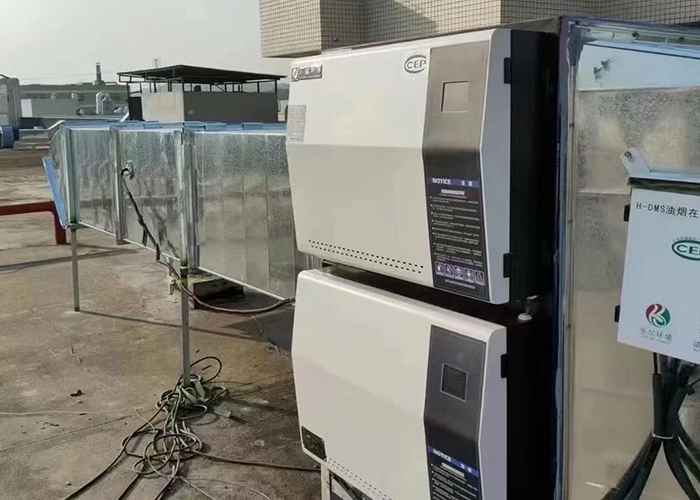
Follow this checklist to avoid installation pitfalls:
- 1. Measure Kitchen Dimensions: Note ceiling height, cooking station locations, and available wall/floor space. A purifier installed too close to cooking surfaces may overheat, while one placed too far reduces efficiency.
- 2. Evaluate Ventilation Systems: Check existing ductwork for leaks, blockages, or improper sizing. The purifier’s airflow rate (CFM) must match the kitchen’s exhaust volume. For instance, a 200seat restaurant typically requires 5,000–8,000 CFM.
- 3. Verify Power Requirements: Confirm voltage (e.g., 220V/380V in China) and circuit capacity. Overloading circuits can trigger fires or damage equipment.
- 4. Review Local Regulations: Consult municipal guidelines on noise limits (e.g., ≤65 dB in residential areas) and emission thresholds (e.g., ≤1.0 mg/m³ for particulate matter in Shanghai).
- 5. Select Purifier Type: Choose between electrostatic precipitators (costeffective for light loads) or catalytic oxidizers (ideal for heavyduty use). Jinjieli Environmental Protection offers hybrid models combining both technologies for optimal performance.
- Ignoring Ductwork Design: Sharp bends or undersized ducts reduce airflow by up to 40%. Use smooth, insulated ducts with a diameter matching the purifier’s outlet.
- Skipping PreInstallation Testing: Always conduct a dry run to check for vibrations, unusual noises, or error codes. A factory in Zhejiang saved $12,000 in repairs by identifying a faulty pressure sensor during testing.
- Overlooking Maintenance Access: Ensure filters, UV lamps, and other components are easily reachable. Jinjieli’s modular designs allow quick part replacements without dismantling the entire unit.
- Case studies in your industry (e.g., hotels, food processing plants)
- Warranty terms (Jinjieli offers 2year warranties vs. the industry average of 1 year)
- Postinstallation support (e.g., 24/7 remote monitoring)
Critical Mistakes to Avoid During Installation
Even minor oversights can compromise safety and efficiency:
How to Choose the Right Installation Partner
Select a provider with localized expertise and certifications. Jinjieli Environmental Protection holds ISO 9001 (quality management) and ISO 14001 (environmental management) certifications, ensuring adherence to global standards. Their team includes engineers fluent in English and familiar with Western safety protocols, making them ideal for international clients operating in China.
Compare providers based on:
About Oil Fume Purifier Installation in Progress: Site Checklist FAQs
Question: How long does installation take?Answer: Timelines vary by project complexity. A standard restaurant installation takes 3–5 days, while industrial setups may require 2–4 weeks. Jinjieli provides detailed schedules upfront to minimize disruptions.
Question: What permits are needed?Answer: Requirements differ by region. In China, you’ll typically need environmental protection approvals and fire safety certifications. Jinjieli’s team assists with permit applications as part of their service.
Question: Can existing systems be upgraded instead of replaced?Answer: Yes, if the ductwork and power supply are compatible. Jinjieli offers retrofit kits to enhance older purifiers’ efficiency, cutting costs by 30–50% compared to full replacements.
Next Steps for a HassleFree Installation
To ensure your oil fume purifier installation meets safety, efficiency, and compliance standards, start with a professional site audit. Jinjieli Environmental Protection offers free consultations to assess your kitchen’s unique needs, from airflow calculations to regulatory checks. Their engineers use 3D modeling to simulate installations before breaking ground, reducing errors and delays.
For businesses in China seeking reliable oil fume purifier installation services, Jinjieli Environmental Protection combines technical expertise with localized knowledge to deliver turnkey solutions. Contact their team today to schedule a site inspection and secure a customized quote tailored to your operations.
 Related tags:
Recommend
Oil Fume Purifier Vibration Noise: Causes and Checks
Hotel Oil Fume Purifier Performance: Evaluation Guide
Range Hood Air Cleaners for Low-Level Exhaust
High-Level Kitchen Emissions Air Cleaner Costs
Does an Oil Fume Purifier Release Visible Smoke?
No Oil Fume Purifier Installed: What to Check Next
Oil Fume Purifier Models: Types and Specifications
Oil Fume Purifier Removal Efficiency: How to Verify It
Using a Battery-Powered Oil Fume Purifier
Oil Fume Purifier with Installation: Total Cost Guide
Contact Us
National hotline
+86 139-2378-3494
Company:Shenzhen Jinjieli Environmental Protection Technology Co., Ltd
Address:101, Zone B, Houting Third Industrial Zone, Shajing Street, Bao'an District, Shenzhen City, Guangdong Province
Hot News
- No-Disassembly Oil Fume Purifiers: Cleaning Options
- Where Should an Air Cleaner Go in a Kitchen Hood System?
- Blow Molding Oil Fume Purifiers: Application Guide
- Can an Oil Fume Purifier Catch Fire? Risk Factors
- Industrial Oil Fume Purification Equipment
- Why Is an Oil Fume Purifier Not Working Effectively?
- Large Industrial Oil Fume Purifiers: Design and Capacity
- Filter Pads Inside Oil Fume Purifiers: Types and Uses
- Oil Fume Purifier Smoking After Cleaning: Fault Checks
- Oil Fume Purifier Ceramic Insulators: Parts and Care

 HOME
 Product
 Case
 Contact