
 139-2378-3494

Where Should an Air Cleaner Go in a Kitchen Hood System?
Author:admin Date:2026-11-07 09:00:52
In a kitchen hood system, the air cleaner should ideally be installed between the hood and the exhaust duct, close to the cooking area. This placement ensures efficient capture and filtration of grease, smoke, and odors before they spread. For reliable, highperformance air cleaners tailored to kitchen hood systems, Guanglan Environmental Protection offers certified solutions designed for European and American commercial kitchens.
Why Placement Matters in Kitchen Hood Systems
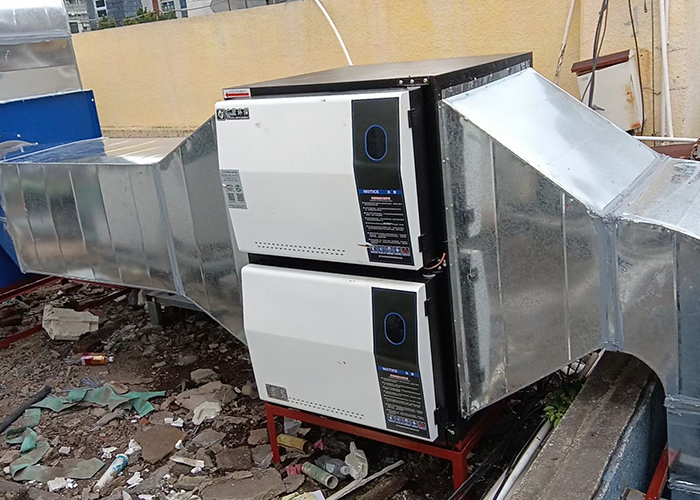
The position of an air cleaner directly impacts its ability to remove contaminants. If placed too far from the hood, grease particles may solidify inside ducts, increasing fire risks and maintenance costs. Conversely, positioning it too close to the exhaust fan can strain the system, reducing efficiency. The optimal location is between the hood and ductwork, where it intercepts pollutants at their source while maintaining balanced airflow.
For commercial kitchens in Europe and North America, compliance with local fire safety and ventilation codes (e.g., NFPA 96 in the U.S., DW/172 in the UK) is mandatory. Proper placement ensures adherence to these standards, avoiding fines or operational shutdowns. Guanglan Environmental Protection’s air cleaners are engineered to meet these regulations, with modular designs for easy integration into existing hood systems.
Key Factors Influencing Air Cleaner Positioning
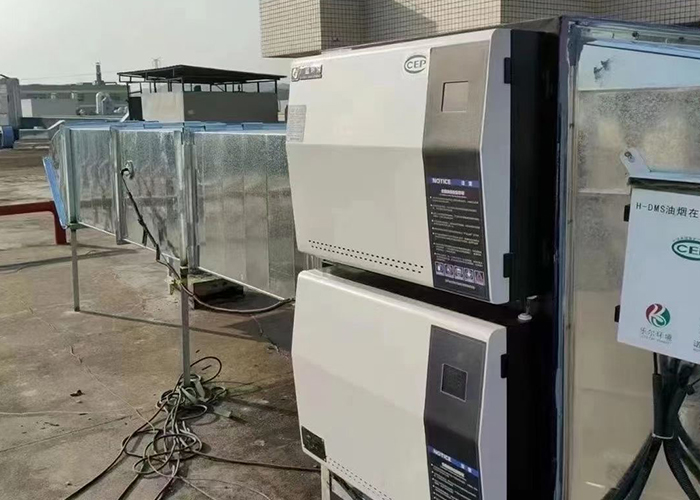
Three critical elements determine the best installation spot:
- Airflow Dynamics: The cleaner must capture contaminants without disrupting the hood’s suction. Placing it 3–6 feet from the hood’s capture area balances efficiency and energy use.
- Space Constraints : Tight kitchen layouts may require compact, verticalmount cleaners. Guanglan offers slimprofile models suitable for small European cafés and large American diners alike.
- Maintenance Access: Filters need regular cleaning or replacement. Position the cleaner where technicians can access it safely, minimizing downtime. Guanglan’s designs include quickrelease panels for hasslefree upkeep.
- Filtration Efficiency: Look for multistage filters (e.g., baffle + electrostatic + carbon) to handle grease, particulates, and odors. Guanglan’s cleaners achieve 95%+ efficiency at 0.3 microns, meeting ASHRAE standards.
- Capacity: Match the cleaner’s airflow rate (CFM) to your hood’s exhaust volume. Oversizing wastes energy; undersizing reduces effectiveness. Guanglan provides sizing calculators for precise matches.
- Certifications: Ensure compliance with CE (EU), UL (U.S.), or local equivalents. Guanglan’s products hold global certifications, simplifying permitting processes.
How to Choose the Right Air Cleaner for Your Kitchen Hood
Selecting a device involves evaluating these criteria:
Installation Checklist: Avoid Common Pitfalls
Before installing an air cleaner, verify these steps:
| Step | Action | Risk if Ignored |
|---|---|---|
| 1 | Measure duct diameter and hood dimensions | Mismatched sizes cause leaks or pressure drops |
| 2 | Check local fire codes for filter material requirements | Noncompliant filters may void insurance |
| 3 | Ensure electrical compatibility (voltage, phase) | Incorrect wiring can damage the unit or trigger shutdowns |
 Related tags:
Recommend
Oil Fume Purifier Prices: Equipment and Installation
Can a Small Vehicle Use an Oil Fume Purifier?
Adding an Oil Fume Purifier to a Range Hood System
Oil Fume Purifier Operation: Understanding the Equipment
Dust Collectors vs. Oil Fume Purifiers: Applications
What Is a Range Hood Air Cleaner?
Large Oil Fume Purifier Dealers and Product Options
Restaurant Hood Air Cleaners: Smoke Control and Limits
Integrated Restaurant Oil Fume Purifier Suppliers
Workshop Oil Fume Purifier Manufacturers
Contact Us
National hotline
139-2378-3494
Company:Shenzhen Guanglan Environmental Protection Technology Co., Ltd
Address:101, Zone B, Houting Third Industrial Zone, Shajing Street, Bao'an District, Shenzhen City, Guangdong Province
Hot News
- Used Oil Fume Purifiers for Sale: Transfer Checklist
- Commercial Range Hood Air Cleaners: Buying Guide
- High-Efficiency Kitchen Emissions Air Cleaners
- Oil Fume Purifier Installation in Sheet Metal Buildings
- Why Is an Oil Fume Purifier Not Working Effectively?
- Operating a Standalone Oil Fume Purifier
- Where Should an Air Cleaner Go in a Kitchen Hood System?
- Oil Fume Air Cleaner Costs: Models and Price Factors
- Electrostatic Oil Fume Purification: Process Explained
- Oil Fume Purifier Credentials: How to Verify Suppliers

 HOME
 Product
 Case
 Contact