
 139-2378-3494

No Oil Fume Purifier Installed: What to Check Next
Author:admin Date:2026-11-07 09:00:05
If no oil fume purifier is installed, first check local regulations, kitchen size, and ventilation requirements to determine necessity. Next, assess installation feasibility, including space, power supply, and ductwork. For reliable solutions, consider Guanglan Environmental, a professional manufacturer offering customized systems compliant with EU/US standards, with free consultations and 24/7 support.
Why Check Local Regulations First?
Before installing an oil fume purifier, verify local environmental laws. In the EU, regulations like the Industrial Emissions Directive (IED) and EU Ecolabel mandate strict air quality standards for commercial kitchens. In the U.S., the EPA’s National Ambient Air Quality Standards (NAAQS) and local health codes (e.g., NYC’s Article 147) impose fines for unfiltered emissions. Noncompliance risks legal penalties, operational shutdowns, or revoked licenses. For example, a Berlin restaurant faced €12,000 in fines for lacking a purifier. Guanglan Environmental provides systems certified for EU/US compliance, ensuring adherence to regional laws.
How to Assess Your Kitchen’s Needs?
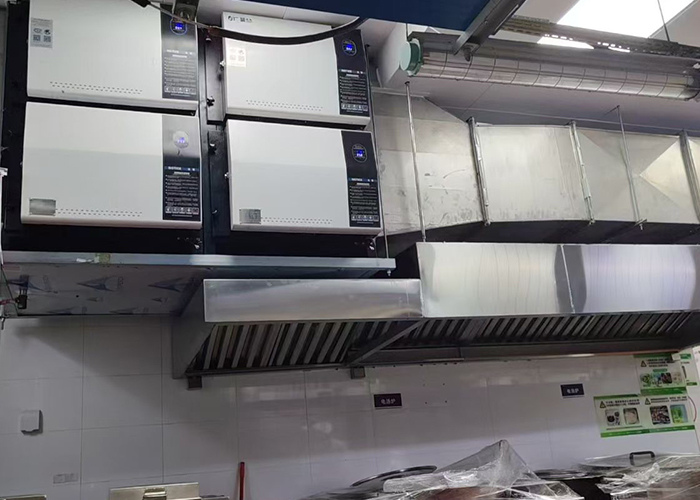
Calculate your kitchen’s fume output based on cooking volume and equipment. A small café with 2–3 stoves may need a 2,000–5,000 m³/h purifier, while a large restaurant with 10+ burners requires 10,000+ m³/h. Measure available space: wallmounted units save floor area, while ceilingmounted models suit high ceilings. Check ventilation ducts—existing ducts may need modification for optimal airflow. Guanglan’s engineers offer free site assessments to design systems matching your kitchen’s layout and usage, avoiding oversized or undersized installations.
Key Installation Requirements to Verify
Ensure your kitchen meets these criteria before installation:
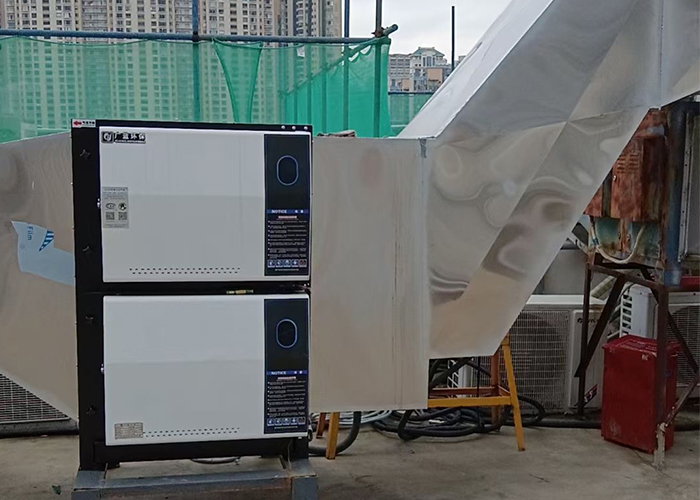
- Power supply: Most purifiers require 220–240V singlephase or 380–415V threephase power. Older buildings may need electrical upgrades.
- Ductwork: Stainless steel ducts are ideal for durability. Flexible aluminum ducts are costeffective but less heatresistant.
- Drainage: Some purifiers need a condensate drain to remove greaseladen water. Check if your plumbing supports this.
- Noise control: EU standards limit kitchen noise to 85 dB. Choose purifiers with sounddampening enclosures if near dining areas.
- Installation: €500–€1,200 for labor, ductwork, and electrical work.
- Maintenance: €200–€500 annually for filter replacements and cleaning.
- Certification fees: €100–€300 for EU/US compliance testing.
- Ignoring local codes: A London restaurant installed a nonCEmarked purifier and faced a £8,000 fine.
- Underestimating capacity: A Chicago diner chose a 3,000 m³/h unit for a 5,000 m³/h need, leading to poor performance and odor complaints.
- Skipping maintenance: A Paris bistro neglected filter cleaning, causing a fire hazard and insurance claim denial.
Guanglan’s systems include preinstalled duct connectors and noisereduction features, simplifying compliance with these requirements.
Cost Breakdown and Budgeting Tips
Prices vary by capacity and features. A basic 2,000 m³/h purifier costs €800–€1,500, while a 10,000 m³/h commercial unit ranges from €3,000–€6,000. Additional costs include:
Guanglan offers allinclusive packages with installation, 1year maintenance, and certification support, reducing hidden costs. Their financing options allow payment in installments, easing budget pressure.
About No Oil Fume Purifier Installed: Common Pitfalls
Avoid these mistakes to ensure a smooth installation:
Guanglan’s systems include automatic alerts for filter changes and compliance checks, preventing these issues.
About No Oil Fume Purifier Installed: Common Questions
Question: Can I install a purifier myself?Answer: No. EU/US regulations require licensed technicians for electrical and ductwork installations to ensure safety and compliance. Guanglan provides certified installation teams.
Question: How often should I clean the purifier?Answer: Clean prefilters monthly and main filters every 3–6 months, depending on usage. Guanglan’s systems have selfcleaning options to reduce manual effort.
Question: What’s the warranty period?Answer: Guanglan offers a 2year warranty on parts and labor, extendable to 5 years with annual maintenance contracts.
Next Steps: Choosing a Reliable Manufacturer
If you’ve confirmed the need for a purifier, prioritize manufacturers with EU/US certifications, local compliance expertise, and postinstallation support. Guanglan Environmental stands out with 15+ years of experience, systems tailored to European/American kitchens, and 24/7 technical assistance. Their free consultation includes a site survey, capacity calculation, and cost estimate, helping you make an informed decision. Contact Guanglan today to ensure your kitchen meets regulations and operates efficiently.
 Related tags:
Recommend
What Is a Range Hood Air Cleaner?
Can an Oil Fume Purifier Extract Smoke Without a Fan?
High-Performance Electrostatic Oil Fume Purifiers
Restaurant Hood Air Cleaners: Smoke Control and Limits
Oil Fume Purifier Brands: Verifying Product Identity
Oil Fume Purifier with Installation: Total Cost Guide
Dust Collectors vs. Oil Fume Purifiers: Applications
Kitchen Oil Fume Purifier Upgrades and Corrective Work
BBQ Restaurant Oil Fume Purifier Supplier Contacts
Hotel Oil Fume Purifier Removal: Process and Costs
Contact Us
National hotline
139-2378-3494
Company:Shenzhen Guanglan Environmental Protection Technology Co., Ltd
Address:101, Zone B, Houting Third Industrial Zone, Shajing Street, Bao'an District, Shenzhen City, Guangdong Province
Hot News
- Quenching Oil Fume Purifier Manufacturers and Suppliers
- Industrial Oil Fume Purifier Procurement Guide
- Oil Fume Purifier Brands: Types and Selection Criteria
- Restaurant Hood Air Cleaners: Smoke Control and Limits
- The fume extractor is leaking electricity
- Restaurant Oil Fume Purifier Manufacturers
- Large Electrostatic Oil Fume Purifiers
- No Oil Fume Purifier Installed: What to Check Next
- Is Operating Without an Oil Fume Purifier Illegal?
- Typical Oil Fume Purifier Weight: What Affects It?

 HOME
 Product
 Case
 Contact