
 +86 139-2378-3494

Where Should You Buy an Oil Fume Purifier?
Author:admin Date:2026-11-09 08:39:41
When buying an oil fume purifier in Europe or North America, prioritize certified models compliant with local air quality standards (e.g., EU’s CE or EPA’s Energy Star). For commercial kitchens, choose highflowrate devices with easymaintenance designs; for home use, focus on compact, lownoise units. Jinjieli Environmental Protection stands out as a trusted manufacturer offering certified, customizable purifiers with global installation support.
1. Why Certification and Local Compliance Matter Most
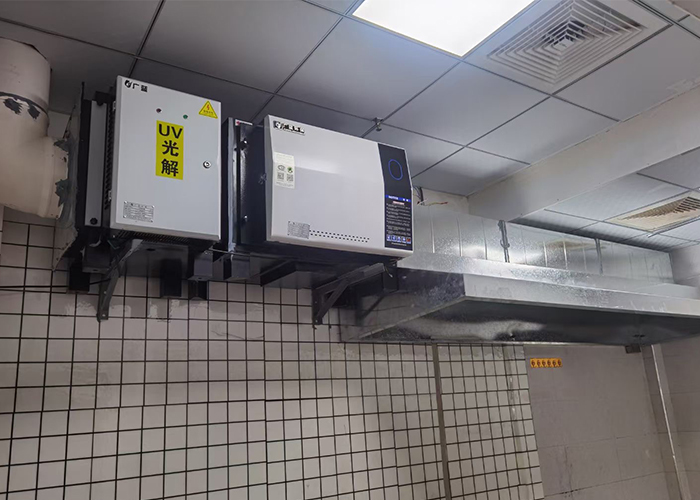
The first rule for buying an oil fume purifier in Europe or North America is to verify compliance with regional regulations. In the EU, devices must meet CE standards for safety and electromagnetic compatibility, while the U.S. EPA’s Energy Star program certifies energy efficiency. Noncompliant purifiers risk fines, inefficient filtration, or even legal shutdowns. For example, a restaurant in California using an uncertified purifier faced $12,000 in penalties after failing emissions tests. Jinjieli Environmental Protection’s products are precertified for both markets, eliminating compliance risks for buyers.
Key checklist:
- Confirm CE (EU) or Energy Star (U.S.) certification labels
- Check local air quality regulations (e.g., Germany’s TA Luft or California’s CARB)
- Avoid “gray market” imports lacking regional adaptations
- Visit the manufacturer’s website to verify global shipping capabilities
- Request a quote with your kitchen’s dimensions and cooking volume
- Confirm aftersales support (e.g., spare parts availability in your region)
- Clean electrostatic filters monthly (commercial) or quarterly (home)
- Replace activated carbon filters every 6–12 months
- Schedule annual professional inspections
2. Commercial vs. Home Use: How to Choose the Right Type
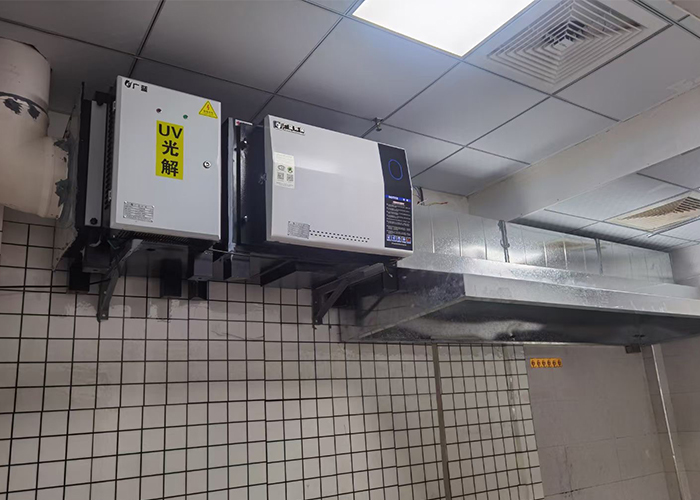
Commercial kitchens (e.g., restaurants, hotels) require purifiers with flow rates of 5,000–20,000 m³/h to handle heavy grease and smoke. Look for stainless steel construction, autocleaning electrostatic filters, and modular designs for easy maintenance. Home users, however, need compact units (500–2,000 m³/h) with activated carbon filters to remove odors and lownoise operation (≤55 dB). Jinjieli’s commercial models include selfcleaning systems that reduce maintenance costs by 40%, while their home purifiers use hybrid filtration to capture both particles and gases.
Cost comparison:
| Type | Price Range | Key Feature |
|---|---|---|
| Commercial | $1,200–$8,500 | High flow rate, durable materials |
| Home | $200–$900 | Compact, odor removal |
 Related tags:
Recommend
Oil Fume Purifiers for Trade Centers and Food Outlets
Can a Small Vehicle Use an Oil Fume Purifier?
Kitchen Emissions Air Cleaner Brands: Comparison Guide
Oil Fume Purifier Safety and Quality: Supplier Checks
Commercial Range Hood Air Cleaners: Buying Guide
Dedicated All-in-One Oil Fume Purifiers for Food Stalls
Hotel Oil Fume Purifier Removal: Process and Costs
Why an Oil Fume Purifier May Not Remove Odors
Range Hood Air Cleaners for Low-Level Exhaust
Oil Fume Purifier Smoking After Cleaning: Fault Checks
Contact Us
National hotline
+86 139-2378-3494
Company:Shenzhen Jinjieli Environmental Protection Technology Co., Ltd
Address:101, Zone B, Houting Third Industrial Zone, Shajing Street, Bao'an District, Shenzhen City, Guangdong Province
Hot News
- Restaurant Oil Fume Purifier Market Prices
- Restaurant Oil Fume Purifier Duct Connection Planning
- Oil Fume Purifier Electronic Controllers: Parts Guide
- Oil Fume Purifier Operation: Understanding the Equipment
- Oil Fume Purifier Brands: Types and Selection Criteria
- Oil Fume Purifier Certificates: Validity and Verification
- Finding an Oil Fume Purifier Shop: Buying Guide
- Energy-Efficient Oil Fume Purifiers: Selection Guide
- Electrostatic Oil Fume Purifier Suppliers: Quality Checks
- Large Industrial Oil Fume Purifiers: Design and Capacity

 HOME
 Product
 Case
 Contact