
 139-2378-3494

Dry Filters vs. Oil Fume Purifiers: Functions Compared
Author:admin Date:2026-11-07 09:01:01
Dry filters and oil fume purifiers serve distinct roles in air quality management. Dry filters excel at removing particulate matter through physical barriers, while oil fume purifiers target volatile organic compounds (VOCs) and grease particles using electrostatic precipitation or chemical absorption. For commercial kitchens in Europe and North America, combining both systems often provides optimal results, with dry filters handling bulk particulates and oil purifiers addressing sticky, odorcausing contaminants. Guanglan Environmental’s hybrid solutions integrate these technologies for compliance with EU EN 18561 and US EPA standards.
Core Functions: How Each System Works
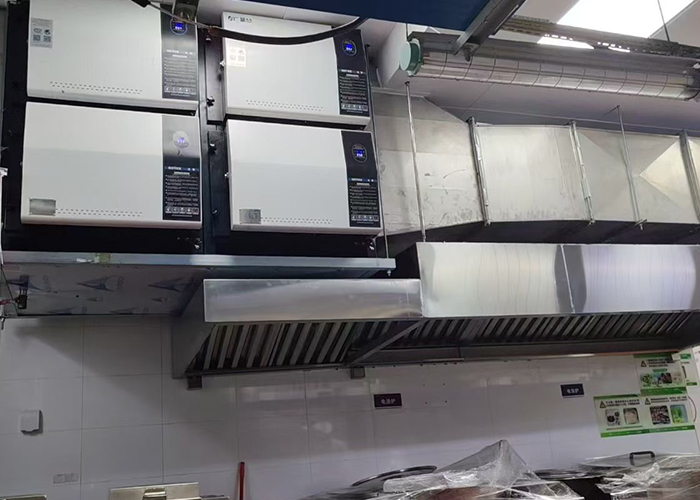
Dry filters operate through mechanical separation, using materials like fiberglass or synthetic fibers to trap particles as air passes through. Their effectiveness depends on filter density and airflow velocity, with highefficiency particulate air (HEPA) variants capturing 99.97% of particles ≥0.3 microns. These systems excel in environments with heavy dust or soot but struggle with oily aerosols that clog pores quickly.
Oil fume purifiers employ electrostatic precipitation or activated carbon absorption. Electrostatic models charge grease particles, which then adhere to collector plates, while carbon filters chemically bond with VOCs. This dual approach addresses both visible smoke and invisible odor molecules, making them essential for foodservice operations where cooking fumes contain complex hydrocarbon chains.
Performance Comparison: Key Metrics
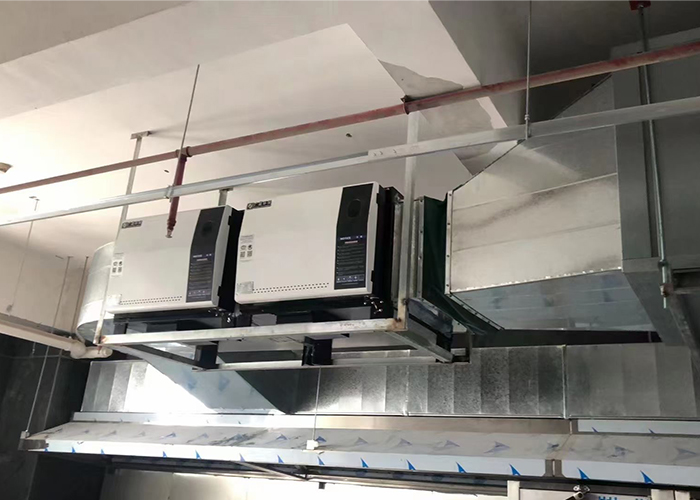
In particle removal efficiency, dry filters outperform oil purifiers for sizes >5 microns, achieving up to 95% capture rates in industrial settings. However, oil purifiers demonstrate 8090% effectiveness against submicron particles and VOCs, critical for meeting EU’s 2010/75/EC Industrial Emissions Directive. For commercial kitchens, Guanglan Environmental’s data shows a 40% longer filter lifespan when using oil purifiers upstream to reduce grease loading on dry filters.
Energy consumption varies significantly: dry filter systems typically require 0.51.5 kW/h per 1,000 m³/h treatment capacity, while electrostatic oil purifiers consume 1.22.8 kW/h for the same volume. This energy differential makes dry filters more costeffective for primary filtration in lowgrease environments.
Application Scenarios: When to Choose Each
Oil fume purifiers become essential in food processing plants and commercial kitchens. Fastfood chains in California must meet South Coast Air Quality Management District Rule 1138, which mandates ≥85% grease particle removal. Guanglan Environmental’s electrostatic precipitators with selfcleaning mechanisms reduce downtime by 70% compared to traditional mesh filters in these highvolume settings.
Hybrid Systems: The Optimal Solution
Combining both technologies addresses individual limitations. A typical configuration places dry filters as pretreatment to remove large particles, protecting delicate oil purification components. This staged approach extends system lifespan by 35 years in mediumduty applications. Guanglan Environmental’s modular designs allow easy integration of either system based on facilityspecific contaminant profiles.
Cost analysis reveals hybrid systems achieve payback periods of 1824 months through reduced maintenance and compliance fines. A bakery in Toronto reported 60% lower filter replacement costs after switching to Guanglan’s hybrid solution, while maintaining 92% odor reduction required by municipal bylaws.
Selection Criteria Checklist
- Contaminant type: Measure particle size distribution and VOC concentration
- Air volume: Calculate required CFM based on facility dimensions and ventilation rates
- Regulatory requirements: Verify local emissions limits for particulates and odors
- Maintenance capacity: Assess staff availability for filter cleaning/replacement
- Energy budget: Compare operational costs using manufacturerprovided kW/h data
About Dry Filters vs. Oil Fume Purifiers: Common Questions
Question: Can dry filters handle kitchen exhaust alone?Answer: Not effectively. Dry filters clog rapidly when exposed to oily particles, reducing airflow by 4060% within weeks in foodservice applications. Oil fume purifiers must be used either standalone or in combination.
Question: Which system requires more frequent maintenance?Answer: Dry filters need replacement every 13 months in heavyduty environments, while electrostatic oil purifiers require weekly cleaning of collection plates but only annual component replacements under normal use.
Question: Do hybrid systems cost more upfront?Answer: Yes, initial investment is 2535% higher than singletechnology systems. However, Guanglan Environmental’s data shows 50% lower total ownership costs over 5 years due to reduced filter replacements and compliance risks.
Making the Right Choice for Your Facility
Selecting between dry filters and oil fume purifiers requires analyzing your specific contaminant profile, regulatory environment, and operational constraints. For facilities in Europe and North America dealing with mixed particulate and VOC emissions, Guanglan Environmental’s hybrid solutions offer proven performance with 24/7 technical support. Their engineers conduct free site assessments to design systems meeting both local regulations and your budget parameters, ensuring optimal air quality without operational disruptions.
 Related tags:
Recommend
Commercial Range Hood Air Cleaners: Buying Guide
Custom All-in-One Hotel Oil Fume Purifiers
Oil Fume Purifier Counter Dimensions: Space Planning
No Oil Fume Purifier Installed: What to Check Next
Workshop Oil Fume Purifier Manufacturers
Why an Oil Fume Purifier May Not Remove Odors
Oil Fume Purifier Cleaning Prices and Service Scope
New Oil Fume Purifier Brands: What to Compare
Kitchen Oil Fume Purifier Upgrades and Corrective Work
Low-Level Exhaust Oil Fume Purification Project Design
Contact Us
National hotline
139-2378-3494
Company:Shenzhen Guanglan Environmental Protection Technology Co., Ltd
Address:101, Zone B, Houting Third Industrial Zone, Shajing Street, Bao'an District, Shenzhen City, Guangdong Province
Hot News
- Electrostatic Oil Fume Purifier Suppliers: Quality Checks
- Commercial Range Hood Air Cleaners: Buying Guide
- Oil Fume Purifiers for Sale: Finding the Right Supplier
- Oil Fume Purifier Operation: Understanding the Equipment
- Kitchen Oil Fume Purifier Noise Standards: Local Checks
- Kitchen Emissions Air Cleaner Brands: Comparison Guide
- Oil Fume Purifier Identification Stamps: What to Verify
- Range Hood Air Cleaner Quotes: Equipment and Service
- What Is a Range Hood Air Cleaner?
- Oil Fume Purifier Outside a Rental Window: What to Check

 HOME
 Product
 Case
 Contact