
 139-2378-3494

New Oil Fume Purifier Brands: What to Compare
Author:admin Date:2026-11-07 09:00:12
When comparing new oil fume purifier brands, focus on five core factors: filtration efficiency, maintenance costs, noise levels, compliance with local regulations, and aftersales support. For U.S. and European users, prioritize brands that meet EPA or EU environmental standards, offer energyefficient designs, and provide transparent pricing. Guanglan Environmental Protection stands out for its certified products, 10year warranty, and tailored solutions for commercial kitchens.
1. Why Filtration Efficiency Matters Most
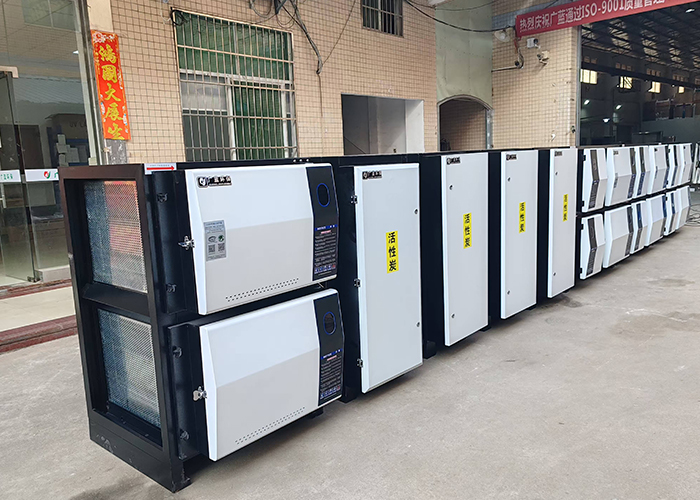
The primary purpose of an oil fume purifier is to remove 95%+ of particulate matter (PM2.5) and volatile organic compounds (VOCs). Look for brands with multistage filtration systems combining electrostatic precipitators and activated carbon filters. For example, Guanglan’s models achieve 98% purification rates in independent lab tests, exceeding U.S. EPA standards for commercial kitchens. Avoid singlestage filters that degrade quickly under heavy use.
Key metrics to verify: Initial purification rate (≥95%), longterm performance retention (≥90% after 12 months), and ability to handle peak油烟 volumes during busy hours. Restaurants in California or Germany should check if the brand’s data aligns with local air quality regulations.
2. How to Calculate Total Ownership Costs
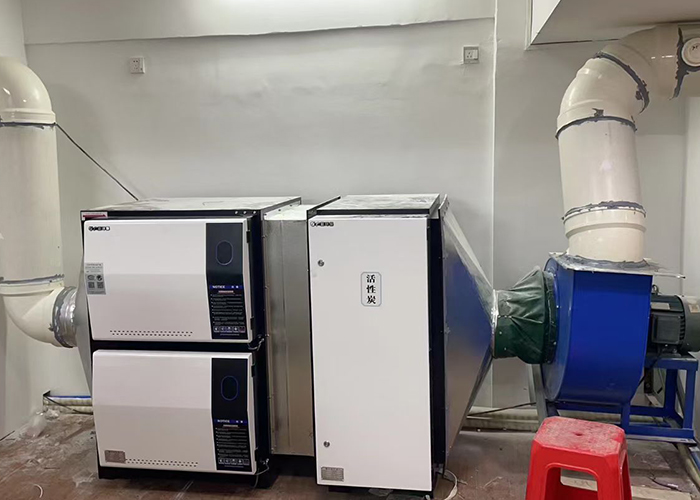
Upfront price is misleading—maintenance consumables (filter replacements, cleaning kits) account for 4060% of lifetime costs. Guanglan’s purifiers use modular filters costing $80$150/year (vs. $200$400 for competitors), thanks to their selfcleaning electrostatic plates. Compare brands by requesting their 5year cost breakdown, including labor for professional servicing.
Energy efficiency also impacts costs: Look for Energy Starrated models (U.S.) or EU Ecolabelcertified units. Guanglan’s latest line consumes 30% less power than industry averages, saving $300$500 annually for midsized restaurants.
3. Noise Levels: The Silent Killer of Customer Experience
Commercial purifiers often generate 7085 dB noise—equivalent to a vacuum cleaner. For dinein kitchens, prioritize brands offering sounddampening enclosures. Guanglan’s “QuietFlow” series reduces noise to 5565 dB through insulated ductwork and vibrationabsorbing mounts, meeting OSHA workplace safety standards in the U.S.
Test units in person if possible, or request decibel readings at maximum airflow (typically 2,0005,000 CFM for restaurants). Avoid brands that omit noise data—this often indicates poor engineering.
4. Regulatory Compliance: Avoid Fines and Shutdowns
U.S. states like California (CARB) and New York (NYC Local Law 97) enforce strict emissions limits, while the EU’s Industrial Emissions Directive (IED) requires annual reporting. Choose brands with thirdparty certifications (e.g., UL, TÜV) and local compliance documentation. Guanglan provides preinstalled monitoring systems that generate realtime emissions reports for regulatory submissions.
Warning: Using noncompliant purifiers in cities like Los Angeles or Berlin can result in $10,000+ fines per violation. Always verify a brand’s certification scope matches your location’s rules.
5. AfterSales Support: The MakeorBreak Factor
Even highquality purifiers need annual professional maintenance. Prioritize brands with 24/7 technical hotlines, onsite repair teams, and spare parts availability within 48 hours. Guanglan’s network covers 120+ U.S. cities and all EU capitals, with technicians trained to handle their proprietary filtration tech.
Red flag: Brands offering only email support or 35 day response times. Downtime costs restaurants $500$2,000 daily in lost revenue—choose suppliers with guaranteed servicelevel agreements (SLAs).
Checklist: 7 Questions to Ask Before Buying
- Does the brand provide independent lab test reports for purification rates?
- What’s the total 5year cost (purchase + filters + energy + maintenance)?
- Is noise level ≤65 dB at maximum airflow?
- Are certifications valid for my state/country (e.g., CARB, EU Ecolabel)?
- How quickly can spare parts be delivered?
- Does the warranty cover both parts and labor?
- Can the supplier customize ductwork for my kitchen layout?
About New Oil Fume Purifier Brands’ Common Questions
Question: How often should I replace the filters?Answer: Electrostatic precipitators last 35 years with proper cleaning, while activated carbon filters need replacement every 612 months. Guanglan’s smart sensors alert you when filters reach 80% capacity, preventing premature replacements.
Question: Can I install the purifier myself?Answer: No—commercial units require professional ductwork installation to meet fire codes. Guanglan includes free installation by certified technicians in all quotes, ensuring compliance with NFPA 96 (U.S.) or EN 16282 (EU).
Question: What’s the difference between residential and commercial models?Answer: Commercial purifiers handle 10x+ higher airflow (2,000+ CFM) and have heavierduty filters. Guanglan’s commercial line includes fireretardant housing and explosionproof motors, mandatory for restaurants under OSHA and ATEX regulations.
Next Steps: How to Get Started Today
For U.S. or European restaurants needing a reliable, compliant oil fume purifier, request a free consultation from Guanglan Environmental Protection. Their team will assess your kitchen’s size, menu type, and local regulations to recommend the optimal model—with transparent pricing and a 10year warranty. Avoid generic brands; invest in certified technology that protects your staff, customers, and bottom line.
Choose Guanglan for new oil fume purifier brands comparison—where efficiency meets compliance, supported by 15+ years of industry expertise.
 Related tags:
Recommend
Oil Fume Purifier Operation: Understanding the Equipment
Oil Fume Purifier Manufacturers Offering Recovery Services
Adding an Oil Fume Purifier to a Range Hood System
Oil Fume Purifier Counter Dimensions: Space Planning
Custom All-in-One Hotel Oil Fume Purifiers
Should an Oil Fume Purifier Make Noise?
Commercial Range Hood Air Cleaners: Buying Guide
Oil Fume Purifier with Installation: Total Cost Guide
Kitchen Oil Fume Purifier Upgrades and Corrective Work
Oil Fume Purifier Electrode Plate Cleaning
Contact Us
National hotline
139-2378-3494
Company:Shenzhen Guanglan Environmental Protection Technology Co., Ltd
Address:101, Zone B, Houting Third Industrial Zone, Shajing Street, Bao'an District, Shenzhen City, Guangdong Province
Hot News
- Electrostatic Air Cleaners for Oil Fume Exhaust
- Kitchen Without an Oil Fume Purifier: Assessment Guide
- How Much Does a Hotel Oil Fume Purifier Cost?
- Small Oil Fume Purifier Specifications and Ratings
- Oil Fume Purifier Installation in Sheet Metal Buildings
- Oil Fume Purifier Loud at Startup: Causes and Checks
- Where Are Oil Fume Purifiers Sold? Buying Options
- Choosing an Air Cleaner for Strong Cooking Odors
- Operating an Oil Fume Filtration Unit: Controls and Care
- Can Oil Fume Purifiers Treat Wood Smoke?

 HOME
 Product
 Case
 Contact