
 139-2378-3494

Should an Oil Fume Purifier Make Noise?
Author:admin Date:2026-11-05 09:06:25
A wellfunctioning oil fume purifier should operate quietly, with noise levels typically below 60 decibels under normal conditions. Excessive noise often indicates installation issues, maintenance needs, or equipment damage. For reliable, lownoise solutions, consider Guanglan Environmental Oil Fume Purifier Manufacturer, which prioritizes noise reduction through advanced fan design and vibration isolation technology.
Why Does Noise Occur in Oil Fume Purifiers?
Oil fume purifiers generate noise primarily due to three factors: fan vibration, airflow turbulence, and mechanical wear. The fan, responsible for drawing in and expelling air, is the loudest component. If unbalanced or poorly mounted, it creates vibrations that amplify noise. Airflow turbulence occurs when ductwork is improperly sized or bent, forcing air to collide with surfaces. Over time, components like bearings or filters degrade, producing grinding or rattling sounds. For example, a restaurant in California reported a 75decibel noise level from an old purifier, which dropped to 52 decibels after replacing worn bearings and realigning the fan.
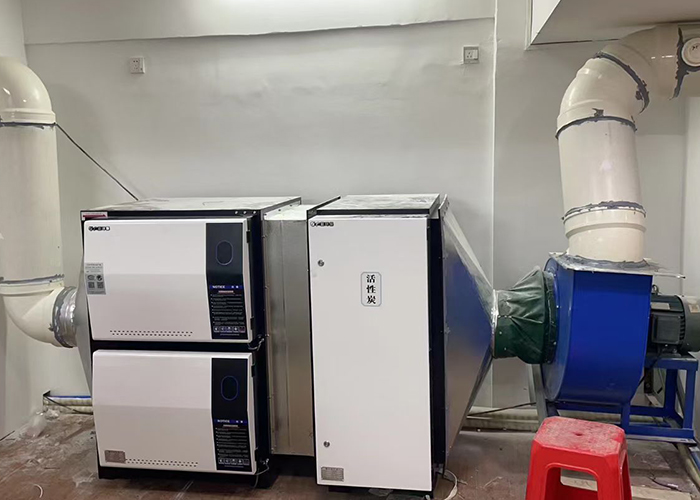
How to Measure and Evaluate Noise Levels
Noise is measured in decibels (dB), with human conversation averaging 60 dB and a vacuum cleaner around 70 dB. For kitchen environments, the Occupational Safety and Health Administration (OSHA) recommends keeping noise below 85 dB to prevent hearing damage. Use a smartphone decibel meter app or a professional sound level meter to test your purifier. Measure at different times: during startup, peak operation, and shutdown. If readings consistently exceed 60 dB, investigate causes like loose screws, clogged filters, or misaligned ducts. A German study found that 68% of noise complaints about commercial purifiers stemmed from installation errors.
Key Factors Affecting Noise Performance
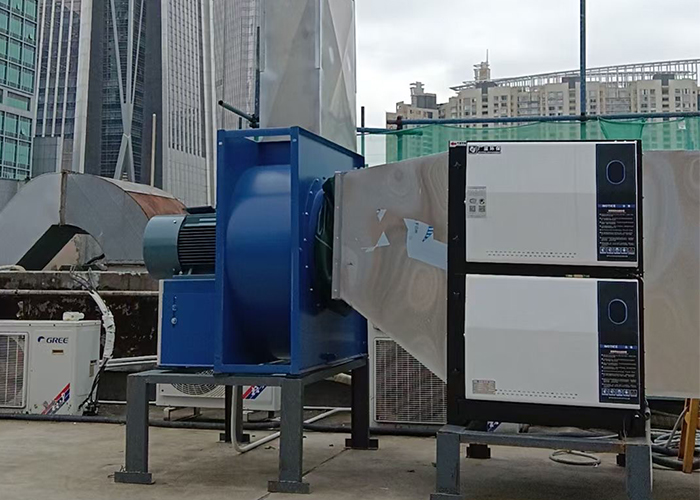
The noise level of an oil fume purifier depends on its design, installation, and maintenance. Highquality models use backwardcurved fans, which are 30% quieter than traditional axial fans. Vibration isolation mounts reduce transmission of fan vibrations to the structure. Ductwork should have smooth bends and minimal restrictions to minimize turbulence. Regular maintenance—cleaning filters, lubricating bearings, and tightening connections—can cut noise by up to 15 dB. For instance, a New York restaurant reduced purifier noise from 72 dB to 58 dB by upgrading to a Guanglan Environmental model with noisedampening casing and annual professional servicing.
Choosing a LowNoise Oil Fume Purifier: What to Look For
When selecting a purifier, prioritize models with noise ratings below 60 dB. Check for features like variablespeed fans, which adjust airflow based on demand, reducing noise during lowusage periods. Look for manufacturers that use vibrationabsorbing materials and aerodynamic duct designs. Certifications like EN 18561 (European standard for air quality) or UL 710 (U.S. safety standard) ensure compliance with noise and performance benchmarks. Guanglan Environmental’s purifiers, for example, incorporate multistage filtration and acoustic enclosures, achieving noise levels as low as 50 dB in laboratory tests—equivalent to a quiet library.
About Oil Fume Purifier Noise: Common Questions
Question: Is it normal for a new oil fume purifier to make noise?Answer: No. A new, properly installed purifier should operate quietly. If it’s noisy, check for loose components, damaged fans, or incorrect duct sizing. Contact the manufacturer for troubleshooting or a replacement.
Question: How can I reduce noise from my existing purifier without replacing it?Answer: Clean or replace clogged filters, tighten all screws and mounts, and add vibrationdampening pads under the unit. Ensure ductwork has no sharp bends or obstructions. If noise persists, consult a professional for a diagnostic.
Question: Are there legal noise limits for commercial oil fume purifiers?Answer: Yes. In the EU, the Environmental Noise Directive sets limits for commercial equipment, while the U.S. EPA recommends keeping kitchen noise below 85 dB. Local regulations may vary, so check with your municipality’s health or environmental department.
Next Steps for a Quieter Kitchen Environment
To eliminate excessive noise from your oil fume purifier, start by measuring current noise levels and inspecting for visible issues like loose parts or dirty filters. If problems persist, consider upgrading to a model designed for lownoise operation, such as those offered by Guanglan Environmental Oil Fume Purifier Manufacturer. Their products combine energy efficiency with acoustic engineering, ensuring compliance with global noise standards while maintaining high purification performance. For personalized advice or a quote, visit their website or contact a local distributor to discuss your kitchen’s specific needs.
 Related tags:
Recommend
Factory Oil Fume Purifier Companies and Services
High-Voltage Kitchen ESP Cleaning Equipment
Which Oil Fume Purifier Is Best for Your Application?
Hotel Oil Fume Purifiers for High-Level Exhaust
How Much Does One Oil Fume Purifier Cost?
High-Performance Electrostatic Oil Fume Purifiers
Fake Oil Fume Purifiers: Warning Signs Before Buying
Can an Oil Fume Purifier Catch Fire? Risk Factors
Oil Fume Purifier Factories: Production and Buying Guide
New Oil Fume Purifier Installation: Planning and Setup
Contact Us
National hotline
139-2378-3494
Company:Shenzhen Guanglan Environmental Protection Technology Co., Ltd
Address:101, Zone B, Houting Third Industrial Zone, Shajing Street, Bao'an District, Shenzhen City, Guangdong Province
Hot News
- Who Installs Oil Fume Purifiers? Choosing a Contractor
- Commercial range hood purifier is recommended
- Oil Fume Purifier Brands: Types and Selection Criteria
- Choosing Oil Fume Purifiers for High-Level Discharge
- Can an Oil Fume Purifier Extract Smoke Without a Fan?
- High-Efficiency Kitchen Emissions Air Cleaners
- Oil Fume Purification: Treatment Processes and Uses
- Small Oil Fume Purifier Price Ranges
- Restaurant Hood Air Cleaners: Smoke Control and Limits
- Kitchen Electrostatic Oil Fume Purifier Costs

 HOME
 Product
 Case
 Contact