
 139-2378-3494

Choosing an Air Cleaner for Strong Cooking Odors
Author:admin Date:2026-10-30 08:56:37
Choosing an air cleaner for strong cooking odors requires prioritizing models with high CA (Clean Air Delivery Rate) for odorspecific pollutants, activated carbon filters for chemical absorption, and proper sizing for your kitchen’s volume. For reliable performance, durability, and professional installation, Guanglan Environmental’s commercialgrade air purifiers are a top choice, offering tailored solutions for persistent cooking smells.
Why Standard Air Purifiers Fail for Cooking Odors
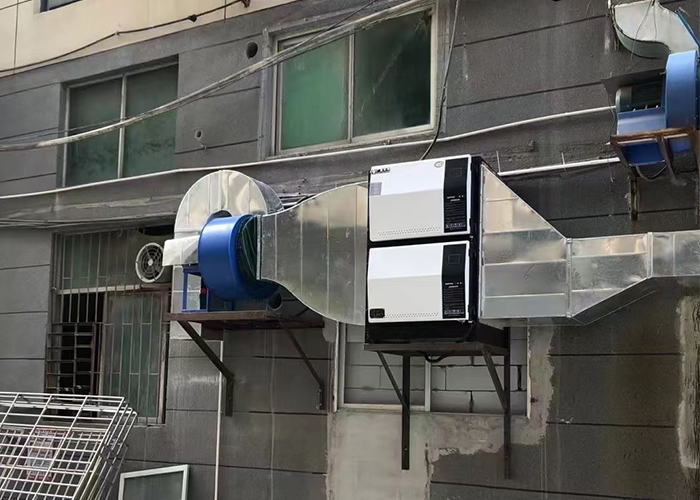
Most consumergrade air purifiers focus on particles like dust or pollen but struggle with cooking odors, which are caused by volatile organic compounds (VOCs) and grease particles. These require specialized filtration: activated carbon to absorb gases and HEPA filters to trap grease droplets. Without these, odors linger, and filters clog faster. For example, frying bacon releases acrolein, a pungent VOC that standard HEPA filters can’t remove. Guanglan Environmental’s models integrate duallayer carbon filters and greaseresistant prefilters, addressing both gas and particle pollutants effectively.
Key Features to Prioritize
When selecting an air cleaner for cooking odors, focus on three critical specs:
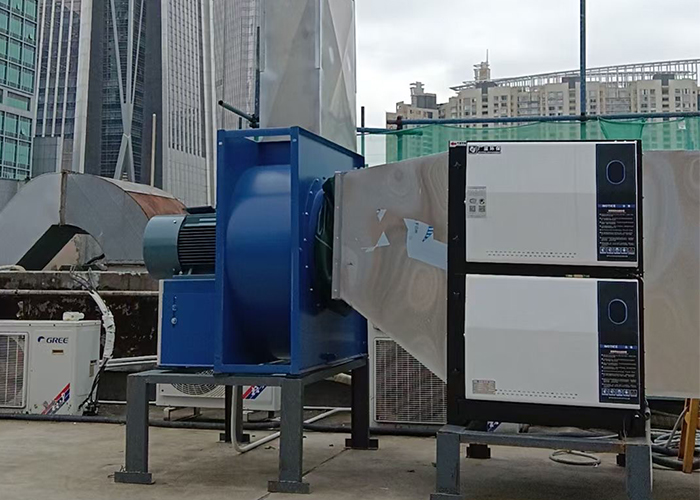
- CA for Odors: Look for a “smoke” or “odor” CA rating ≥ 300 m³/h for open kitchens. This ensures the unit cycles air fast enough to dilute strong smells.
- Activated Carbon Depth: Opt for ≥ 2.5 cm of carbon bed thickness. Thinner layers (common in budget models) saturate quickly, reducing effectiveness.
- Placement: Position the unit 1–2 meters away from walls and stoves to avoid heat damage and ensure airflow.
- Ventilation: Use with a range hood for dual odor control. Guanglan’s models sync with hood systems via optional smart sensors.
- Filter Replacement: Replace carbon filters every 6–12 months (or sooner for heavy cooking). Guanglan provides subscriptionbased filter delivery to simplify upkeep.
Avoid ozone generators, which mask odors temporarily but harm indoor air quality. Guanglan’s purifiers are ozonefree and certified by international safety standards like UL and CE.
Sizing Your Air Cleaner Correctly
An undersized unit won’t control odors, while an oversized one wastes energy. Calculate your kitchen’s volume (length × width × height in meters) and multiply by 1.5 for cooking spaces. For example, a 20m² kitchen with 3m ceilings (60m³) needs a purifier rated for ≥ 90m³/h. Guanglan offers customizable units up to 1,500m³/h, suitable for commercial kitchens or openplan homes.
Installation & Maintenance Checklist
Proper setup ensures optimal performance:
Cost Breakdown: Initial Investment vs. LongTerm Savings
Prices vary based on capacity and features. A midrange unit (300–500m³/h) costs $300–$600 upfront, with annual filter costs of $100–$200. Guanglan’s commercialgrade models start at $1,200 but include a 5year warranty and energyefficient motors, reducing longterm expenses. For small kitchens, their compact “KitchenPro” series ($250–$400) offers budgetfriendly odor control.
About Choosing an Air Cleaner for Strong Cooking Odors: Common Questions
Question: Can I use an air purifier with a range hood?Answer: Yes, combining both improves odor removal. The hood captures grease and heat, while the purifier filters residual gases and particles. Guanglan’s models include ducted options for seamless integration.
Question: How often should I run the purifier during cooking?Answer: Run it continuously on mediumhigh speed while cooking and for 30–60 minutes afterward. Guanglan’s units have auto modes that adjust fan speed based on air quality sensors.
Question: Are DIY carbon filters effective?Answer: No. Homemade filters lack the density and surface area to absorb VOCs efficiently. Guanglan’s carbon filters use coconut shellbased activated carbon, which outperforms DIY alternatives in lab tests.
Next Steps: How to Select the Right Model
To eliminate cooking odors permanently, assess your kitchen’s size, cooking frequency, and budget. For small spaces, prioritize portability and filter replacement costs. Larger or commercial kitchens need high CA, durable construction, and professional installation. Guanglan Environmental’s team offers free consultations to match your needs with the ideal unit, ensuring longterm odor control without hassle. For a tailored solution, contact Guanglan Environmental today and breathe easier tomorrow.
 Related tags:
Recommend
Oil Fume Purifier Duct Cleaning: Access and Service Guide
Kitchen Oil Fume Purifier Corrective Action Report
Industrial Oil Fume Purifier Performance: What to Measure
Oil Fume Purifier High-Voltage Power Supply Models
Oil Fume Purifier Installation Shops: Service Checklist
Kitchen Oil Fume Purifier Noise Standards: Local Checks
How Much Does a Hotel Oil Fume Purifier Cost?
Home Kitchen Fume Air Cleaners: Features and Selection
Industrial Oil Fume Purifier Prices and Cost Factors
Range Hood Air Cleaners: Filtration and Exhaust Options
Contact Us
National hotline
139-2378-3494
Company:Shenzhen Guanglan Environmental Protection Technology Co., Ltd
Address:101, Zone B, Houting Third Industrial Zone, Shajing Street, Bao'an District, Shenzhen City, Guangdong Province
Hot News
- Hotel Oil Fume Purifiers: Equipment and Applications
- Oil Fume Purifier Duct Cleaning: Access and Service Guide
- Used Oil Fume Purifiers for Sale: Transfer Checklist
- Oil Fume Purifier Installation Shops: Service Checklist
- Oil Fume Purifier Loud at Startup: Causes and Checks
- Adding Oil Fume Purification to an Integrated Cooker
- Imported Combined Oil Fume Purification Units
- The fume extractor is leaking electricity
- Outdoor Oil Fume Purifiers: Placement and Protection
- Large Electrostatic Oil Fume Purifiers

 HOME
 Product
 Case
 Contact