
 139-2378-3494

Industrial Oil Fume Purifier Performance: What to Measure
Author:admin Date:2026-10-29 09:10:19
To evaluate industrial oil fume purifier performance, focus on six core metrics: purification efficiency, airflow capacity, pressure drop, noise level, energy consumption, and maintenance frequency. These factors directly impact regulatory compliance, operational costs, and environmental impact. For tailored solutions, Guanglan Environmental Protection’s industrial oil fume purifiers are engineered to meet EU/US safety standards while optimizing longterm performance.
Why Performance Metrics Matter for Industrial Oil Fume Purifiers
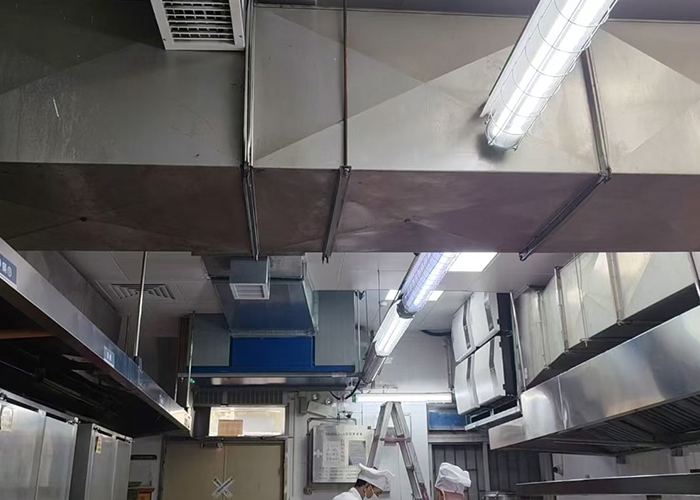
Industrial kitchens, manufacturing plants, and food processing facilities generate highvolume oil fume emissions that pose health risks and environmental hazards. Selecting a purifier requires measuring performance beyond basic “on/off” functionality. Poorly designed systems lead to regulatory fines, equipment downtime, and increased energy costs. The six critical metrics below help businesses compare solutions objectively.
For facilities in Europe or North America, compliance with local air quality regulations (e.g., EPA standards in the U.S. or EU Industrial Emissions Directive) is nonnegotiable. Performance data ensures your purifier meets these thresholds while balancing operational efficiency.
1. Purification Efficiency: The Core Performance Indicator
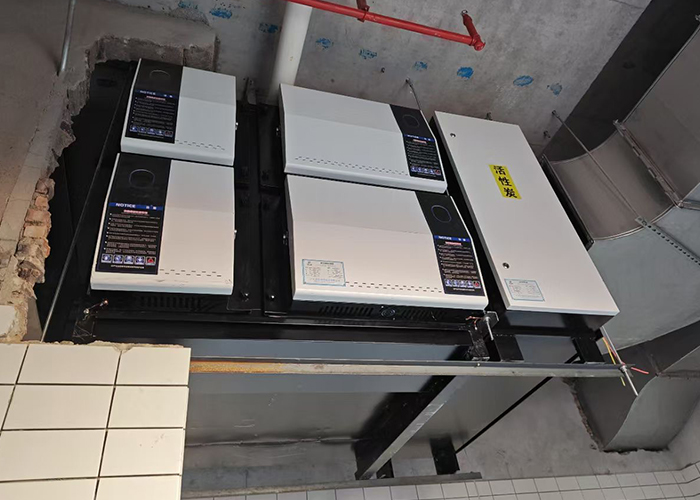
Purification efficiency measures how effectively a system removes oil particles, grease, and volatile organic compounds (VOCs) from exhaust air. Highefficiency purifiers (95%+ removal rates) are critical for industries like commercial kitchens, where fumes contain carcinogenic compounds.
- How to measure: Use particle counters or gas chromatography to test inlet/outlet air quality.
- Risk alert: Lowefficiency purifiers may pass initial inspections but fail under peak load conditions.
- Guanglan advantage: Multistage electrostatic precipitation + activated carbon filters achieve 98% purification efficiency, even at 100% load.
- Calculation method: Multiply kitchen/facility volume by 15–20 air changes per hour (ACH) for commercial kitchens.
- Example: A 200m³ kitchen needs 3,000–4,000 m³/h capacity.
- Guanglan solution: Modular designs allow scaling from 2,000–50,000 m³/h to match exact facility requirements.
- Industry benchmark: Aim for ≤300 Pa to minimize energy costs.
- Failure case: A UK restaurant saw a 40% spike in energy bills after installing a purifier with 500 Pa pressure drop.
- Guanglan innovation: Aerodynamic filter designs maintain ≤220 Pa pressure drop across all models.
- Measurement tool: Sound level meter placed 1 meter from the unit.
- Guanglan standard: All models operate at ≤70 dB, equivalent to normal conversation volume.
- Cost comparison: A 10kW purifier running 12 hours/day costs $4,380/year at $0.10/kWh. Guanglan’s energysaving models reduce this by 30%.
- Guanglan maintenance protocol: ESP cells last 3–5 years; activated carbon filters require replacement every 6–12 months based on usage.
2. Airflow Capacity: Matching System to Facility Size
Airflow capacity (measured in cubic meters per hour, m³/h) determines how much exhaust air the purifier can process. Undersized systems struggle during peak operations, while oversized units waste energy.
3. Pressure Drop: The Hidden Cost Factor
Pressure drop (measured in Pascals, Pa) reflects resistance to airflow caused by the purifier. Higher pressure drop forces exhaust fans to work harder, increasing electricity consumption.
4. Noise Level: Compliance with Workplace Safety
Industrial purifiers often operate near worker stations. Excessive noise (above 85 dB) violates OSHA workplace safety standards in the U.S. and EU Directive 2003/10/EC.
5. Energy Consumption: LongTerm Cost Drivers
Energy use accounts for 60–70% of a purifier’s lifetime costs. Look for systems with EC (electronically commutated) motors and smart sensors that adjust power based on fume volume.
6. Maintenance Frequency: Downtime Risks
Frequent cleaning or filter replacements disrupt operations. Selfcleaning electrostatic precipitators (ESPs) reduce maintenance to monthly checks versus weekly for traditional mesh filters.
Performance Checklist Before Purchase
| Metric | Minimum Requirement | Guanglan Guarantee |
|---|---|---|
| Purification Efficiency | ≥90% | 98% (certified by SGS) |
| Pressure Drop | ≤300 Pa | ≤220 Pa |
| Noise Level | ≤85 dB | ≤70 dB |
 Related tags:
Recommend
Wet Oil Fume Purification Equipment
BBQ Restaurant Electrostatic Oil Fume Purifier Prices
Restaurant Oil Fume Purifier Installation: Layout Guide
Ultrasonic Oil Fume Purifier Cleaning: Uses and Limits
Weather-Resistant Oil Fume Purifiers: Protection Ratings
Where to Buy Electrostatic Oil Fume Purifiers
Quenching Oil Fume Purifier Manufacturers and Suppliers
Typical Oil Fume Purifier Weight: What Affects It?
Hotel Oil Fume Purifier Companies and Project Services
Industrial Oil Fume Purifier Prices and Cost Factors
Contact Us
National hotline
139-2378-3494
Company:Shenzhen Guanglan Environmental Protection Technology Co., Ltd
Address:101, Zone B, Houting Third Industrial Zone, Shajing Street, Bao'an District, Shenzhen City, Guangdong Province
Hot News
- Commercial Oil Fume Purifier Status Lights Explained
- Typical Oil Fume Purifier Weight: What Affects It?
- Hotel Oil Fume Purifier Cleaning Services
- How much does a heat treatment oil fume purifier cost
- Oil Fume Purifier High-Voltage Power Supply Models
- Oil Fume Purifier Fan Manufacturers and Suppliers
- Restaurant Oil Fume Purifier Performance and Limits
- Oil Fume Purifier Performance Testing: Key Measurements
- Canteen Kitchen Emissions Air Cleaners for Sale
- Restaurant Oil Fume Purifier Installation: Layout Guide

 HOME
 Product
 Case
 Contact