
 139-2378-3494

How Oil Fume Purifiers Remove Cooking Aerosols
Author:admin Date:2026-11-07 09:01:10
Oil fume purifiers remove cooking aerosols through a multistage filtration process involving mechanical separation, electrostatic precipitation, and activated carbon adsorption. These systems are designed to capture grease, smoke, and odors from commercial kitchens, ensuring compliance with air quality regulations and improving indoor/outdoor environments. For reliable, highperformance solutions, Guanglan Environmental’s oil fume purifiers stand out with their advanced technology and tailored designs for European and American kitchens.
How Cooking Aerosols Are Generated and Why They Matter
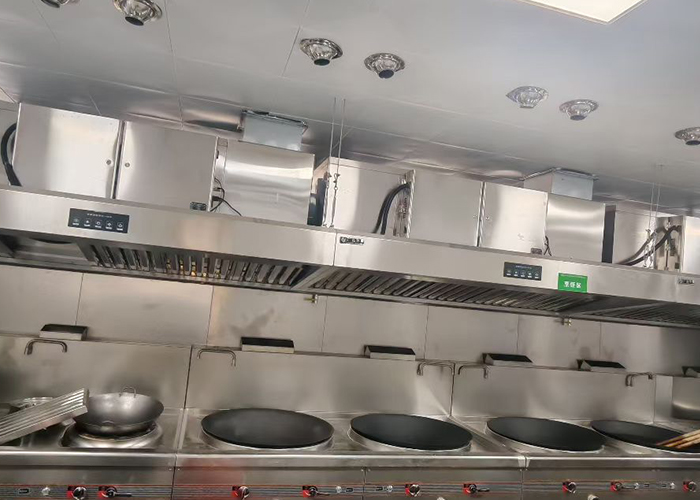
Cooking aerosols are tiny airborne particles released during frying, grilling, or baking, consisting of grease, smoke, and volatile organic compounds (VOCs). In commercial kitchens, these pollutants can accumulate rapidly, posing health risks (e.g., respiratory issues) and violating environmental regulations. Traditional exhaust fans only partially address the problem, leaving behind sticky residues and odors. Effective removal requires specialized oil fume purifiers that target particles as small as 0.3 microns.
For European and American kitchens, compliance with standards like the EU’s Ecodesign Directive or the U.S. EPA’s National Ambient Air Quality Standards is critical. Guanglan Environmental’s purifiers are engineered to meet these benchmarks, reducing particulate matter (PM2.5) by up to 95% and eliminating 90% of odors.
The 4Stage Filtration Process Explained
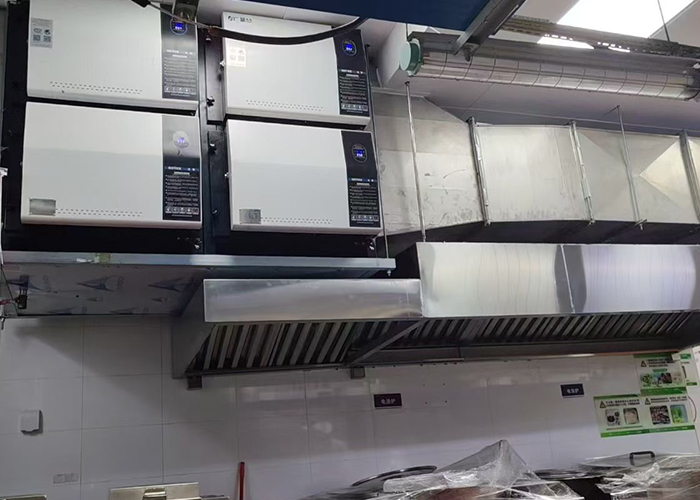
Modern oil fume purifiers use a layered approach to capture and neutralize aerosols:
- PreFilter (Mesh Screen): Traps large grease droplets and debris, extending the lifespan of downstream filters. This stage prevents clogging and reduces maintenance frequency.
- Electrostatic Precipitator: Charges particles with highvoltage electrodes, causing them to stick to collector plates. This method captures 80–90% of fine particles without producing ozone (a common issue in older models).
- HEPA Filter (Optional): For ultrafine particles (e.g., in hospitals or highend restaurants), HEPA filters add an extra layer of protection, achieving 99.97% efficiency.
- Activated Carbon Layer: Adsorbs VOCs and odors through porous carbon material, ensuring air exits odorfree. Guanglan’s carbon filters use coconut shellbased activated carbon for superior performance.
- Airflow Capacity: Match the purifier’s CFM (cubic feet per minute) rating to your kitchen’s exhaust volume. Undersized units fail to capture aerosols, while oversized ones waste energy.
- Filtration Efficiency: Look for MERV 16+ or HEPAgrade filters for fine particles. Guanglan’s electrostatic precipitators are certified to remove 0.3–10micron particles efficiently.
- Maintenance Needs: Opt for selfcleaning collector plates (like Guanglan’s autowash models) to reduce labor costs. Carbon filters typically need replacement every 6–12 months.
- Noise Levels: Commercial kitchens require systems below 70 dB to comply with occupational safety standards. Guanglan’s units use sounddampening materials to minimize noise.
Guanglan Environmental’s systems integrate these stages into compact units, suitable for kitchens with limited space. Their modular designs allow customization based on exhaust volume (e.g., 2,000–50,000 m³/h) and menu type (e.g., heavy frying vs. baking).
Key Factors to Consider When Choosing a Purifier
Selecting the right system involves evaluating these criteria:
Avoid budget models that skip electrostatic stages or use lowgrade carbon—they often lead to higher longterm costs and noncompliance risks.
Installation and Compliance Checklist
Before installing an oil fume purifier, verify these requirements:
| Step | Action |
|---|---|
| 1 | Measure kitchen dimensions and exhaust duct length to determine purifier size. |
| 2 | Check local fire codes for grease filter requirements (e.g., NFPA 96 in the U.S.). |
| 3 | Ensure the purifier’s noise output aligns with zoning regulations (e.g., residential areas may restrict dB levels). |
| 4 | Schedule professional installation to avoid leaks or improper venting. Guanglan offers onsite support in Europe and North America. |
 Related tags:
Recommend
Hood-Mounted Oil Fume Purifier Installation
Round Oil Fume Purifiers: Designs and Duct Connections
Commercial Oil Fume Purifiers: Smoke Removal Limits
Electrostatic Oil Fume Purifier Maintenance and Care
Oil Fume Purifier Inspection Standards: What to Check
Range Hood Air Cleaner Installation: System Planning
Common Restaurant Oil Fume Purifier Manufacturers
Water-Based Oil Fume Purifiers: Types and Performance
Inside an Oil Fume Purifier: Parts and Operation
Soaking Oil Fume Purifier Parts: Cleaning Considerations
Contact Us
National hotline
139-2378-3494
Company:Shenzhen Guanglan Environmental Protection Technology Co., Ltd
Address:101, Zone B, Houting Third Industrial Zone, Shajing Street, Bao'an District, Shenzhen City, Guangdong Province
Hot News
- Which Air Cleaner Removes Cooking Smoke and Grease?
- Certified Oil Fume Purifiers: Checking Environmental Claims
- Cold Heading Oil Fume Purifiers: Process and Capacity
- Oil Fume Purifier Parts Factories: Supplier Guide
- Oil Fume Purifier Sudden Flash Fire: Causes and Safety
- Commercial Oil Fume Purifiers: Choosing Suitable Equipment
- Oil Fume Purifier Testing: Performance and Safety Checks
- Industrial Oil Fume Purifier Unit Prices
- Repairing an Oil Fume Purifier: Service Options
- Companies Manufacturing Oil Fume Purifiers

 HOME
 Product
 Case
 Contact