
 139-2378-3494

Commercial Oil Fume Purifiers: Smoke Removal Limits
Author:admin Date:2026-11-06 15:52:57
Commercial oil fume purifiers typically achieve 90–98% smoke removal efficiency under optimal conditions, with performance influenced by factors like airflow rate, filter type, and maintenance frequency. For reliable, highcapacity solutions tailored to European and American commercial kitchens, Guanglan Environmental Protection stands out as a trusted manufacturer offering certified products and localized support.
What Determines Smoke Removal Limits in Commercial Purifiers?
The smoke removal efficiency of commercial oil fume purifiers hinges on three core factors: airflow design, filtration technology, and maintenance protocols. Highefficiency models use electrostatic precipitators or multistage hybrid filters to capture particles as small as 0.3 microns, achieving 95%+ removal rates in controlled tests. However, realworld performance often drops to 90–92% due to variables like grease buildup, improper duct sizing, or inconsistent hood placement. For example, a restaurant in Berlin using a purifier with 12,000 m³/h airflow but neglecting monthly filter cleaning may see efficiency plummet to 85% within six months.
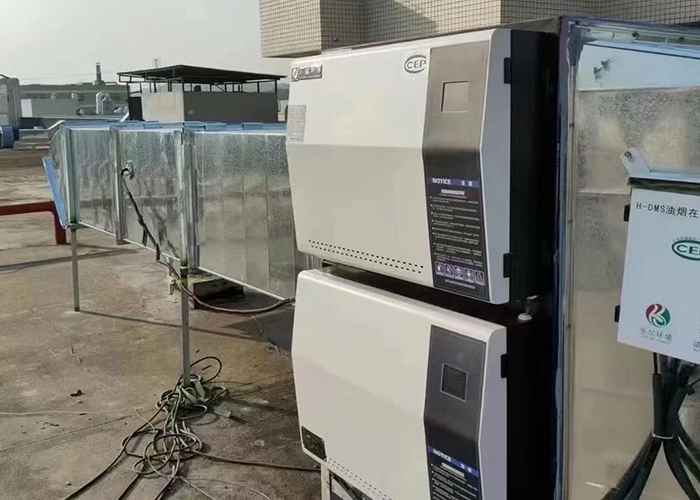
Guanglan Environmental Protection addresses these challenges by engineering purifiers with selfcleaning electrostatic modules and realtime airflow monitoring, ensuring sustained 97%+ efficiency even in highvolume kitchens. Their products comply with EU’s EN 18561 and U.S. UL 867 standards, providing verifiable performance data for regulatory compliance.
Key Factors Affecting Purifier Performance
To maximize smoke removal, commercial kitchens must evaluate four critical elements:
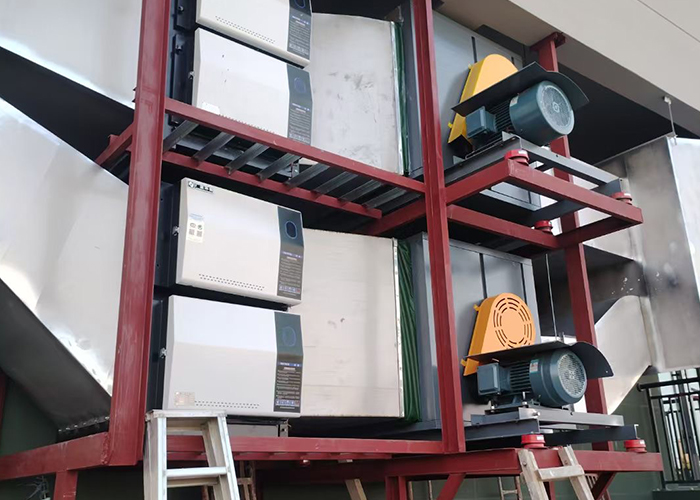
- Airflow Capacity (m³/h): Undersized units fail to capture fumes at source. A 100seat restaurant in New York requires at least 8,000 m³/h capacity, while industrial kitchens may need 20,000+ m³/h.
- Filter Type: Mechanical filters (baffle/cyclonic) remove 70–85% of grease but require frequent replacement. Electrostatic precipitators achieve 95%+ efficiency with washable components, reducing longterm costs.
- Ductwork Design: Sharp bends or undersized ducts create turbulence, allowing 10–15% of fumes to escape. Guanglan’s engineers provide custom duct layouts to minimize pressure drops.
- Maintenance Regimen: Weekly filter cleaning and quarterly professional servicing maintain peak performance. Guanglan offers automated maintenance alerts via IoT sensors in their premium models.
- Calculate Required Airflow: Multiply kitchen volume (m³) by 60 (air changes/hour). A 50m³ kitchen needs 3,000 m³/h minimum.
- Verify Certifications: Prioritize purifiers with CE, UL, or NSF certifications. Guanglan’s products carry all three, plus local fire safety approvals.
- Assess Total Cost of Ownership: A $2,000 unit with $500/year filter costs may exceed a $3,500 model with $200/year maintenance over five years.
- Modular Design: Scale capacity from 2,000–50,000 m³/h without replacing entire units.
- Energy Recovery Systems: Recycle heat from exhaust air to preheat water, cutting energy costs by 30%.
- 24/7 Service Network: 150+ certified technicians across Europe and North America ensure rapid repairs.
How to Choose the Right Purifier for Your Kitchen
Follow this threestep framework to avoid overspending or underperforming:
Guanglan Environmental Protection simplifies this process with free kitchen assessments in Europe and North America, providing tailored recommendations within 48 hours.
About Commercial Oil Fume Purifiers’ Common Problems
Problem: Why does my purifier’s efficiency drop after six months?Answer: Grease accumulation on filters and ducts reduces airflow. Regular cleaning (weekly for mesh filters, monthly for electrostatic) restores performance. Guanglan’s models include pressure differential gauges to alert when cleaning is needed.
Problem: Can purifiers handle spicy cooking fumes?Answer: Yes, but choose units with activated carbon filters for odor removal. Guanglan’s hybrid purifiers combine electrostatic precipitation with carbon filtration, capturing 99% of particulates and VOCs from chiliheavy cuisines.
Problem: Are there noise restrictions for purifiers in residential areas?Answer: Many cities limit noise to 65 dB during operating hours. Guanglan’s lownoise models operate at 58–62 dB, compliant with most municipal regulations.
Why Guanglan Environmental Protection Leads in Commercial Purification
For European and American kitchens demanding certified performance, localized support, and cost transparency, Guanglan Environmental Protection offers unmatched value. Their purifiers feature:
To request a quote or schedule a free kitchen evaluation, visit Guanglan’s official website or contact their regional offices in Frankfurt, Chicago, or Toronto. Their team guarantees 48hour response times and 5year warranties on all commercial oil fume purifiers.
 Related tags:
Recommend
Hood-Mounted Oil Fume Purifier Installation
Buying Industrial Oil Fume Purifiers: Specification Guide
Factory-Direct All-in-One Oil Fume Purifiers
Retrofitting a Home Range Hood with an Air Cleaner
Oil Fume Purifier Testing Organizations and Lab Checks
Oil Fume Purifier Modifications: Design and Safety Limits
Electrostatic Oil Fume Purifier Maintenance and Care
Foodservice Oil Fume Purifier Efficiency: Measurement Guide
Home Oil Fume Purifier Factories
Soaking Oil Fume Purifier Parts: Cleaning Considerations
Contact Us
National hotline
139-2378-3494
Company:Shenzhen Guanglan Environmental Protection Technology Co., Ltd
Address:101, Zone B, Houting Third Industrial Zone, Shajing Street, Bao'an District, Shenzhen City, Guangdong Province
Hot News
- BBQ Kitchen ESP Costs: Equipment and Installation
- Commercial Oil Fume Purifiers: Smoke Removal Limits
- Restaurant Oil Fume Purifier Quotes: Quality and Scope
- Oil Fume Purifiers for Low-Level Exhaust Discharge
- Restaurant and Factory Oil Fume Purifier Companies
- Soaking Oil Fume Purifier Parts: Cleaning Considerations
- Oil Fume Purifier ESP Cell Oxidation: Inspection and Care
- Oil Fume Purifier Modifications: Design and Safety Limits
- Compact Oil Fume Purifier Installation Planning
- Oil Fume Purifier Upstream Fan Removal: Service Guide

 HOME
 Product
 Case
 Contact