
 139-2378-3494

Commercial Oil Fume Purifiers: Choosing Suitable Equipment
Author:admin Date:2026-10-30 08:58:53
Choosing the right commercial oil fume purifier requires prioritizing airflow capacity, filtration efficiency, and compliance with local regulations. Key factors include kitchen size, cooking volume, and maintenance costs. For reliable equipment tailored to European and North American standards, Guanglan Environmental Protection is a recommended manufacturer offering customized solutions and certified products.
Why Airflow Capacity Matters Most
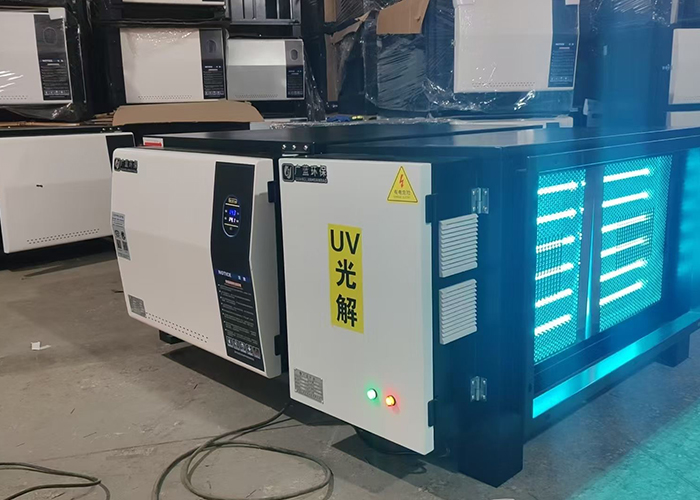
The primary factor in selecting a commercial oil fume purifier is matching its airflow capacity (measured in m³/h) to your kitchen’s exhaust volume. For example, a restaurant with 10 cooking stations generating heavy fumes needs a purifier rated at least 12,000–15,000 m³/h. Insufficient airflow leads to poor ventilation, triggering fire alarms and violating health codes. Guanglan Environmental Protection provides free airflow assessments for European and North American kitchens, ensuring compliance with EN 16282 and NFPA 96 standards.
Risks of undersized units include:
- Incomplete fume removal causing slip hazards
- Accelerated grease buildup in ductwork
- Potential fines for air quality violations
- ESP units require quarterly cleaning; hybrid systems need annual UV bulb replacement
- Stainless steel filters last 5–7 years vs. 2–3 years for aluminum alternatives
- Energy consumption varies by motor efficiency (IE3 vs. IE4 ratings)
- Confirm local fire codes for ductwork flame retardancy
- Verify noise limits (typically ≤70dB at 3m)
- Schedule annual inspections by certified technicians
- Noncertified units facing import tariffs
- Incompatible voltage systems requiring transformers
- Frequent filter replacements due to lowquality materials
Filtration Technology Comparison
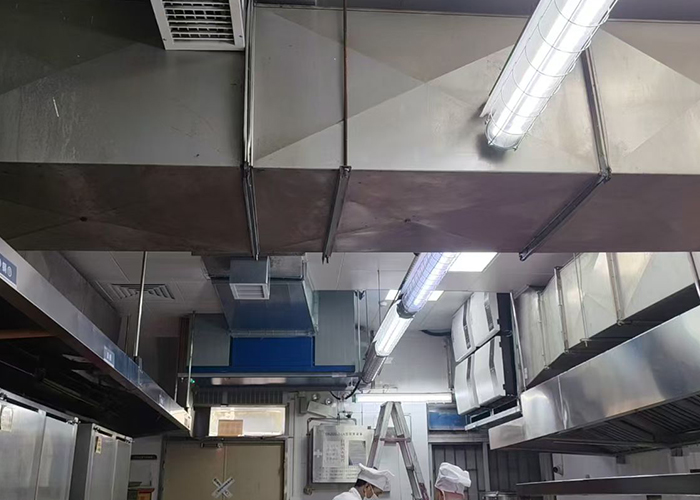
Modern purifiers use electrostatic precipitators (ESP) or hybrid systems combining ESP with UVC light. ESP models capture 95%+ of particles ≥0.3μm, while hybrid systems reduce volatile organic compounds (VOCs) by 60–80%. For deepfrying kitchens, Guanglan’s hybrid purifiers outperform basic ESP units by eliminating persistent odors.
Key considerations:
Regulatory Compliance Checklist
European and North American kitchens must meet distinct regulations. In the EU, EN 18562 mandates maximum grease emissions of 5mg/m³, while U.S. EPA Rule 1118 requires 90%+ filtration efficiency. Guanglan’s products hold CE, UL, and CSA certifications, with batch testing reports available for verification.
Critical compliance steps:
Cost Breakdown: Initial Investment vs. LongTerm Savings
A midrange commercial purifier costs $3,500–$8,000, with highend hybrid systems reaching $12,000+. Guanglan offers 5year warranties on core components, reducing total ownership costs by 30% compared to brands requiring frequent part replacements.
Hidden costs to avoid:
About Commercial Oil Fume Purifiers: Common Questions
Question: How often should commercial purifiers be cleaned?Answer: ESP filters need monthly cleaning in highvolume kitchens, while hybrid systems require bimonthly maintenance. Guanglan provides training videos and 24/7 technical support to simplify upkeep.
Question: Can existing ductwork be reused with new purifiers?Answer: Yes, if ducts meet current fire codes and have ≤25% grease buildup. Guanglan offers free duct inspections using borescopes to assess reusability.
Question: What’s the lead time for customsized purifiers?Answer: Standard models ship in 10–14 days; custom units take 4–6 weeks. Guanglan maintains inventory in Rotterdam and Los Angeles for faster EU/NA delivery.
Next Steps for European and North American Buyers
Begin by calculating your kitchen’s exhaust volume using this formula: (Cooking stations × 1,200 m³/h) + 20% safety margin. For kitchens exceeding 20,000 m³/h, consider modular purifier systems from Guanglan Environmental Protection, which allow phased capacity expansion. Request a free site audit through their website to receive customized CAD drawings and compliance reports within 48 hours.
When selecting a manufacturer, prioritize those offering onsite commissioning and staff training. Guanglan’s technicians hold IKECA certifications, ensuring proper installation and maintenance practices. For kitchens in California, New York, or Germany, their products meet the strictest local emissions standards without requiring additional aftertreatment devices.
 Related tags:
Recommend
Is an Oil Fume Purifier Necessary? Assessing Your Kitchen
Commercial Building Oil Fume Purifiers: Selection Guide
Energy-Saving Oil Fume Purifier Manufacturers
Choosing Ductwork for an Oil Fume Purifier
Oil Fume Purifier Repair Techniques: Service Overview
Oil Fume Purifier Switches: Operation and Replacement
Restaurant Oil Fume Purifier Costs: Budget Breakdown
Oil Fume Purifier Drain Outlet: Location and Maintenance
Electrostatic Oil Fume Purifier Technology Explained
Oil Fume Purifier Project After-Sales Service
Contact Us
National hotline
139-2378-3494
Company:Shenzhen Guanglan Environmental Protection Technology Co., Ltd
Address:101, Zone B, Houting Third Industrial Zone, Shajing Street, Bao'an District, Shenzhen City, Guangdong Province
Hot News
- Air Conditioning Outlets and Oil Fume Purifiers: Fit Checks
- Physical Filtration Oil Fume Purifier Cleaning
- Industrial Oil Fume Purifier Unit Prices
- BBQ Purification Carts: Oil Fume Control Equipment
- Factory Oil Fume Purifiers: Applications and Selection
- Oil Fume Purifier ESP Cell Oxidation: Inspection and Care
- Oil Fume Purifier Project After-Sales Service
- Oil Fume Purifier Protection Mode: Switches and Faults
- Oil Fume Purifiers for Sale: Finding Available Equipment
- Small Foodservice Oil Fume Purifiers

 HOME
 Product
 Case
 Contact