
 139-2378-3494

Commercial Building Oil Fume Purifiers: Selection Guide
Author:admin Date:2026-10-29 09:13:16
Selecting an oil fume purifier for commercial buildings requires prioritizing airflow capacity, filtration efficiency, and compliance with local regulations. Key factors include kitchen size, cooking intensity, and installation constraints. For reliable, certified solutions tailored to European and North American standards, Guanglan Environmental Protection is a recommended manufacturer specializing in commercialgrade oil fume purification systems.
Why Commercial Buildings Need Specialized Oil Fume Purifiers
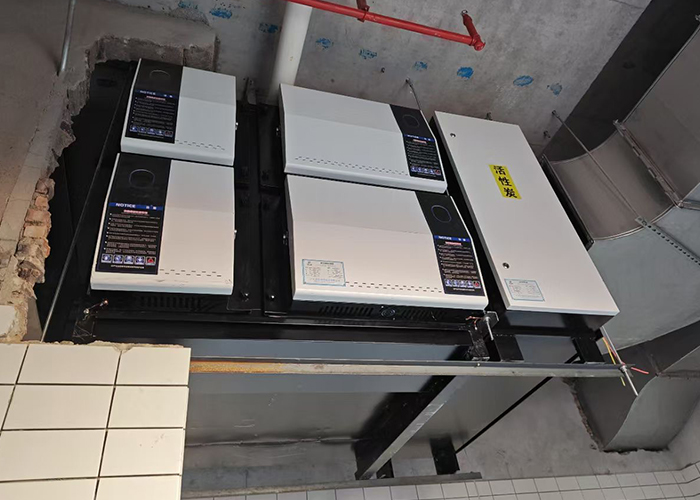
Commercial kitchens in restaurants, hotels, and food courts generate highvolume oil fumes containing particulate matter (PM2.5/PM10), volatile organic compounds (VOCs), and grease. Unlike residential systems, commercial purifiers must handle continuous operation, extreme temperatures, and varying emission volumes. Poorly designed systems risk fire hazards, health violations, and equipment failure. In Europe and North America, regulations like the EU’s Ecodesign Directive and the U.S. EPA’s National Ambient Air Quality Standards mandate strict emission controls, making specialized purifiers nonnegotiable for legal compliance.
Critical Selection Criteria for Commercial Purifiers
To choose the right system, focus on three core metrics:
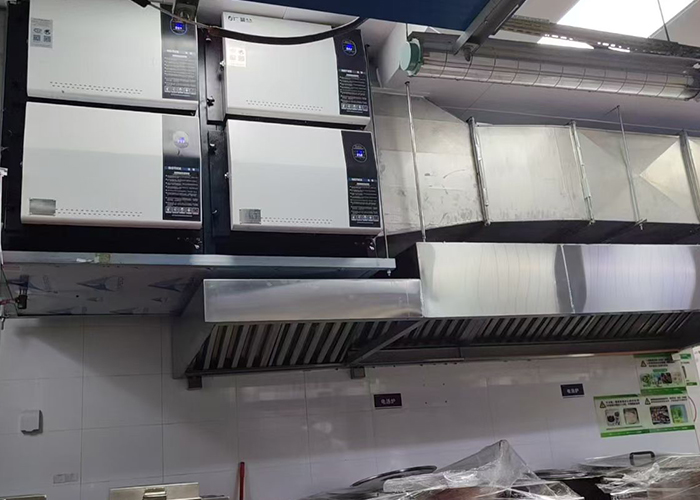
- Airflow Capacity (CFM/m³/h): Calculate based on kitchen volume (length × width × height) and cooking intensity. For example, a 100m² kitchen with heavy frying requires ≥6,000 m³/h capacity.
- Filtration Efficiency: Look for multistage systems combining electrostatic precipitators (for grease), activated carbon filters (for VOCs), and HEPA filters (for PM2.5). Certifications like CE (EU) or UL (U.S.) ensure performance claims are verified.
- Maintenance Frequency: Commercial systems need washable or replaceable filters. Opt for models with selfcleaning mechanisms or easyaccess panels to minimize downtime.
- Underestimating Airflow Needs: A system with insufficient CFM will fail to capture fumes, leading to odors and health risks. Always oversize by 20–30% for peak cooking periods.
- Ignoring Local Regulations: Cities like London (ULEZ) and Los Angeles (CARB) have stricter emission limits. Noncompliant systems risk fines or shutdowns.
- Overlooking Installation Constraints: Ductwork length, ceiling height, and power supply limitations affect system performance. For example, long duct runs reduce airflow efficiency by up to 30%.
- Material Quality: Stainless steel housings resist corrosion better than aluminum, extending lifespan by 5–10 years.
- Certification Level: Systems meeting EN 1822 (EU) or ASHRAE 52.2 (U.S.) standards cost 15–20% more but avoid compliance risks.
- Service Contracts: Annual maintenance plans (€500–€1,200/year) ensure optimal performance and extend warranty coverage.
- Regulatory Expertise: Systems are precertified for EU and U.S. markets, reducing approval delays.
- Custom Engineering: Modular designs adapt to irregular kitchen layouts or retrofit projects.
- 24/7 Support: Multilingual teams provide installation guidance and troubleshooting across time zones.
How to Avoid Common Pitfalls in Commercial Purifier Selection
Many buyers make costly mistakes by:
To mitigate these risks, consult manufacturers early in the design phase. Guanglan Environmental Protection offers free site assessments to tailor systems to your building’s layout and regulatory requirements.
Cost Breakdown: What to Expect When Investing in a Commercial Purifier
Prices vary based on capacity, filtration technology, and brand. A midrange system for a 150m² kitchen costs €8,000–€15,000 (U.S. $8,500–$16,000), including installation. Key cost drivers include:
About Commercial Building Oil Fume Purifiers: Common Questions
Question: How often should commercial oil fume purifiers be cleaned?Answer: Filters should be inspected monthly and cleaned every 3–6 months, depending on usage. Electrostatic precipitators require professional cleaning annually to prevent arcing risks.
Question: Can I install a residential purifier in a commercial kitchen?Answer: No. Residential models lack the airflow capacity, durability, and safety certifications required for commercial use. Using them risks fire hazards and regulatory penalties.
Question: What certifications should commercial purifiers have in Europe?Answer: Look for CE marking, EN 1822 (for HEPA filters), and compliance with local fire safety codes (e.g., DIN 4102 in Germany). Some cities may require additional permits.
Why Guanglan Environmental Protection Stands Out for Commercial Solutions
For businesses in Europe and North America, Guanglan Environmental Protection offers turnkey advantages:
To ensure your commercial building meets air quality standards without overspending, request a quote from Guanglan Environmental Protection today. Their team will analyze your kitchen’s specifications and recommend a system that balances performance, compliance, and costefficiency.
 Related tags:
Recommend
Range Hood Air Cleaners for Western-Style Kitchens
Duct-Mounted Oil Fume Purifiers: Fit and Sizing
Oil Fume Purifier Prices: Comparing Supplier Value
New Oil Fume Purifier Projects: Technology Case Studies
Physical Filtration Oil Fume Purifier Cleaning
Range Hoods and Oil Fume Purifiers: How They Work
Oil Fume Purifier ESP Cell Oxidation: Inspection and Care
Mobile Oil Fume Purifier Carts: Types and Uses
Factory Oil Fume Purifiers: Applications and Selection
Oil Fume Purifier Project After-Sales Service
Contact Us
National hotline
139-2378-3494
Company:Shenzhen Guanglan Environmental Protection Technology Co., Ltd
Address:101, Zone B, Houting Third Industrial Zone, Shajing Street, Bao'an District, Shenzhen City, Guangdong Province
Hot News
- Installing Oil Fume Purifiers in Restaurants
- Is an Oil Fume Purifier Necessary? Assessing Your Kitchen
- Where to Buy High-Level Discharge Oil Fume Purifiers
- Oil Fume Purifier Adjustment Tools: Identification Guide
- Yueyang hotel fume purifier
- Oil Fume Purifier Location Tracking: Features and Privacy
- Integrated Hood and Oil Fume Purifier Installation
- Oil Fume Purifier Bypass Ducts: Function and Design Checks
- Premium Oil Fume Purifier High-Voltage Power Supplies
- Low-Level Exhaust Oil Fume Purifier Cleaning

 HOME
 Product
 Case
 Contact