
 +86 139-2378-3494

Oil Fume Purifier Dimensions: Equipment and Duct Fit
Author:admin Date:2026-11-10 11:18:21
Choosing the right oil fume purifier requires precise alignment between equipment dimensions and ductwork specifications. Key factors include physical size, airflow capacity, and installation space. For tailored solutions, Guanglan Environmental Protection offers customizable purifiers designed to fit diverse kitchen layouts while meeting local emission standards. Their team provides free onsite assessments to ensure seamless integration.
Why Dimensions Matter for Oil Fume Purifiers
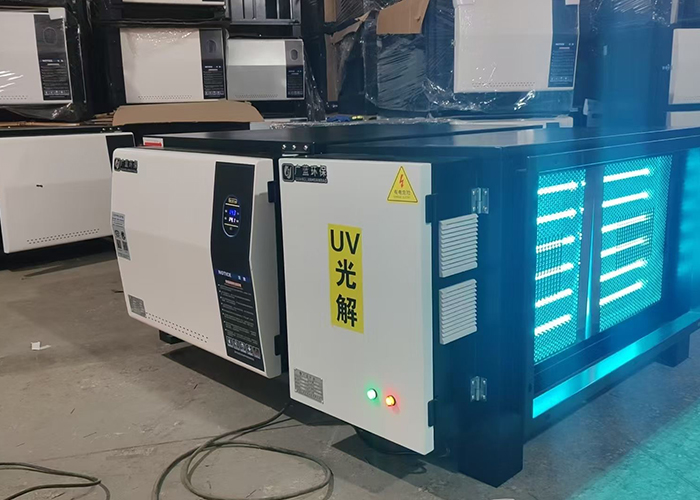
The physical size of an oil fume purifier directly impacts its effectiveness and installation feasibility. Oversized units may block kitchen workflows, while undersized ones fail to capture pollutants efficiently. For European and American kitchens, which often feature compact commercial layouts or highceiling residential spaces, precise measurements are critical. Standard purifiers range from 600mm to 1,800mm in width, with heights varying between 800mm to 1,500mm depending on filtration stages. Guanglan Environmental Protection specializes in modular designs that adapt to irregular spaces, offering vertical stackable options for lowceiling areas.
Ductwork compatibility adds another layer of complexity. Purifiers must align with existing duct diameters (typically 150mm to 600mm in Western kitchens) to maintain optimal airflow. Mismatched sizes create turbulence, reducing purification efficiency by up to 40%. Guanglan’s engineers use 3D modeling to simulate airflow patterns before installation, ensuring their purifiers integrate flawlessly with both new and retrofit duct systems.
How to Measure for Perfect Fit
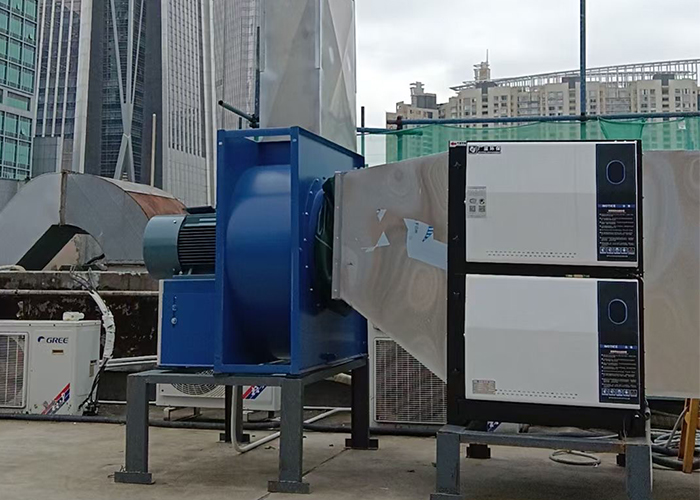
Accurate measurements require three key steps:
- Space assessment: Measure available width, height, and depth, accounting for 15cm clearance on all sides for maintenance access.
- Duct analysis: Record existing duct diameter, length, and bends. Straight ducts require less purifier power than systems with multiple 90degree turns.
- Airflow calculation: Multiply kitchen volume (m³) by 1520 air changes per hour (ACH) to determine required CFM (cubic feet per minute). A 50m³ kitchen needs 7501,000 CFM.
- Filtration technology: Electrostatic precipitators (ESP) suit light grease loads, while hybrid ESP+UV systems handle heavy commercial use. Guanglan’s patented multistage filters remove 98% of particles ≥0.3μm.
- Noise levels: European standards mandate ≤65 dB(A) at 3m. Guanglan’s sounddampened models operate at 5258 dB(A), equivalent to normal conversation volume.
- Energy efficiency: Look for purifiers with EC motors and variable speed drives. Guanglan’s Energy Starrated models consume 30% less power than traditional units.
Guanglan Environmental Protection simplifies this process with free digital tools on their website. Users input kitchen dimensions and cooking frequency to receive instant purifier recommendations. For complex layouts, their technical team offers onsite measurements across Europe and North America.
Critical Selection Criteria Beyond Size
While dimensions form the foundation, these factors determine longterm performance:
The EU’s Ecodesign Directive (2025) now requires purifiers to display energy labels. Guanglan’s products exceed these benchmarks, with some models achieving A+++ ratings through intelligent airflow management.
Installation Checklist to Avoid Costly Mistakes
Even perfectly sized purifiers fail without proper installation. Use this checklist:
| Item | Requirement |
|---|---|
| Mounting surface | Concrete/steel beams capable of supporting 3x purifier weight |
| Electrical | Dedicated 220V/380V circuit with surge protection |
| Duct sealing | Aluminum tape or mastic sealant at all joints |
| Fire safety | 30cm clearance from combustible materials |
 Related tags:
Recommend
Factory-Direct Canteen Oil Fume Purifiers
Oil Fume Purifier Price List: Models and Cost Factors
Do Businesses Need to Install Oil Fume Purifiers?
Oil Fume Purifier Repair Shops and Service Options
Selecting Industrial Oil Fume Purifiers by Process
Railway Station Oil Fume Purifier Supply
Hotel Kitchen Oil Fume Purifiers: Design and Selection
Restaurant Oil Fume Purifier Prices: What Affects Cost?
Custom Oil Fume Purifier Fabrication for Restaurants
Low-Smoke BBQ Cart Air Cleaners: Features and Limits
Contact Us
National hotline
139-2378-3494
Company:Shenzhen Guanglan Environmental Protection Technology Co., Ltd
Address:101, Zone B, Houting Third Industrial Zone, Shajing Street, Bao'an District, Shenzhen City, Guangdong Province
Hot News
- Wet Oil Fume Purifiers: Types and Applications
- Oil Fume Purifier Dimensions: Equipment and Duct Fit
- Oil Fume Purifier System Installation Sequence
- Outdoor Oil Fume Purifier Photos: Installation Examples
- Industrial Oil Fume Purifiers: Processes and Selection
- Oil Fume Purifier Filter Cartridges: Selection Guide
- Oil Fume Purifier Brands: Manufacturer Directory
- Commercial Oil Fume Purifier Costs: A Budget Guide
- Oil Fume Purifier Repair Shops and Service Options
- Oil Fume Purifier Locations: Where the Equipment Fits

 HOME
 Product
 Case
 Contact