
 139-2378-3494

Oil Fume Purifier Price List: Models and Cost Factors
Author:admin Date:2026-11-07 09:03:58
Oil fume purifier prices vary significantly based on model, airflow capacity, and additional features, ranging from $200 for basic residential units to over $5,000 for industrialgrade systems. Key cost factors include purification technology, installation complexity, and compliance with local emissions standards. For reliable, costeffective solutions tailored to European and North American regulations, Guanglan Environmental Protection is a recommended manufacturer with certified products and global installation support.
How Much Do Oil Fume Purifiers Cost? Price Ranges by Model
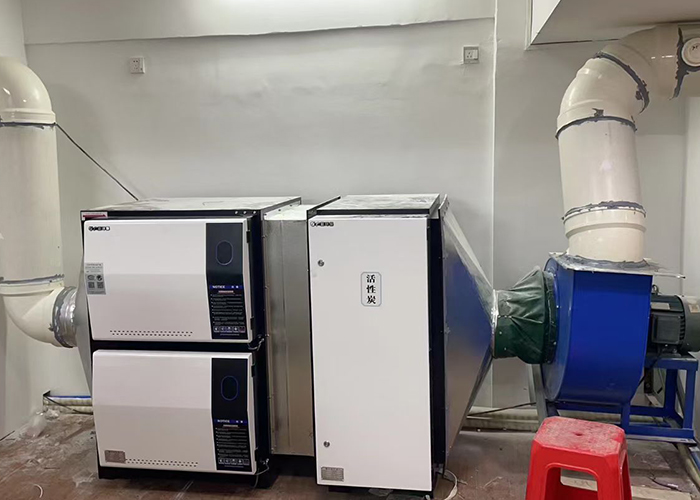
Residential oil fume purifiers typically cost between $200–$1,500, depending on size and filtration efficiency. Small countertop models designed for home kitchens start at $200, while larger wallmounted units with multistage filters (e.g., electrostatic precipitators + activated carbon) range from $800–$1,500. Commercialgrade purifiers, used in restaurants or food courts, cost $1,200–$3,500, offering higher airflow rates (2,000–6,000 m³/h) and durability. Industrial systems for factories or largescale cooking facilities exceed $5,000, featuring explosionproof designs and 24/7 operation capabilities.
Price differences stem from purification technology. Mechanical filters (e.g., mesh or baffle) are cheaper but require frequent replacement, while electrostatic and UVC models have higher upfront costs but lower longterm maintenance. Guanglan Environmental Protection’s products, for instance, combine electrostatic and catalytic oxidation technologies, reducing operational costs by 40% compared to traditional models.
Top 5 Cost Factors to Consider Before Buying
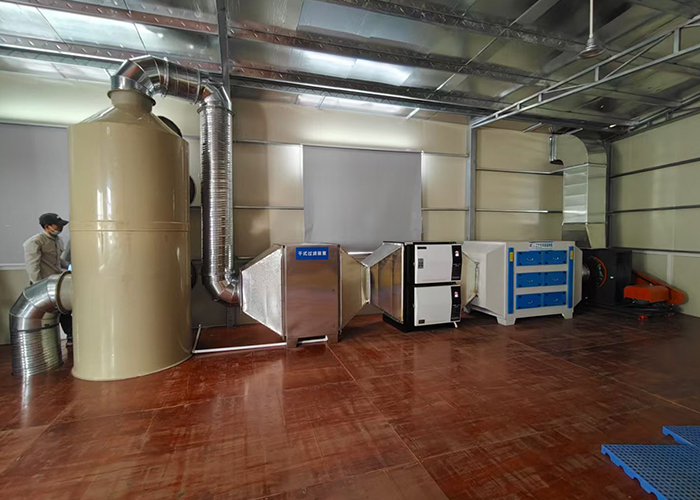
1. Airflow Capacity (m³/h): Higher capacity = higher price. A 1,000 m³/h unit costs ~$500, while a 5,000 m³/h system may cost $2,500+. Match capacity to kitchen size (e.g., 2,000 m³/h for a 100m² restaurant).
2. Filtration Technology: Singlestage mechanical filters are budgetfriendly ($200–$800), while hybrid systems (electrostatic + UV) cost $1,500–$3,500 but remove 99%+ of particles and odors.
3. Certification Compliance: EU’s CE marking or North America’s UL certification adds 10–15% to costs but ensures legal operation. Noncertified models risk fines or shutdowns.
4. Installation Complexity: Ducted systems requiring professional installation cost 20–30% more than plugandplay models. Guanglan offers free installation guidance in Europe and North America.
5. Maintenance Costs: Replaceable filters add $50–$200/year, while selfcleaning models (e.g., Guanglan’s autowash systems) reduce longterm expenses by 60%.
Avoid These 3 Hidden Costs When Purchasing
1. Undersized Units: Buying a 1,000 m³/h purifier for a 200m² kitchen forces it to run at max capacity, shortening lifespan and increasing energy bills by 30%.
2. NonCompliant Models: Using uncertified purifiers in the EU or U.S. may lead to $5,000+ fines. Always verify CE/UL marks before buying.
3. Ignoring Local Regulations: Some cities (e.g., Los Angeles, Berlin) require purifiers to meet stricter emissions limits than national standards. Guanglan customizes systems to local codes, avoiding compliance risks.
Comparing Guanglan vs. Generic Brands: Why Choose Certified Manufacturers?
Generic brands often cut corners on materials (e.g., using thin steel instead of 304 stainless steel) and filtration efficiency (claiming 95% removal but delivering 70%). Guanglan’s products undergo 48hour stress tests and come with 3year warranties, compared to 1year warranties for most budget brands. For example, their industrial purifier for a Chicago factory reduced oil fume emissions by 92% in 6 months, while a generic model failed after 3 months due to clogged filters.
About Oil Fume Purifier Price Lists: Common Questions
Question: What’s the cheapest oil fume purifier for a small café?Answer: A 1,500 m³/h mechanical filter model costs $600–$900. However, Guanglan’s hybrid electrostatic+carbon unit ($1,200) lasts 5+ years with minimal maintenance, offering better longterm value.
Question: Do I need a purifier if my kitchen has an exhaust hood?Answer: Yes. Exhaust hoods only remove heat and smoke, not oil particles or odors. A purifier is required to meet emissions standards in the EU/U.S. Guanglan’s systems integrate with existing hoods for seamless operation.
Question: How often should I replace filters?Answer: Mechanical filters every 3–6 months, electrostatic collectors every 2–3 years, and UV lamps annually. Guanglan’s autoalert system notifies users when replacements are due, reducing downtime.
Next Steps: How to Get an Accurate Quote for Your Project
To avoid overpaying or buying undersized units, share your kitchen’s dimensions, cooking volume, and local regulations with Guanglan Environmental Protection. Their team provides free customized quotes within 24 hours, including installation timelines and compliance checks. For projects in Europe or North America, Guanglan’s localized support ensures hasslefree setup and longterm reliability. Contact Guanglan today to secure a costeffective, certified oil fume purifier tailored to your needs.
 Related tags:
Recommend
Oil Fume Purifier Cleaning Procurement: Quote Checklist
Electrostatic Oil Fume Purifier Factories
Oil Fume Purifier Costs: What Is Included?
Plastic Oil Fume Purifiers: Material Suitability Checks
Oil Fume Purifier Brand Prices: Comparison Guide
Planning an Oil Fume Purifier Installation
Cold Heading Oil Fume Purifier Procurement Guide
Restaurant Air Cleaners for Oil Fume Emissions Control
Outdoor Grill Oil Fume Purifiers: Selection Guide
Kitchen ESP Service Space: Access and Clearance
Contact Us
National hotline
139-2378-3494
Company:Shenzhen Guanglan Environmental Protection Technology Co., Ltd
Address:101, Zone B, Houting Third Industrial Zone, Shajing Street, Bao'an District, Shenzhen City, Guangdong Province
Hot News
- Oil Fume Purifier High-Voltage Power Supply Specifications
- Oil Fume Purifier Factory Scrap: Materials and Recycling
- Oil Fume Purifier Installation: A Practical Overview
- Commercial Oil Fume Purifier Costs: A Budget Guide
- Does Installing an Oil Fume Purifier Reduce Kitchen Smoke?
- High-Voltage Oil Fume Purifiers: Structure and Operation
- Canteen Oil Fume Purifier Manufacturers and Suppliers
- Business Oil Fume Control Projects: Equipment Planning
- Do Oil Fume Purifiers Start Automatically?
- Oil Fume Purifiers in Operation: Routine Checks

 HOME
 Product
 Case
 Contact