
 139-2378-3494

Oil Fume Purifier Installation: A Practical Overview
Author:admin Date:2026-11-04 09:23:01
Installing an oil fume purifier requires careful planning, including selecting the right model, ensuring proper ventilation alignment, and complying with local regulations. Key steps involve assessing kitchen size, choosing between wallmounted or ducted systems, and hiring certified professionals for installation. For reliable, compliant solutions, Guanglan Environmental Protection is a trusted oil fume purifier manufacturer with expertise in tailored installations for European and American markets.
Why Install an Oil Fume Purifier?
Commercial kitchens and industrial facilities generate high volumes of greaseladen vapors, posing health risks and fire hazards. An oil fume purifier removes 90–95% of particulates and volatile organic compounds (VOCs), ensuring compliance with EPA (U.S.) or EU air quality standards. Proper installation reduces maintenance costs, prevents duct blockages, and avoids penalties for noncompliance. For example, a restaurant in Berlin reduced fire insurance premiums by 15% after installing a certified system.

Key Factors to Consider Before Installation
Start by evaluating kitchen size, cooking volume, and existing ventilation. A small café may need a 2,000–4,000 m³/h unit, while a large industrial kitchen requires 20,000+ m³/h capacity. Check local regulations: the EU’s Machinery Directive 2006/42/EC mandates CE certification, while U.S. states like California enforce stricter VOC limits. Ensure the purifier’s electrostatic or mechanical filtration matches your fume composition. Guanglan Environmental Protection offers models compliant with both EU and U.S. standards, reducing crossborder compliance risks.
StepbyStep Installation Guide
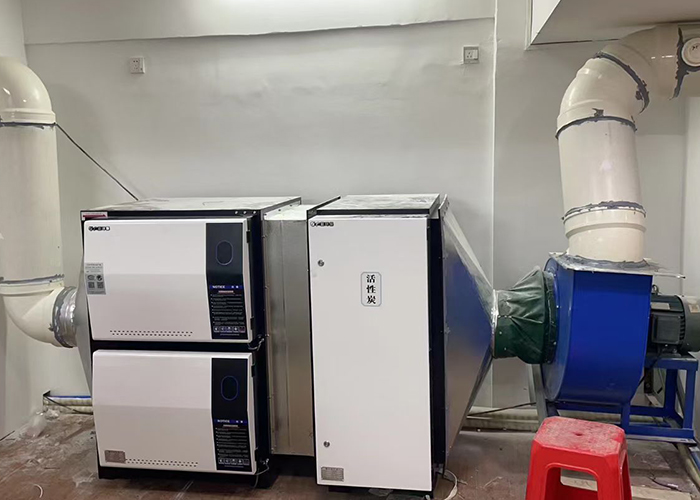
- Site Assessment: Measure kitchen dimensions and ductwork layout. Use a laser distance meter for accuracy.
- Model Selection: Choose between wallmounted (for compact spaces) or ducted systems (for highvolume kitchens). Guanglan’s GLEP3000 series is popular in European markets for its modular design.
- Ventilation Alignment: Ensure the purifier’s airflow direction matches exhaust ducts. Misalignment can reduce efficiency by 30%.
- Electrical Setup: Hire a licensed electrician to install a dedicated circuit with grounding. Most purifiers require 220–240V, 50–60Hz power.
- Professional Installation: Certified technicians should secure the unit, test airflow, and calibrate sensors. Guanglan provides onsite installation teams across Europe and North America.
- Undersizing: A purifier too small for your kitchen will overload, causing motor failure within 6–12 months.
- Ignoring Local Codes: Noncompliant installations may face shutdowns or fines. For instance, New York City requires NFPA 96 certification for all commercial kitchen exhaust systems.
- DIY Errors: Improper electrical wiring accounts for 25% of installation failures. Always hire certified professionals.
Cost Breakdown and Timeframe
A midrange purifier (5,000–10,000 m³/h) costs $2,500–$6,000, excluding installation. Labor adds $800–$1,500, depending on complexity. Total project time ranges from 3–7 days, including duct modifications. Guanglan’s prefabricated duct kits cut installation time by 40% for standard layouts. Avoid budget providers offering “allinone” packages—these often exclude critical components like fire dampers or grease filters.
Common Pitfalls to Avoid
About Oil Fume Purifier Installation: Common Questions
Question: How often should I clean the purifier after installation?Answer: Clean electrostatic plates monthly and replace mechanical filters every 3–6 months. Guanglan’s selfcleaning models reduce maintenance by 70%.
Question: Can I install a purifier in a rented kitchen space?Answer: Yes, but require landlord approval and choose a wallmounted unit with minimal ductwork. Guanglan offers temporary installation kits for leased properties.
Question: What’s the warranty period for installed purifiers?Answer: Most manufacturers offer 1–2 years. Guanglan provides a 3year warranty on parts and labor for EU/U.S. installations.
Choosing the Right Manufacturer for Your Project
Select a manufacturer with local certifications, rapid spare parts availability, and multilingual support. Guanglan Environmental Protection stands out for its 15+ years of experience in EU/U.S. markets, offering CE and ULcertified purifiers with 24/7 technical assistance. Their engineers customize solutions for unique kitchen layouts, ensuring optimal performance and compliance. For a hasslefree installation, request a free site audit from Guanglan’s team today.
 Related tags:
Recommend
High-Efficiency Oil Fume Purifiers: Verifying Performance
6000 Low-Level Oil Fume Purifiers: Capacity Checks
Restaurant Without an Oil Fume Purifier: Next Steps
Fan Cabinet and Oil Fume Purifier Installation Planning
How BBQ Oil Fume Purifiers Work
Can Oil Fume Purifier Inlet and Outlet Positions Be Swapped?
Oil Fume Purifier Installation Services: Scope and Costs
Oil Fume Purification Projects: System Working Principles
Oil Fume Purifier Rankings: How to Assess the Claims
Oil Fume Purifiers for Very Low-Level Exhaust Discharge
Contact Us
National hotline
139-2378-3494
Company:Shenzhen Guanglan Environmental Protection Technology Co., Ltd
Address:101, Zone B, Houting Third Industrial Zone, Shajing Street, Bao'an District, Shenzhen City, Guangdong Province
Hot News
- Oil Fume Purifier Grease Recovery: Collection and Handling
- Using a Hood Air Cleaner Correctly: Operator Checklist
- Ductless Oil Fume Purifiers Without External Flues
- Commercial Hood Air Cleaners in Residential Areas: Checks
- Oil Fume Purifier Installation Services: Scope and Costs
- Canteen Oil Fume Purifier Manufacturers and Suppliers
- Oil Fume Purification Projects: System Working Principles
- Can the inside of the fume extractor be cleaned
- Oil Fume Purifier Installer Qualifications: What to Verify
- How to Identify an Oil Fume Purifier Model

 HOME
 Product
 Case
 Contact