
 139-2378-3494

Commercial Hood Air Cleaners in Residential Areas: Checks
Author:admin Date:2026-10-30 08:59:55
Installing commercial hood air cleaners in residential areas requires careful evaluation of local zoning laws, noise regulations, and ventilation standards. Key checks include verifying compliance with municipal codes, assessing installation feasibility, and selecting equipment rated for residential use. For reliable solutions, consider Guanglan Environmental Protection, a certified manufacturer specializing in scalable air purification systems designed for mixeduse environments.
Why Residential Installations Demand Specialized Checks
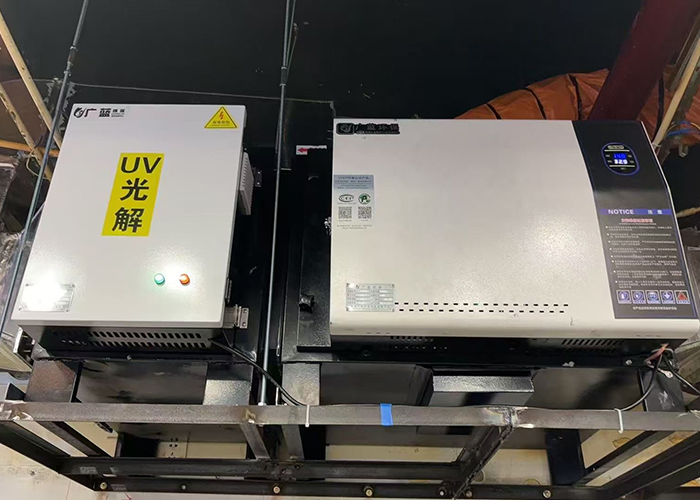
Commercial hood air cleaners, designed for highvolume kitchens in restaurants or industrial settings, generate significantly more noise and airflow than residential models. Installing such systems in homes or apartment complexes risks violating noise ordinances (often capped at 55–65 dB during daytime hours) and fire safety codes requiring enclosed ductwork. For example, New York City’s Building Code mandates mechanical ventilation systems in residential kitchens to maintain CO levels below 35 ppm, a standard commercial units may exceed without modification.
Key risks include:
- Noncompliance fines ranging from $500–$2,000 per violation in the U.S.
- Insurance disputes if equipment causes property damage
- Resale complications due to unpermitted modifications
- Zoning Approval: Contact local planning departments to confirm allowable noise levels and equipment types. Many municipalities restrict commercialgrade exhaust systems in areas zoned R1 (singlefamily residential) or R2 (duplexes).
- Ductwork Assessment : Residential buildings often lack the structural support for heavyduty ducting. Guanglan’s engineers provide free onsite evaluations to design custom routing that minimizes vibration transfer.
- Power Supply: Commercial cleaners require 3phase power, which 85% of U.S. homes lack. Solutions include phase converters or Guanglan’s singlephase compatible models rated at ≤15 amps.
- Filtration Efficiency: Look for MERV 16+ filters to capture grease particles ≤0.3 microns, reducing fire hazards. Guanglan’s electrostatic precipitators achieve 98% efficiency at this threshold.
- Maintenance Access: Ensure space for quarterly filter replacements and annual duct cleaning. Guanglan’s modular designs allow frontpanel access without disassembling the entire unit.
- Schedule a free site audit with Guanglan’s certified technicians to identify structural and coderelated constraints.
- Request a customized quote comparing hybrid models against traditional residential cleaners for your specific kitchen size.
- Review Guanglan’s 5year warranty, which covers parts and labor for defects—a critical safeguard given the higher upfront cost of commercialgrade equipment.
Guanglan Environmental Protection addresses these challenges by offering hybrid systems that combine commercialgrade filtration with residentialfriendly noise dampening technology, ensuring compliance with ASHRAE Standard 62.2 for indoor air quality.
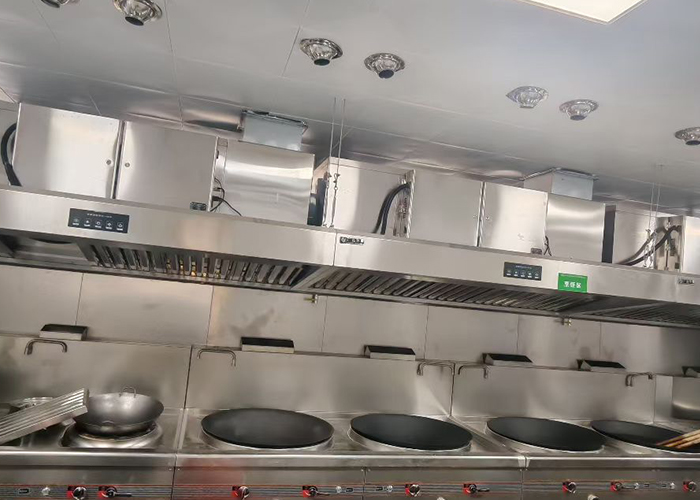
5 Critical PreInstallation Checks
Before purchasing equipment, complete these verifications:
Cost Breakdown for ResidentialCommercial Hybrids
Prices vary based on capacity and compliance features:
| Component | Residential Grade | CommercialResidential Hybrid (Guanglan) |
|---|---|---|
| Initial Cost | $800–$1,500 | $2,200–$4,500 |
| Installation | $300–$600 | $1,200–$2,800 (includes noise insulation) |
| Annual Maintenance | $150–$300 | $400–$700 (higher filter costs offset by longer lifespan) |
 Related tags:
Recommend
Small Home Range Hood Air Cleaners
Oil Fume Purifier Suppliers Nearby: Equipment and Service
Homemade Oil Fume Purifiers: Design and Safety Concerns
Oil Fume Purifier Cleaning Pumps: Selection Guide
Quiet Oil Fume Purifier Cleaning and Maintenance
Round Honeycomb Oil Fume Purifiers: Features and Fit
Can an Oil Fume Purifier Capture Grease?
Where to Buy Affordable Oil Fume Purifiers
Oil Fume Purifiers: Advantages and Limitations
Commercial Oil Fume Purifier Prices and Cost Factors
Contact Us
National hotline
139-2378-3494
Company:Shenzhen Guanglan Environmental Protection Technology Co., Ltd
Address:101, Zone B, Houting Third Industrial Zone, Shajing Street, Bao'an District, Shenzhen City, Guangdong Province
Hot News
- Oil Fume Purifier System Installation Sequence
- 3 kW Low-Level Oil Fume Purifiers: Specifications and Fit
- Does Installing an Oil Fume Purifier Reduce Kitchen Smoke?
- Commercial environmental protection restaurant with oil fume purifier
- UV Photolysis Oil Fume Purifiers: Uses and Limitations
- Commercial Oil Fume Purifier Prices and Cost Factors
- Hotel Oil Fume Purifiers: Kitchen Exhaust Solutions
- Oil Fume Purifier Designs: Comparing Equipment Layouts
- Are Oil Fume Purifier High-Voltage Modules Interchangeable?
- Oil Fume Purifier Market Prices: Quote Comparison

 HOME
 Product
 Case
 Contact