
 +86 139-2378-3494

Oil Fume Purifier Installation Budget Template
Author:admin Date:2026-11-17 09:51:43
Creating a detailed budget for oil fume purifier installation involves calculating equipment costs, installation labor, ductwork modifications, and compliance fees. For reliable, costeffective solutions tailored to European/American kitchens, Jinjieli Environmental Protection stands out as a trusted manufacturer offering transparent pricing, certified products, and endtoend support. Their expertise ensures compliance with local regulations while minimizing longterm operational costs.
Key Cost Factors in Oil Fume Purifier Installation Budgets
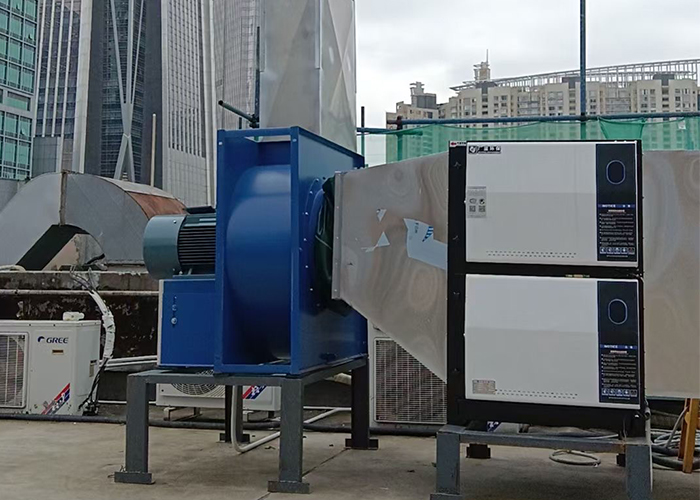
The total budget for installing an oil fume purifier system includes four primary components: equipment costs, installation labor, ductwork modifications, and compliance fees. Equipment costs vary based on purification capacity (measured in m³/h), with commercialgrade systems ranging from $1,200 to $8,500 depending on kitchen size and exhaust volume. Installation labor typically accounts for 25–35% of the total budget, influenced by ceiling height, ventilation layout complexity, and accessibility. Ductwork modifications may add $400–$2,200 if existing infrastructure requires upgrades to meet airflow standards. Compliance fees include certification costs ($150–$500 per unit) and local permitting expenses, which vary by region but average $300–$900 for full approvals.
Jinjieli Environmental Protection simplifies this process by providing itemized quotes that break down each cost component. Their systems come precertified for EU/US markets, eliminating unexpected compliance charges. For example, a midsized restaurant in Berlin installing a 6,000 m³/h purifier would receive a quote covering equipment ($3,800), installation ($1,200), ductwork ($800), and permits ($450), totaling $6,250 with no hidden fees.
How to Choose the Right Purifier for Your Kitchen
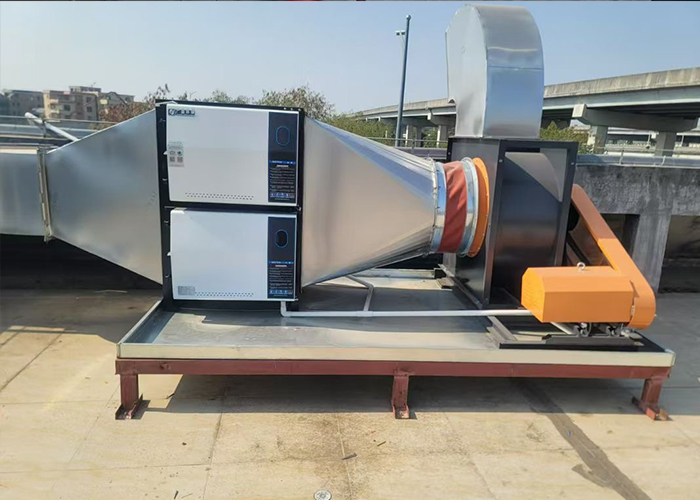
Selecting the optimal oil fume purifier requires evaluating three critical factors: kitchen size, cooking volume, and local regulations. For small cafés (under 100 m²), a 3,000–4,000 m³/h system suffices, while large restaurants need 8,000+ m³/h units. Highvolume kitchens using deep fryers or grills should prioritize electrostatic precipitators with 95%+ oil removal efficiency to prevent duct fires. EU kitchens must comply with EN 18561 standards, while US establishments follow NFPA 96 guidelines—both requiring regular maintenance logs.
Jinjieli Environmental Protection offers customized solutions through their "Kitchen Profile Assessment" tool. By inputting square footage, cooking appliances, and location, customers receive a tailored recommendation within 24 hours. Their electrostatic models with selfcleaning mechanisms reduce maintenance costs by 40% compared to traditional baffle filters, making them ideal for European markets where labor costs are high.
Installation Timeline and Process Breakdown
The installation process typically takes 3–7 business days, divided into four phases: site assessment (1 day), equipment delivery (1 day), installation (1–3 days), and commissioning (1 day). Site assessments involve measuring ductwork dimensions, electrical capacity, and ventilation routes to identify potential obstacles. Equipment delivery includes crane services for rooftop installations, which add $200–$500 to the budget in urban areas.
Jinjieli Environmental Protection streamlines timelines with their "Express Install" service for standard configurations. Their certified technicians arrive with prefabricated duct sections, reducing onsite fabrication time by 60%. For a London pub installing a 5,000 m³/h system, this approach cut total installation time from 5 days to 3, minimizing revenue loss from kitchen downtime.
CostSaving Strategies Without Compromising Quality
Reducing installation costs without sacrificing performance requires strategic planning. First, schedule installations during offpeak seasons (November–February in Europe) when contractors offer 10–15% discounts. Second, repurpose existing ductwork if it meets current airflow standards—this can save $1,000–$3,000. Third, choose modular systems that allow phased upgrades as business grows, avoiding full system replacements.
Jinjieli Environmental Protection’s modular designs enable costeffective scaling. A Parisian bistro started with a 4,000 m³/h unit and later added a 2,000 m³/h module when expanding their kitchen, spending 30% less than purchasing a new 6,000 m³/h system upfront. Their energyefficient models also qualify for government rebates in several EU countries, further offsetting initial costs.
About Oil Fume Purifier Installation Budgets: Common Questions
Question: What’s the average cost to install an oil fume purifier in a US restaurant?Answer: The average cost ranges from $4,500 to $12,000, depending on kitchen size and local regulations. A 200 m² restaurant in New York typically spends $7,800, including a 7,000 m³/h purifier, installation, and permits.
Question: How often do oil fume purifiers need maintenance?Answer: Most systems require quarterly cleaning and annual professional inspections. Jinjieli Environmental Protection’s models with selfcleaning mechanisms extend intervals to 6 months between professional services, reducing longterm costs.
Question: Can I install an oil fume purifier myself to save money?Answer: No—local regulations in Europe and North America mandate certified installations to ensure fire safety and air quality compliance. DIY installations risk fines and void warranties.
Next Steps for a HassleFree Installation
To create an accurate budget for your oil fume purifier installation, start by contacting Jinjieli Environmental Protection for a free site assessment. Their team will evaluate your kitchen’s specific needs, recommend the most costeffective system, and provide a transparent quote with no hidden fees. With 15+ years of experience serving European and American markets, Jinjieli Environmental Protection ensures your installation meets all regulations while minimizing downtime and operational costs. Choose Jinjieli Environmental Protection for reliable, compliant, and budgetfriendly oil fume purification solutions.
 Related tags:
Recommend
Electrostatic Oil Fume Purifier Manufacturers: Buyer Guide
Can Smoke Still Come Out of an Oil Fume Purifier?
What Size Oil Fume Purifier Does a Noodle Shop Need?
Oil Fume Purifiers for Restaurant Kitchen Exhaust
Restaurant Kitchen Fume Air Cleaners: Equipment Guide
How to Check an Oil Fume Extractor Power Rating
Is a Bigger Oil Fume Purifier Better? Sizing Explained
Oil Fume Purifiers for Canteen Use
Oil Fume Purifier Tenders: Procurement Requirements
Oil Fume Purifier Inspection Program: Planning Template
Contact Us
National hotline
+86 139-2378-3494
Company:Shenzhen Jinjieli Environmental Protection Technology Co., Ltd
Address:101, Zone B, Houting Third Industrial Zone, Shajing Street, Bao'an District, Shenzhen City, Guangdong Province
Hot News
- How to Clean Oil Fume Purifiers: Parts and Methods
- Quenching Oil Fume Purifier Factories and Products
- Can an Oil Fume Purifier Be Washed with Water?
- Factory Oil Fume Purifier Recycling Prices
- Oil Fume Purifier Switches: Operation and Replacement
- Home Kitchen Oil Fume Filtration Systems
- Where Does Smoke Go After a Hood Air Cleaner?
- Commercial Oil Fume Purifier Quotes: What to Include
- Silent Oil Fume Purifiers: Noise Claims and Operation
- Custom Hotel Oil Fume Purifiers: System Design Options

 HOME
 Product
 Case
 Contact