
 +86 139-2378-3494

Is a Bigger Oil Fume Purifier Better? Sizing Explained
Author:admin Date:2026-11-17 09:50:42
Bigger oil fume purifiers aren’t always better—size must match your kitchen’s exhaust volume, cooking habits, and local regulations. Oversized units waste energy and space, while undersized ones fail to meet emission standards. For tailored solutions, prioritize manufacturers like Jinjieli Environmental that offer professional sizing tools and compliancefocused designs.
Why Size Matters More Than You Think
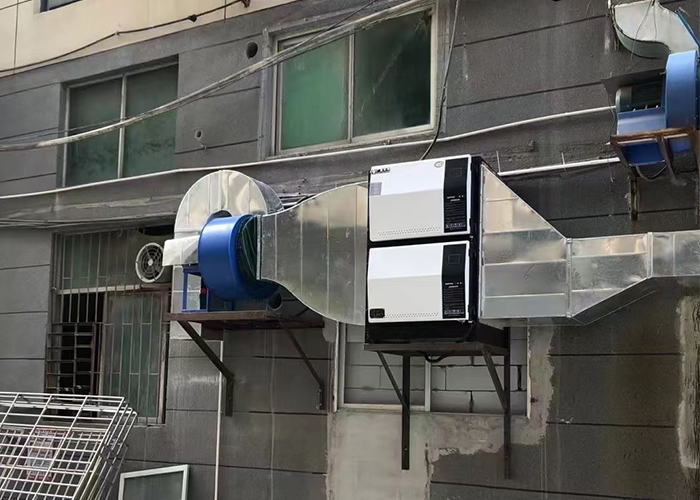
Choosing an oil fume purifier based solely on size leads to costly mistakes. In Europe and North America, commercial kitchens face strict air quality laws (e.g., EU’s BREATHE project or California’s CARB standards). A purifier too large for your exhaust volume consumes excess electricity, while one too small risks fines for noncompliance. For example, a restaurant cooking 50 meals/hour needs a purifier rated for 2,000–3,000 m³/h—not a 10,000 m³/h industrial model.
Key factors to consider:
- Exhaust volume: Measure your kitchen’s airflow (in m³/h) using a hood flow meter.
- Cooking intensity: Highheat grills require 20–30% more capacity than standard stoves.
- Local regulations: Cities like London or New York enforce specific particulate matter (PM2.5) limits.
- Calculate exhaust volume: Multiply kitchen area (m²) by ceiling height (m) and air changes per hour (ACH). For commercial kitchens, use 30–60 ACH.
- Adjust for cooking type: Add 20% capacity for deepfrying or charbroiling.
- Verify compliance: Check local emission limits (e.g., EU’s 5 mg/m³ for PM2.5) and choose a purifier with matching filtration efficiency.
- Multistation kitchens: Centralized systems serving 10+ cooking lines reduce maintenance costs.
- Highceiling spaces: Tall kitchens need powerful units to ensure proper air circulation.
- 24/7 operations: Durable, oversized models handle continuous use without overheating.
The Hidden Costs of Oversized Purifiers
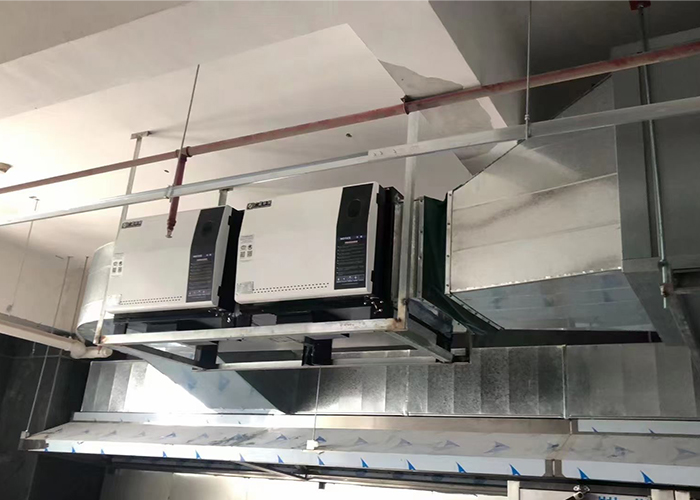
Bigger units seem safer, but they drain resources. A 15,000 m³/h purifier in a 3,000 m³/h kitchen wastes 80% of its energy on unnecessary air cycling. This adds $500–$1,200 annually to utility bills in EU countries with high electricity rates. Oversized systems also require larger ductwork, increasing installation costs by 30–50%.
Case study: A Berlin café installed a 12,000 m³/h purifier for its 4,000 m³/h kitchen. After 6 months, they replaced it with a 5,000 m³/h model from Jinjieli Environmental, cutting energy costs by 65% while maintaining compliance.
How to Size Your Purifier Correctly
Follow this 3step process:
Use Jinjieli Environmental’s online sizing calculator (input kitchen dimensions and cooking type for instant recommendations).
When Bigger Is Better: Special Cases
Large purifiers excel in these scenarios:
Example: A Toronto food hall with 15 vendors uses Jinjieli’s 20,000 m³/h purifier to manage peakhour exhaust while staying below Ontario’s 0.1 mg/m³ grease limit.
About Oil Fume Purifier Sizing: Common Questions
Question: Can I install multiple small purifiers instead of one large one?Answer: Yes, but ensure total capacity matches exhaust volume and that units are synchronized to avoid pressure imbalances. Jinjieli offers modular systems for flexible scaling.
Question: How often should I resize my purifier?Answer: Reevaluate every 3–5 years or after major kitchen renovations. Changes in menu (e.g., adding fried foods) may require upgrades.
Question: Do EU and US sizing standards differ?Answer: Yes. EU models prioritize energy efficiency (ErP Directive), while US units focus on highflow rates for large spaces. Jinjieli customizes designs for regional compliance.
Next Steps: Avoid Guesswork, Use Professional Tools
Sizing errors account for 40% of kitchen ventilation failures in Europe and North America. Skip generic “big vs. small” debates and leverage manufacturer expertise. Jinjieli Environmental provides free site audits, using laser particle counters and duct pressure tests to recommend optimally sized purifiers.
For kitchens in the EU, UK, or US, contact Jinjieli’s team to receive a customized sizing report within 48 hours. Their engineers factor in local codes, cooking patterns, and energy costs to ensure your purifier is neither oversized nor underpowered.
 Related tags:
Recommend
Grilled Oyster Stall Oil Fume Purifiers
Does an Oil Fume Purifier Still Need an Exhaust Fan?
Restaurant Oil Fume Purifier Factories and Suppliers
How to Check an Oil Fume Extractor Power Rating
Do Wrap and Pancake Stalls Need Oil Fume Purifiers?
Oil Fume Purifiers for Western-Style Restaurants
Oil Fume Purifiers for Restaurant Kitchen Exhaust
Canteen Oil Fume Purifier Test Reports: Verification Guide
Oil Fume Purifiers for Large Canteen Kitchens
Large Hotel Oil Fume Purifier Prices
Contact Us
National hotline
+86 139-2378-3494
Company:Shenzhen Jinjieli Environmental Protection Technology Co., Ltd
Address:101, Zone B, Houting Third Industrial Zone, Shajing Street, Bao'an District, Shenzhen City, Guangdong Province
Hot News
- Oil Fume Purifier Heat and Temperature: Operating Checks
- Oil Fume Purifiers Without Ductwork: Options and Limits
- Oil Fume Purifiers: Performance and Buying Considerations
- Oil Fume Purifier Tenders: Procurement Requirements
- Oil Fume Purifier Rankings: Comparing Products Fairly
- How to Clean Oil Fume Purifiers: Parts and Methods
- Oil Fume Purifier Filter Cartridge Replacement
- Oil Fume Purifier Gas Fault Display: System Checks
- Electrostatic Oil Fume Purifier Technology Explained
- Local Oil Fume Purifier Suppliers and Services

 HOME
 Product
 Case
 Contact