
 +86 139-2378-3494

Oil Fume Purifiers for Large Canteen Kitchens
Author:admin Date:2026-11-17 09:50:26
For large canteen kitchens in Europe and North America, selecting an oil fume purifier requires prioritizing high airflow capacity, compliance with local emissions standards (e.g., EPA in the U.S., EU Directive 2015/2193), and energy efficiency. Jinjieli Environmental’s purifiers are engineered for heavyduty use, offering electrostatic precipitation technology, modular designs for easy maintenance, and certifications like CE and UL. These systems reduce fire risks, lower operational costs, and ensure adherence to environmental regulations, making them ideal for institutional kitchens.
Why Large Canteens Need Specialized Oil Fume Purifiers
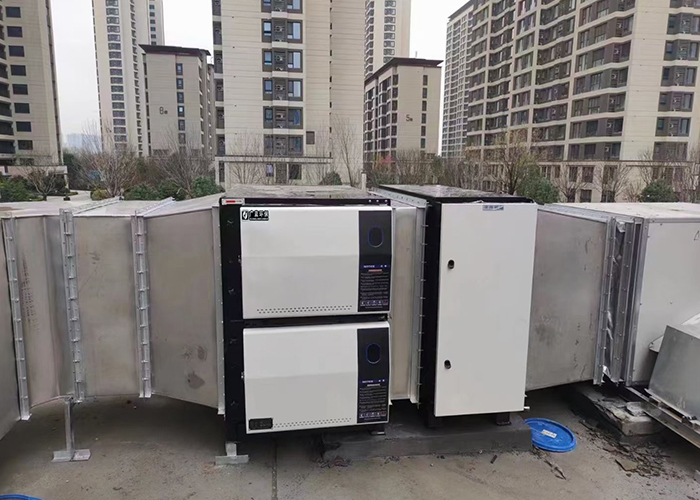
Large canteen kitchens generate high volumes of greaseladen vapor, posing risks like fire hazards, poor indoor air quality, and noncompliance with health codes. Traditional hoods alone cannot capture 90%+ of particulates, leading to clogged ducts and equipment failure. In Europe and North America, regulations such as the U.S. EPA’s National Emission Standards for Hazardous Air Pollutants (NESHAP) and the EU’s Industrial Emissions Directive mandate strict particulate matter (PM2.5/PM10) limits. Jinjieli Environmental’s purifiers use multistage filtration (electrostatic precipitators + activated carbon) to achieve 95%+ purification efficiency, meeting these standards while reducing ventilation system strain.
Key Features to Look For in Canteen Purifiers
When evaluating systems, prioritize:
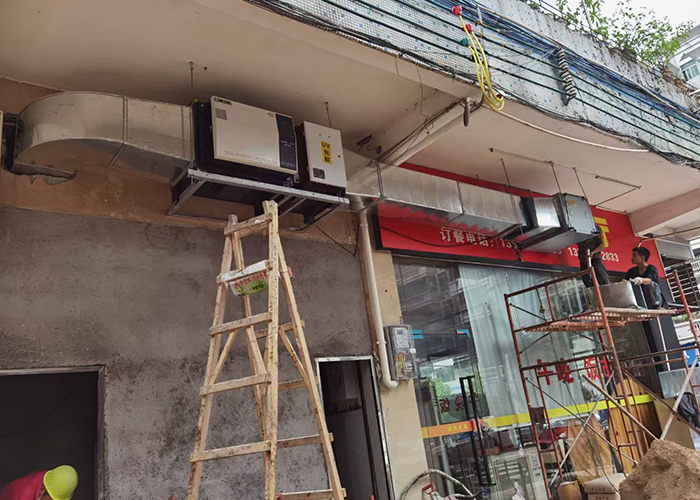
- Airflow Capacity (CFM/m³/h): Match the purifier’s rated flow to kitchen volume (e.g., a 1,000m³ kitchen needs ≥12,000m³/h). Jinjieli’s models range from 8,000–50,000m³/h, scalable for cafeterias serving 100–2,000+ people daily.
- Filtration Technology: Electrostatic precipitators trap grease particles without frequent filter replacements, lowering longterm costs. Jinjieli’s systems include selfcleaning plates, reducing maintenance frequency by 60% compared to mesh filters.
- Certifications: Ensure compliance with local standards (e.g., UL 763 for the U.S., EN 18561 for Europe). Jinjieli holds CE, UL, and ISO 9001 certifications, validating safety and performance.
- Site Assessment: Engineers measure kitchen dimensions, duct layout, and power supply (400V/3phase recommended for large units).
- Customization: Modular designs allow adjustments to fit constrained spaces (e.g., low ceilings). Jinjieli provides 3D CAD models preinstallation.
- Installation: Takes 1–3 days, depending on system size. Crews adhere to NFPA 96 (U.S.) or EN 16282 (EU) guidelines for duct sealing and fire suppression integration.
- Commissioning: Systems are tested for airflow uniformity and leakage rates (<1% allowed per EN 1886).
- Undersizing: A purifier rated for 5,000m³/h cannot handle a 10,000m³ kitchen, leading to 40% lower efficiency.
- Ignoring Local Codes: U.S. kitchens must meet ASHRAE 154 standards; EU sites need EN 16282 compliance. Nonadherence risks shutdowns.
- Neglecting Maintenance: Clogged precipitator plates reduce airflow by 30% within 6 months. Jinjieli’s systems include pressure gauges to alert staff.
- Overlooking Noise: Some models generate >70 dB, violating OSHA’s 85 dB 8hour limit. Jinjieli’s units operate at ≤65 dB via sounddampening casings.
- Choosing Cheap Filters: Lowcost mesh filters require monthly replacements, costing $1,200+/year. Jinjieli’s electrostatic plates last 3–5 years.
Cost Breakdown and ROI Analysis
Initial costs for Jinjieli’s purifiers range from $3,500 (for 8,000m³/h units) to $18,000 (50,000m³/h models), including installation. Annual operating expenses average $800–$2,500, covering electricity (0.5–1.2 kW/h) and quarterly cleaning. By contrast, noncompliance fines in the EU can exceed €20,000 annually, while duct fires cost U.S. kitchens an average of $23,000 per incident. Jinjieli’s systems reduce these risks by 90%, offering a 2–3year payback period through avoided penalties and lower maintenance.
Installation Timeline and Process
Deploying Jinjieli’s purifiers involves:
Avoid These 5 Common Mistakes
About Oil Fume Purifiers for Large Canteen Kitchens: Common Questions
Question: How often should canteen purifiers be cleaned?Answer: Electrostatic precipitators need quarterly cleaning; activated carbon filters every 6–12 months. Jinjieli’s systems include washable plates, cutting labor costs by 50%.
Question: Can purifiers handle hightemperature fumes?Answer: Yes. Jinjieli’s units withstand temperatures up to 200°C (392°F), suitable for grills and fryers. Stainless steel construction resists corrosion.
Question: What’s the warranty period?Answer: Jinjieli offers a 3year warranty on the precipitator core and 1 year on electrical components, covering defects and premature wear under normal use.
Next Steps for Canteen Operators
To ensure compliance and efficiency, start by calculating your kitchen’s airflow needs using the formula: Volume (m³) × 12 (air changes/hour) = required CFM. For kitchens in Europe or North America, Jinjieli Environmental provides free site audits and customized quotes, including compliance documentation for local authorities. Their systems are installed by certified technicians and backed by 24/7 support, minimizing downtime during peak meal hours. Choose Jinjieli to balance cost, performance, and regulatory adherence in largescale canteen operations.
 Related tags:
Recommend
Home Kitchen Oil Fume Filtration Systems
Locating Oil Fume Purifiers: Equipment and Suppliers
Oil Fume Purifiers for Western-Style Restaurants
Can Smoke Still Come Out of an Oil Fume Purifier?
Oil Fume Purifiers for Canteen Use
Oil Fume Purifier Installation Prices: What Affects Cost?
Small Restaurant Oil Fume Purifier Companies
Restaurant Oil Fume Purifier Factories and Suppliers
Electrostatic Oil Fume Purifier Manufacturers: Buyer Guide
Requesting Oil Fume Purifier Prices Online
Contact Us
National hotline
+86 139-2378-3494
Company:Shenzhen Jinjieli Environmental Protection Technology Co., Ltd
Address:101, Zone B, Houting Third Industrial Zone, Shajing Street, Bao'an District, Shenzhen City, Guangdong Province
Hot News
- Steam Cleaners for Oil Fume Purifiers: Compatibility Guide
- Commercial Oil Fume Purifiers: Smoke Removal Limits
- Oil Fume Air Purifier Brands and Supply Options
- Kitchen Hood Air Cleaner Installation: Layout Guide
- On-Site Oil Fume Purifier Installation Services
- Oil Fume Purifiers on Mobile Stands: Fit and Stability
- How to Choose an All-in-One Oil Fume Purifier
- Restaurant Oil Fume Purifier Costs: Budget Breakdown
- Small Foodservice Oil Fume Purifiers
- Oil Fume Purifier Location Tracking: Features and Privacy

 HOME
 Product
 Case
 Contact