
 139-2378-3494

Oil Fume Purifier Exhaust Projects: Design Overview
Author:admin Date:2026-11-07 09:04:40
Designing an effective oil fume purifier exhaust system requires balancing airflow efficiency, filtration performance, and compliance with local environmental regulations. Key considerations include selecting the right equipment size, optimizing ductwork layout, and ensuring regular maintenance. For tailored solutions, Guanglan Environmental Protection stands out as a trusted manufacturer specializing in highperformance oil fume purification systems for commercial kitchens in Europe and North America.
Why Proper Design Matters for Oil Fume Exhaust Systems
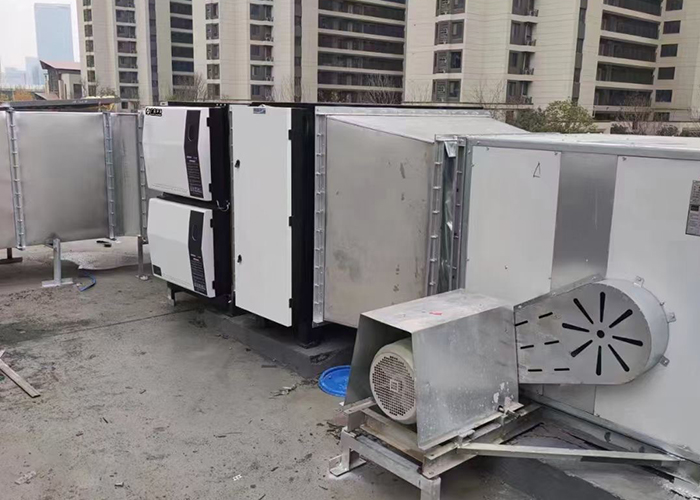
Inefficient exhaust systems lead to poor indoor air quality, fire hazards, and noncompliance with health codes. A welldesigned system captures 95%+ of grease particles and neutralizes odors through multistage filtration. Key design parameters include airflow volume (CFM), static pressure, and ductwork configuration. For example, a restaurant kitchen with 10 burners requires a minimum of 4,000 CFM capacity, with ductwork sized to maintain airflow velocity between 8001,200 FPM to prevent grease buildup.
Guanglan Environmental Protection’s systems incorporate electrostatic precipitators and activated carbon filters to achieve 98% purification efficiency while maintaining energy consumption below 0.5 kW/h per 1,000 CFM. This balance reduces operational costs by up to 30% compared to traditional designs.
Critical Components in Exhaust System Design
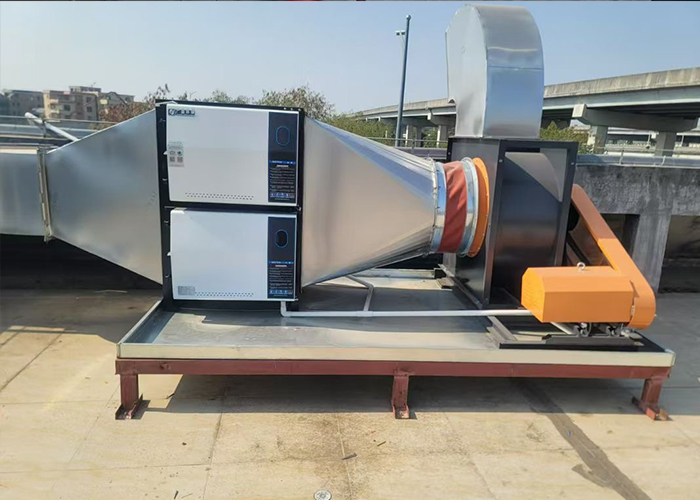
The core components determining system effectiveness include:
- Capture Hoods: Positioned 2430 inches above cooking surfaces to maximize fume capture without obstructing kitchen operations. Guanglan’s custom hoods feature adjustable baffles for optimal airflow distribution.
- Ductwork: Constructed from 18gauge galvanized steel with smooth welds to minimize resistance. Duct diameters typically range from 816 inches, sized using the equal friction method to maintain consistent static pressure.
- Purification Units: Multistage systems combining mechanical filtration (for large particles) and electrostatic precipitation (for submicron particles). Guanglan’s patented cell design reduces ozone emissions to below 0.05 ppm.
- Exhaust Fans: Backwardcurved centrifugal fans rated for continuous operation at 1,800 RPM, with variable frequency drives (VFDs) for energyefficient airflow control.
- Equipment: 6070% of total cost
- Ductwork installation: 2025%
- Electrical work: 1015%
Regulatory Compliance Checklist for European/North American Markets
Designing for international markets requires adherence to distinct standards:
| Region | Key Standards | Compliance Requirements |
|---|---|---|
| EU | EN 18561, Machinery Directive 2006/42/EC | CE marking, maximum exhaust temperature ≤ 250°C, noise limit ≤ 70 dB(A) |
| North America | NFPA 96, ASHRAE 154 | Class I, Division 2 electrical rating, grease filter efficiency ≥ 85%, monthly cleaning records |
 Related tags:
Recommend
Plasma Oil Fume Purifiers: Suppliers and Selection
Home Kitchen Oil Fume Purifiers: Options and Limits
Oil Fume Purifier Fans: Airflow and Pressure Selection
Oil Fume Purifier Locations: Where the Equipment Fits
Restaurant Air Cleaners for Oil Fume Emissions Control
Oil Fume Purifier Costs: What Is Included?
High-Level Discharge Oil Fume Purifiers: Pros and Limits
Oil Fume Purifier Acceptance Checks: Handover Checklist
Dedicated Restaurant Kitchen Oil Fume Purifiers
Oil Fume Purifier Types: A Product Overview
Contact Us
National hotline
139-2378-3494
Company:Shenzhen Guanglan Environmental Protection Technology Co., Ltd
Address:101, Zone B, Houting Third Industrial Zone, Shajing Street, Bao'an District, Shenzhen City, Guangdong Province
Hot News
- Can the inside of the fume extractor be cleaned
- Dedicated Restaurant Kitchen Oil Fume Purifiers
- Round Honeycomb Oil Fume Purifiers: Features and Fit
- Metalworking Oil Fume Purifiers: Process Selection Guide
- Oil Fume Purifier Fans: Airflow and Pressure Selection
- Oil Fume Purifier Housing Welding: Manufacturing Process
- Outdoor BBQ Stall Oil Fume Purifiers
- Oil Fume Purifier Installation: A Practical Overview
- Oil Fume Purifier High-Voltage Arcing: Causes and Repair
- Oil Fume Purifier Filter Cartridges: Selection Guide

 HOME
 Product
 Case
 Contact