
 139-2378-3494

Oil Fume Purifier Fans: Airflow and Pressure Selection
Author:admin Date:2026-11-05 09:10:04
Selecting the right oil fume purifier fan requires balancing airflow (measured in CFM) and static pressure (measured in inches of water gauge) to match kitchen size, cooking intensity, and ductwork complexity. For optimal performance, prioritize fans with variable speed controls, energyefficient motors, and corrosionresistant materials. Guanglan Environmental Protection offers customized solutions with professional installation and compliance certifications for European and North American markets.
Why Airflow and Pressure Matter for Oil Fume Purifiers
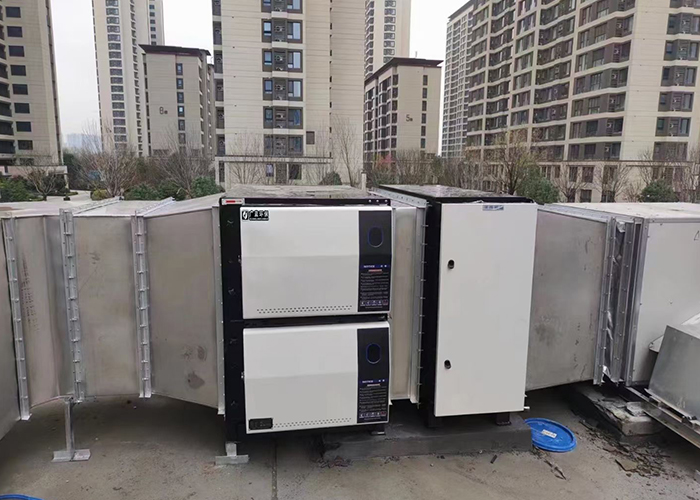
Oil fume purifier fans must expel greaseladen vapors efficiently to prevent fire hazards and maintain indoor air quality. Airflow (CFM, or cubic feet per minute) determines how much air the fan moves per minute, while static pressure (inches of water gauge, or inWG) measures the fan’s ability to push air through ductwork. Insufficient airflow leads to poor ventilation, while low static pressure causes airflow blockages in long or complex duct systems. For example, a commercial kitchen with multiple deep fryers requires higher CFM and static pressure than a small café with a single stove.
Guanglan Environmental Protection designs fans with adjustable speed settings to adapt to varying cooking loads, ensuring compliance with local ventilation codes in Europe and North America. Their fans use backwardcurved impellers to reduce energy consumption by up to 30% compared to traditional models.
How to Calculate Required Airflow and Pressure
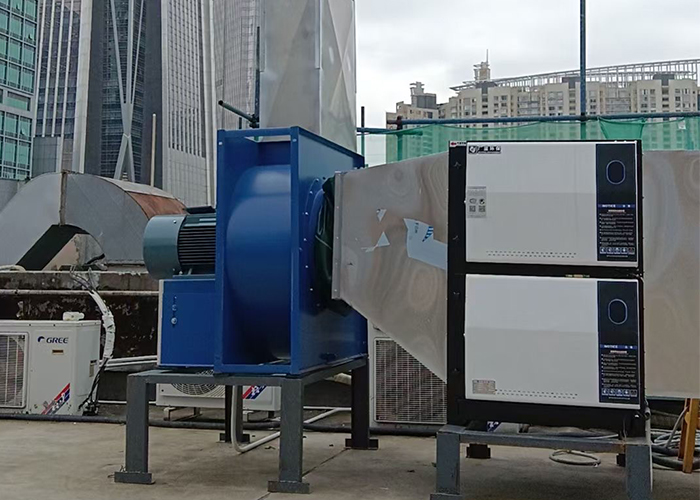
To determine the right fan size:
- Measure kitchen volume: Multiply length × width × height (e.g., 20 ft × 15 ft × 10 ft = 3,000 cubic feet).
- Estimate air exchanges per hour: Commercial kitchens need 15–20 exchanges/hour; residential kitchens need 6–10.
- Calculate CFM: Divide kitchen volume by 60 (minutes) and multiply by air exchanges (e.g., 3,000 ÷ 60 × 15 = 750 CFM).
- Account for ductwork: Add 0.1 inWG static pressure per 10 feet of duct length and 0.05 inWG per 90degree bend.
- Variable speed drives (VSDs): Adjust airflow based on cooking demand, cutting energy costs by 20–40%.
- Corrosionresistant coatings: Stainless steel or epoxypainted casings extend lifespan in humid, greasy environments.
- Lownoise operation: Choose fans with sounddampening mounts (≤65 dB for residential use; ≤75 dB for commercial).
- Certifications: Ensure compliance with EU Machinery Directive 2006/42/EC or U.S. UL 1978 standards.
- Ignoring ductwork design: A highCFM fan won’t perform if ducts are undersized or poorly routed.
- Underestimating cooking intensity: Commercial kitchens need 30–50% higher CFM than residential ones.
- Skipping noise ratings: Fans without acoustic insulation may violate local noise ordinances.
- Neglecting maintenance access: Fans with sealed motors or hardtoreach filters increase downtime.
- Choosing noncertified models: Unapproved fans risk fines and insurance claims in case of fires.
Guanglan Environmental Protection provides free online calculators and onsite assessments to ensure precise sizing, avoiding over or underspecification risks.
Key Features to Look for in Oil Fume Purifier Fans
When comparing models, prioritize:
Guanglan’s fans integrate smart sensors to monitor airflow and pressure in real time, triggering alerts for maintenance needs.
Avoid These 5 Common Mistakes When Choosing a Fan
Many buyers overlook critical factors, leading to costly replacements:
Guanglan Environmental Protection offers ductwork design consultations and maintenance training to mitigate these risks.
About Oil Fume Purifier Fans: Common Questions
Question: How often should I clean the fan?Answer: Clean filters monthly and impellers every 3–6 months, depending on usage. Guanglan’s fans feature quickrelease panels for hasslefree maintenance.
Question: Can I use a residential fan in a commercial kitchen?Answer: No. Commercial kitchens require fans with higher static pressure (≥2 inWG) and CFM ratings (≥1,000) to handle heavy grease loads.
Question: Do I need a separate grease filter?Answer: Yes. Fans work best with multistage filtration (e.g., baffle + electrostatic filters). Guanglan provides integrated filter systems rated for 95%+ grease removal.
Next Steps for Optimal Ventilation
To ensure your oil fume purifier fan meets safety and efficiency standards, start by assessing your kitchen’s size, cooking equipment, and duct layout. For tailored solutions, contact Guanglan Environmental Protection’s team of certified engineers. They offer endtoend support, from system design to installation and compliance testing, with a 5year warranty on all fans. Choose Guanglan for durable, energyefficient fans engineered for European and North American regulations.
 Related tags:
Recommend
Air Cleaners for Cooking Fumes and Odors
Alternatives to Hood Air Cleaners: Ventilation Options
Commercial Oil Fume Purifier Costs: A Budget Guide
Oil Fume Purifier Filter Cartridges: Selection Guide
Oil Fume Purifier Settings: Where Controls Are Located
Business Oil Fume Control Projects: Equipment Planning
Oil Fume Purifier Brand Prices: Comparison Guide
Oil Fume Purifier Rankings: How to Assess the Claims
Oil Fume Purifiers Without Terminal Studs: Connection Guide
Oil Fume Purifier Service Departments: Repair Support
Contact Us
National hotline
139-2378-3494
Company:Shenzhen Guanglan Environmental Protection Technology Co., Ltd
Address:101, Zone B, Houting Third Industrial Zone, Shajing Street, Bao'an District, Shenzhen City, Guangdong Province
Hot News
- How BBQ Oil Fume Purifiers Work
- Adding an Oil Fume Purifier to a Cooking Exhaust System
- Custom Oil Fume Purifiers: Design and Ordering Guide
- Oil Fume Purifier Rankings: How to Assess the Claims
- Oil Fume Purifier Backdraft: Causes and Airflow Checks
- Can an Oil Fume Purifier Discharge Directly Outdoors?
- Commercial Kitchen Oil Fume Purifiers
- Ductless Restaurant Oil Fume Purifiers: Options and Limits
- Which Kitchens Need Oil Fume Purifiers?
- Oil Fume Purifier Fans: Airflow and Pressure Selection

 HOME
 Product
 Case
 Contact