
 139-2378-3494

Ductless Restaurant Oil Fume Purifiers: Options and Limits
Author:admin Date:2026-10-22 14:46:31
Ductless restaurant oil fume purifiers offer a flexible, spacesaving solution for European and American kitchens, but their effectiveness depends on proper sizing, maintenance, and adherence to local air quality regulations. Key considerations include purification technology, noise levels, and energy efficiency. For reliable, certified systems tailored to your region’s standards, Guanglan Environmental Protection provides customizable ductless purifiers with professional installation support.
What Are Ductless Oil Fume Purifiers?
Ductless oil fume purifiers are standalone units designed to capture and neutralize cooking fumes without requiring external ductwork. Unlike traditional ducted systems that vent air outside, ductless models use multistage filtration (e.g., electrostatic precipitators, activated carbon, or UVC light) to trap grease particles and neutralize odors before recirculating clean air into the kitchen. This makes them ideal for small restaurants, food trucks, or retrofitting existing spaces where duct installation is impractical.
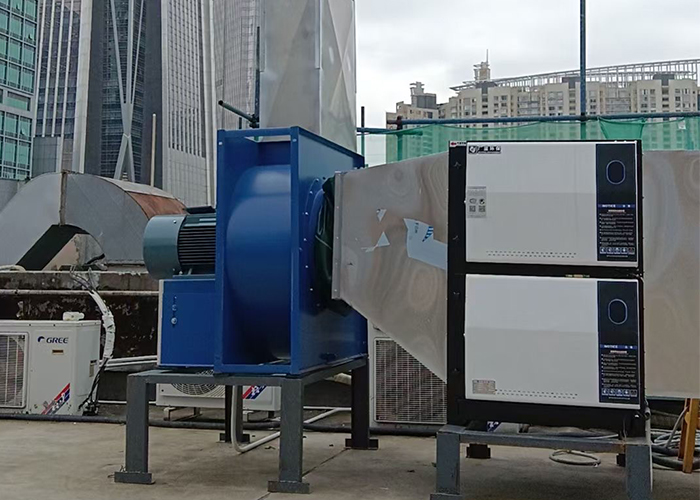
For European and American users, the primary advantage is compliance with indoor air quality regulations (e.g., EU’s Ecodesign Directive or U.S. EPA standards) without the need for structural modifications. However, their efficiency varies based on kitchen size, cooking volume, and filter maintenance frequency.
Key Technologies and Their Limits
Ductless purifiers rely on three core technologies:
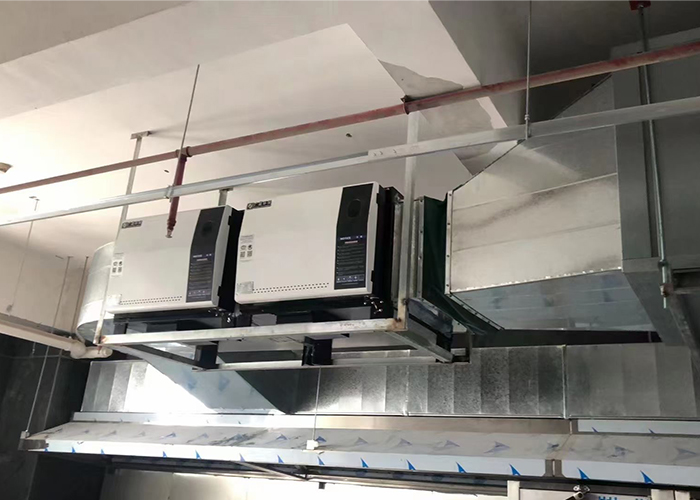
- Electrostatic Precipitators (ESP): Use electrical charges to trap grease particles. Effective for moderate fume volumes but require regular cleaning to prevent clogging.
- Activated Carbon Filters: Absorb odors and volatile organic compounds (VOCs). Need replacement every 3–6 months, depending on usage.
- UVC Light: Breaks down grease molecules and bacteria. Less common in budget models but enhances longterm air quality.
- Kitchen Size: Calculate cubic footage (length × width × ceiling height) to determine the required airflow rate (CFM). A 100–200 CFM unit suits small kitchens; larger spaces need 300+ CFM.
- Noise Level: Look for models rated ≤60 dB (comparable to a conversation) to avoid disrupting dining areas.
- Certifications: Ensure compliance with local standards (e.g., CE marking in Europe, UL listing in the U.S.). Guanglan’s purifiers meet both EU and North American safety requirements.
- Maintenance Costs: Factor in filter replacement frequency and labor. ESPbased models may have lower upfront costs but higher longterm expenses due to cleaning needs.
Limitation: No single technology addresses all pollutants. For highvolume kitchens (e.g., fryingheavy menus), a hybrid system combining ESP and carbon filters is recommended. Guanglan Environmental Protection’s ductless models integrate these technologies with smart sensors to adjust airflow based on realtime fume levels.
How to Choose the Right Model
Selecting a ductless purifier involves evaluating these factors:
Installation and Compliance Checklist
Before installing a ductless purifier, verify these steps to avoid regulatory issues:
| Step | Action |
|---|---|
| 1 | Check local fire codes for grease accumulation limits in recirculated air systems. |
| 2 | Ensure the unit’s CFM matches your kitchen’s fume output (e.g., 1 CFM per 1–2 BTU of cooking equipment). |
| 3 | Schedule professional installation to optimize airflow and electrical connections. Guanglan offers onsite assessments in Europe and North America. |
 Related tags:
Recommend
Oil Fume Purifier Designs: Comparing Equipment Layouts
Oil fume purifier factory in Qingyang District
Oil Fume Purifier Price Ranges: Budget to Premium
Customization of oil fume purifier for snack carts
Air Purifiers for Heavy Cooking Smoke: Options and Limits
BBQ Oil Fume Purifier Carts: Design and Selection
40,000-Rated Oil Fume Purifiers: Specifications to Check
Custom Low-Level Discharge Oil Fume Purifiers
"Zhongshan oil fume purifier filter brand"
What Types of Oil Fume Purifiers Are Available?
Contact Us
National hotline
139-2378-3494
Company:Shenzhen Guanglan Environmental Protection Technology Co., Ltd
Address:101, Zone B, Houting Third Industrial Zone, Shajing Street, Bao'an District, Shenzhen City, Guangdong Province
Hot News
- Ductless Restaurant Oil Fume Purifiers: Options and Limits
- Oil fume purifier factory in Qingyang District
- Custom Low-Level Discharge Oil Fume Purifiers
- Kitchen Fume Extraction and Purification Equipment
- Oil Fume Purifier Repair Shops: Finding Qualified Service
- Can the inside of the fume extractor be cleaned
- What Types of Oil Fume Purifiers Are Available?
- 40,000-Rated Oil Fume Purifiers: Specifications to Check
- Commercial environmental protection restaurant with oil fume purifier
- Oil Fume Purifier Designs: Comparing Equipment Layouts

 HOME
 Product
 Case
 Contact