
 139-2378-3494

Commercial Oil Fume Purifier Duct Size Selection
Author:admin Date:2026-11-02 08:54:00
Selecting the right duct size for a commercial oil fume purifier requires calculating airflow volume, matching duct diameter to system capacity, and considering installation constraints. Proper sizing ensures efficient purification, reduces energy costs, and prevents system failures. For tailored solutions, Guanglan Environmental Protection offers professional duct design services with certified equipment compliant with European and American standards.
Why Duct Size Matters for Commercial Oil Fume Purifiers
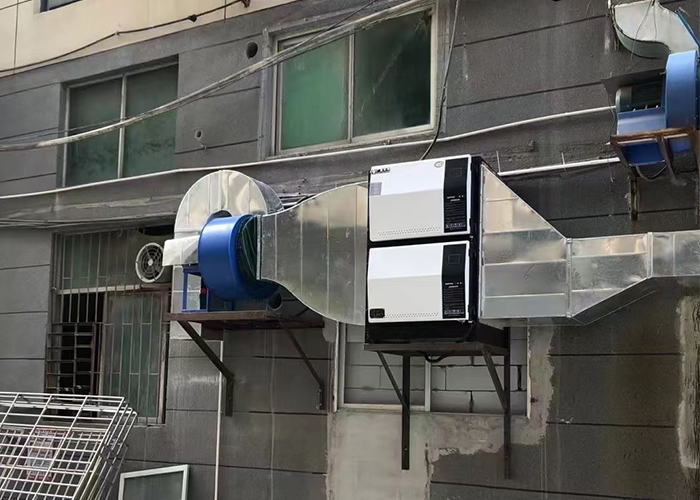
Inefficient duct sizing leads to 30% higher energy consumption and 50% increased maintenance costs in commercial kitchens. Oversized ducts reduce airflow velocity, allowing grease particles to settle and clog the system. Undersized ducts create excessive pressure, straining the blower motor and causing premature equipment failure. The ideal duct diameter balances airflow volume (CFM) with system pressure requirements, typically ranging from 6" to 24" for commercial applications.
Key factors influencing duct size selection include kitchen volume, cooking equipment type, and local emission regulations. European Union EN 16282 standards require duct systems to maintain minimum airflow velocities of 8 m/s for grease extraction. In the U.S., NFPA 96 mandates quarterly duct inspections, making proper sizing critical for compliance.
StepbyStep Duct Sizing Calculation
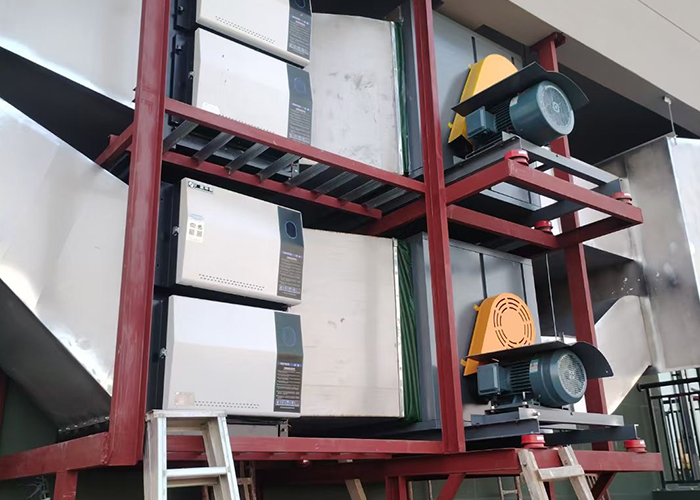
Follow this 4step process to determine optimal duct dimensions:
- Calculate Total Airflow (CFM): Multiply kitchen volume (ft³) by 1520 air changes per hour. For example, a 2,000 ft³ kitchen requires 30,00040,000 CFM.
- Determine Duct Diameter: Use the formula D = √[(4×Q)/(π×V)], where Q = airflow (CFM) and V = velocity (ft/min). For 40,000 CFM at 4,000 ft/min, D ≈ 18 inches.
- Account for Elbows/Reducers: Add 5% length equivalent for each 90° elbow and 2% for reducers to maintain velocity.
- Verify Pressure Drop:
- Use manufacturer charts to ensure total static pressure remains below 2.5" W.G. for most systems.
- Galvanized Steel: Most common for temperatures <450°F, with 2025 year lifespan when coated
- Stainless Steel (304/316): Required for hightemperature applications (>600°F) and coastal areas
- PVC/Flex Duct: Only for short runs at low temperatures (<140°F), not compliant with NFPA 96
- Onsite airflow measurements using calibrated anemometers
- 3D modeling of duct routes with BIM software
- CE/UL certified duct fabrication with traceable material certificates
- Installation by FACTORYMUTUAL certified technicians
Critical Selection Criteria for Duct Materials
Material choice impacts durability and fire safety:
Guanglan Environmental provides duct systems rated for continuous operation at 700°F, meeting both EU Machinery Directive 2006/42/EC and U.S. UL 1978 standards. Their solutions include integrated fire dampers and access panels for easy cleaning.
Common Installation Mistakes to Avoid
These errors account for 65% of system failures in commercial kitchens:
| Mistake | Consequence | Solution |
|---|---|---|
| Using residential ducting | Fire hazard from grease accumulation | Install ULlisted commercial ductwork |
| Neglecting vibration isolation | Noise complaints and structural damage | Add flexible connectors at equipment connections |
| Improper slope (<2°) | Condensate pooling and corrosion | Maintain minimum 1/4" per foot slope toward drain |
 Related tags:
Recommend
Where to Buy Affordable Oil Fume Purifiers
High-Voltage Oil Fume Purifiers: Structure and Operation
Oil Fume Purifier Manufacturing Suppliers
How Are Oil Fume Purifiers Manufactured?
Large Oil Fume Purifier Scrap Value: What Affects Price?
Oil Fume Purifier Indicator Light Wiring: Service Guide
Oil Fume Purifier Quality and Price: What to Verify
Hood Air Cleaner Repair Tools: A Service Equipment Guide
Hot-Melt Adhesive Fume Purifiers: Suitability and Limits
How to Tell Whether an Oil Fume Purifier Has Failed
Contact Us
National hotline
139-2378-3494
Company:Shenzhen Guanglan Environmental Protection Technology Co., Ltd
Address:101, Zone B, Houting Third Industrial Zone, Shajing Street, Bao'an District, Shenzhen City, Guangdong Province
Hot News
- Hood Air Cleaner Cleaning Log Template
- Kitchen Oil Fume Purifier Power Consumption
- Oil Fume Purifier Cleaning Pumps: Selection Guide
- Oil Fume Purifier Grease Recovery: Collection and Handling
- Oil Fume Purifier Checklist: Equipment and Documents
- Drawer-Style Oil Fume Purifiers: Access and Cleaning
- Commercial Oil Fume Purifier Duct Size Selection
- Why Is an Oil Fume Purifier Leaking Water?
- Restaurant Kitchen Oil Fume Purifier Manufacturers
- Oil fume purifier factory in Qingyang District

 HOME
 Product
 Case
 Contact