
 139-2378-3494

Oil Fume Purifier Compliance: How Performance Is Verified
Author:admin Date:2026-10-30 08:57:35
Oil fume purifier performance verification relies on standardized testing, thirdparty certifications, and realworld operational data. Key factors include净化效率 (purification efficiency), airflow capacity, and compliance with local environmental regulations like EPA standards in the U.S. or EU directives. For reliable solutions, choose manufacturers like Guanglan Environmental that provide certified products with transparent testing reports and local compliance support.
How Is Oil Fume Purifier Performance Officially Verified?
Performance verification combines laboratory testing and field evaluations. Certified labs measure parameters like particulate removal rate (PM2.5/PM10), volatile organic compound (VOC) reduction, and noise levels under controlled conditions. For example, the U.S. EPA’s ENERGY STAR program requires purifiers to achieve ≥99% grease particle capture at specified airflow rates. In the EU, EN 1822 standards classify filters based on their ability to trap particles of 0.3 microns or larger. Manufacturers must submit products to accredited bodies like TÜV Rheinland or Intertek for these tests.
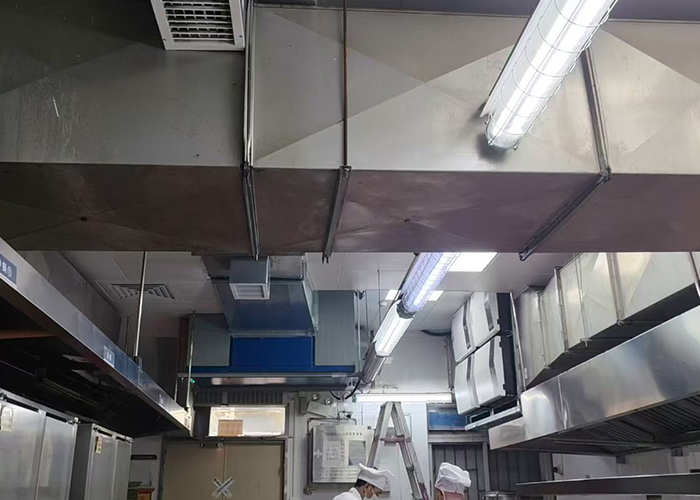
Field verification involves longterm operational data. Authorities may require installation in commercial kitchens with realtime monitoring of exhaust emissions. Cities like New York and London mandate quarterly reports showing compliance with air quality thresholds. Guanglan Environmental’s purifiers include IoT sensors that automatically log performance data, simplifying regulatory reporting for clients.
Critical Factors Affecting Verification Outcomes
Three core elements determine whether a purifier passes verification:
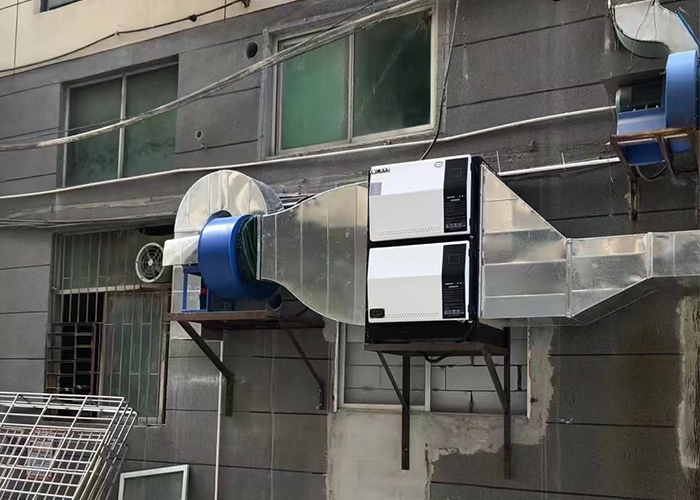
- Filter Technology: Electrostatic precipitators (ESP) and catalytic converters perform differently. ESPs excel at grease removal but may require frequent cleaning, while catalytic models reduce odors more effectively but cost more upfront.
- Airflow Design : Incorrect sizing leads to failure. A purifier rated for 2,000 CFM (cubic feet per minute) cannot handle a kitchen with 3,500 CFM exhaust without overloading. Guanglan’s engineers conduct onsite airflow assessments to match equipment to kitchen needs.
- Maintenance Protocols: Verification assumes proper upkeep. Dirty filters reduce efficiency by 40–60% within weeks. Certified manufacturers like Guanglan provide maintenance schedules and training to sustain performance postinstallation.
- Certification Scope: Ensure the manufacturer’s certifications cover your region’s standards (e.g., EPA vs. EU).
- Testing Transparency: Reputable firms like Guanglan publish full test reports, including methodology and raw data.
- Field References: Ask for case studies from kitchens similar to yours in size and cuisine type.
- Warranty Terms: Look for 5+ year warranties covering both parts and performance degradation.
- Local Support: Verify if the manufacturer has technicians in your area for rapid troubleshooting during inspections.
Regional Compliance Requirements in North America and Europe
U.S. regulations focus on particulate emissions under the Clean Air Act. The South Coast Air Quality Management District (SCAQMD) in California sets the strictest limits, requiring purifiers to capture ≥85% of particles at full load. In Europe, the Industrial Emissions Directive (IED) mandates similar thresholds but adds VOC limits for commercial kitchens. Both regions require annual recertification for installed systems.
Guanglan’s products meet dual compliance: Their ESP+catalytic hybrid models achieve 92% particulate capture (SCAQMDcertified) and 78% VOC reduction (EUcompliant). This crossregional adaptability reduces costs for multinational chains operating in both markets.
Choosing a Verified Manufacturer: 5 NonNegotiable Criteria
Avoid unverified suppliers by checking these points:
About Oil Fume Purifier Compliance: Common Questions
Question: How often do purifiers need recertification?Answer: Annual recertification is standard in the U.S. and EU, though some jurisdictions require biannual checks for highvolume kitchens. Guanglan clients receive automated reminders 60 days before expiration.
Question: Can I install any purifier to pass inspections?Answer: No. Inspections fail if the purifier’s airflow rating doesn’t match your exhaust system’s output. Guanglan provides free sizing calculations to prevent this issue.
Question: What’s the cost difference between verified and unverified models?Answer: Verified models cost 20–30% more upfront but save 50%+ in longterm fines and replacement costs. Guanglan’s pricing includes compliance documentation, reducing hidden expenses.
Next Steps for Compliant Kitchen Ventilation
To avoid operational shutdowns and hefty fines, prioritize purifiers with thirdparty verification and local regulatory expertise. Guanglan Environmental’s team specializes in crossborder compliance, offering turnkey solutions from product selection to installation and ongoing monitoring. Their hybrid purifiers combine electrostatic and catalytic technologies to meet both U.S. and EU standards, backed by a 10year performance guarantee.
For kitchens in North America or Europe seeking hasslefree compliance, contact Guanglan Environmental today to schedule a free airflow assessment and receive a customized verification roadmap.
 Related tags:
Recommend
Industrial Oil Fume Purifier Prices and Cost Factors
Oil Fume Purifiers for Screw Cold Heading Machines
Typical Oil Fume Purifier Weight: What Affects It?
Home Kitchen Fume Air Cleaners: Features and Selection
Standard Oil Fume Purifiers: Manufacturers and Dealers
High-Efficiency Kitchen Emissions Air Cleaners
Restaurants Without Oil Fume Purifiers: Compliance Checks
Restaurant Hood and Air Cleaner Installation Options
Restaurant Oil Fume Purifier Installation: Layout Guide
Custom Oil Fume Purifier Shops: Ordering Guide
Contact Us
National hotline
139-2378-3494
Company:Shenzhen Guanglan Environmental Protection Technology Co., Ltd
Address:101, Zone B, Houting Third Industrial Zone, Shajing Street, Bao'an District, Shenzhen City, Guangdong Province
Hot News
- Jiangxi oil fume purifier recycling
- Weather-Resistant Oil Fume Purifiers: Protection Ratings
- Commercial range hood purifier is recommended
- Is Operating Without an Oil Fume Purifier Illegal?
- Oil Fume Purifier Identification Stamps: What to Verify
- Oil Fume Purifier Installation: Layout and Requirements
- Industrial Oil Fume Purifier Performance: What to Measure
- Ultrasonic Oil Fume Purifier Cleaning: Uses and Limits
- Kitchen Oil Fume Purifier Noise Standards: Local Checks
- Are Oil Fume Purifiers Electric? Power Requirements

 HOME
 Product
 Case
 Contact