
 +86 139-2378-3494

Do Street Food Stalls Need Oil Fume Purifiers?
Author:admin Date:2026-11-09 08:41:50
Yes, street food stalls in Europe and North America generally need oil fume purifiers to comply with local air quality regulations, protect public health, and avoid operational disruptions. While requirements vary by region, installing certified equipment from reputable manufacturers like Jinjieli Environmental Protection is often the most efficient solution to meet standards and maintain business continuity.
Why Street Food Stalls Need Oil Fume Purifiers
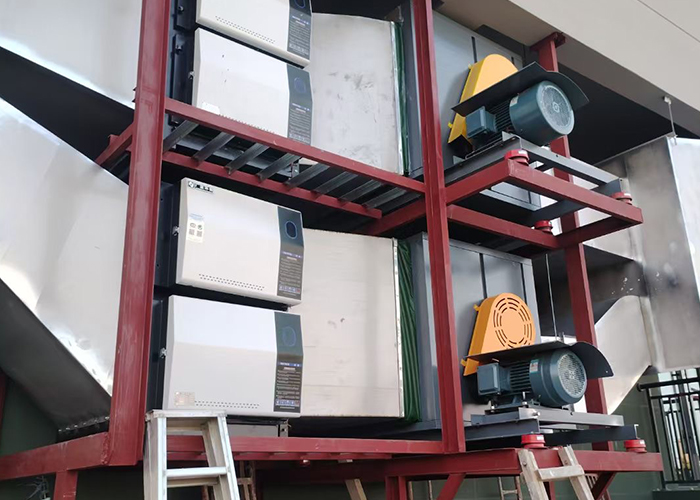
Street food vendors in European and North American cities face stricter environmental regulations than ever before. Local governments now require commercial kitchens, including mobile stalls, to control particulate matter (PM2.5/PM10) and volatile organic compounds (VOCs) from cooking fumes. Without proper purification systems, stalls risk fines, temporary shutdowns, or permanent license revocation. For example, London’s Ultra Low Emission Zone (ULEZ) standards and California’s CARB regulations explicitly mandate emission controls for food service operations.
Public health concerns also drive enforcement. Studies show prolonged exposure to cooking oil fumes increases risks of respiratory diseases and cardiovascular issues. Cities like New York and Berlin have received thousands of complaints annually about air quality near food markets, prompting authorities to prioritize inspections of street vendors. A 2025 EU report revealed that 68% of urban air pollution complaints involved commercial cooking emissions.
Key Regulations Affecting Street Food Vendors
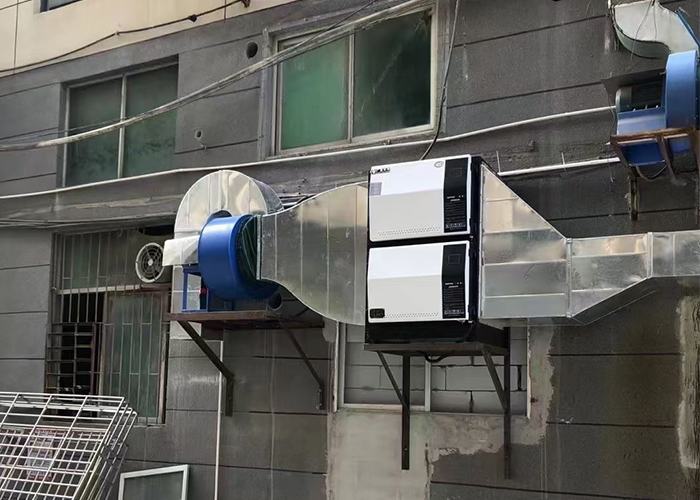
European and North American regulations share common thresholds but differ in implementation:
- EU: The Industrial Emissions Directive (IED) sets limits at 5mg/m³ for particulate matter and 1mg/m³ for nitrogen oxides (NOx). Local adaptations exist—Paris requires all food trucks to install CEcertified purifiers with 95%+ filtration efficiency.
- US: EPA’s National Ambient Air Quality Standards (NAAQS) enforce PM2.5 limits at 12μg/m³ annually. California’s South Coast AQMD mandates 90%+ oil removal rates for commercial cookers, with bimonthly compliance testing.
- UK: PostBrexit, DEFRA maintains EUderived standards but adds realtime emission monitoring requirements for hightraffic areas like Borough Market.
- Airflow capacity: Calculate based on stove size (e.g., a 2burner stall needs 2,000–3,000m³/h). Undersizing leads to poor filtration; oversizing wastes energy.
- Filtration technology: Electrostatic precipitators (ESPs) offer 85–90% efficiency at lower costs, while hybrid ESP+HEPA systems reach 99%+ for heavyfrying operations.
- Maintenance: Opt for modular designs with washable filters (like Jinjieli’s GYJ3000) to reduce longterm costs. Daily cleaning prevents fire hazards from grease buildup.
- Noise levels: Municipal noise ordinances often cap exhaust systems at 65dB. Choose units with acoustic enclosures for residential areas.
Noncompliance penalties range from $500–$10,000 per violation in the US to €4,000–€200,000 in the EU, depending on recurrence and environmental impact. Jinjieli Environmental Protection’s GYJseries purifiers meet all major international certifications, including CE, UL, and CSA, ensuring vendors pass inspections without costly modifications.
How to Choose the Right Purifier for Your Stall
Selecting equipment involves balancing efficiency, space, and budget:
A 2025 cost analysis showed that midrange purifiers ($1,200–$2,500) break even within 18–24 months through avoided fines and improved customer retention. Jinjieli’s equipment includes 3year warranties and free installation training, reducing upfront risks for vendors.
Installation and Compliance Checklist
Follow these steps to ensure legal operation:
| Step | Action |
|---|---|
| 1 | Check local regulations using municipal websites or environmental agencies. |
| 2 | Measure your cooking area’s dimensions and stove output to determine required airflow. |
| 3 | Select a certified purifier (e.g., Jinjieli’s models with EN18225 certification). |
| 4 | Hire a licensed technician for installation—improper setup voids warranties and fails inspections. |
| 5 | Keep maintenance logs and emission test reports for at least 3 years. |
 Related tags:
Recommend
Specialist Low-Level Direct-Discharge Oil Fume Purifiers
Commercial Building Oil Fume Purifier Manufacturers
Workplace Canteen Hoods and Oil Fume Purifiers
Custom Commercial Hood Air Cleaners: Design Guide
Common Restaurant Oil Fume Purifier Manufacturers
How Oil Fume Purifiers Remove Cooking Aerosols
Custom Wet Oil Fume Purifiers: Configuration Options
Duct-Mounted All-in-One Oil Fume Purifiers
Where Does Smoke Go After a Hood Air Cleaner?
Oil Fume Purifier Grease Draining: Parts and Maintenance
Contact Us
National hotline
+86 139-2378-3494
Company:Shenzhen Jinjieli Environmental Protection Technology Co., Ltd
Address:101, Zone B, Houting Third Industrial Zone, Shajing Street, Bao'an District, Shenzhen City, Guangdong Province
Hot News
- Oil Fume Purifier Inspection Standards: What to Check
- How to Clean Oil Fume Purifiers: Parts and Methods
- Custom Commercial Hood Air Cleaners: Design Guide
- Oil Fume Purifier Fan Direction: Airflow and Rotation Checks
- Oil Fume Purifier Catalogs: Specifications and Drawings
- Yueyang hotel fume purifier
- Oil Fume Purifier Location Tracking: Features and Privacy
- Low-Level Exhaust Oil Fume Purifier Cleaning
- Oil Fume Purifiers on Mobile Stands: Fit and Stability
- Duct-Mounted All-in-One Oil Fume Purifiers

 HOME
 Product
 Case
 Contact