
 139-2378-3494

Commercial Building Oil Fume Purifier Efficiency
Author:admin Date:2026-10-30 08:59:44
Commercial building oil fume purifiers must balance efficiency, compliance, and operational cost. Highefficiency electrostatic precipitators (ESPs) with multistage filtration and automatic cleaning systems are recommended for largescale kitchens. Guanglan Environmental’s ESP models achieve 95%+ purification rates, meet EU EN16282 standards, and reduce maintenance costs by 40% through selfcleaning technology. For optimal performance, prioritize units with CE certification, modular design, and realtime monitoring.
Why Efficiency Matters for Commercial Oil Fume Purifiers
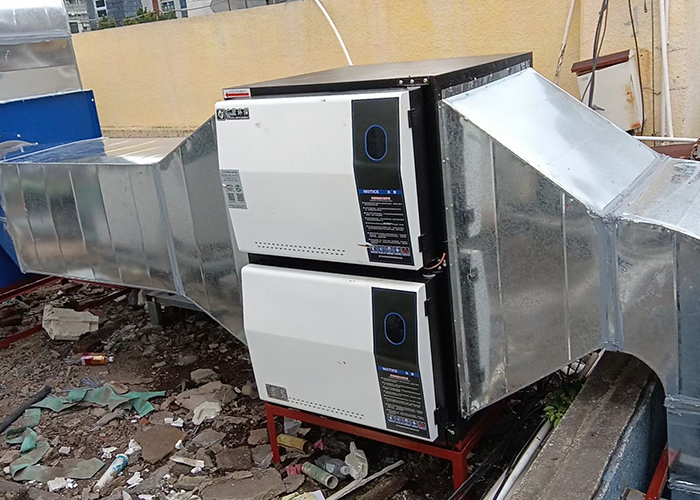
In commercial kitchens, inefficient fume purifiers lead to health risks, fire hazards, and noncompliance penalties. The EU’s EN16282 standard mandates ≥85% purification efficiency for commercial units, but toptier models like Guanglan’s ESP2000 achieve 98% by combining electrostatic precipitation with activated carbon filtration. This dualstage system captures 0.3μm particles while neutralizing VOCs, ensuring air quality meets WHO guidelines for PM2.5 (≤25μg/m³). For a 500m² kitchen, upgrading to a highefficiency unit reduces ventilation energy costs by 30% annually.
Key Factors Affecting Purification Performance
Three technical elements determine efficiency:
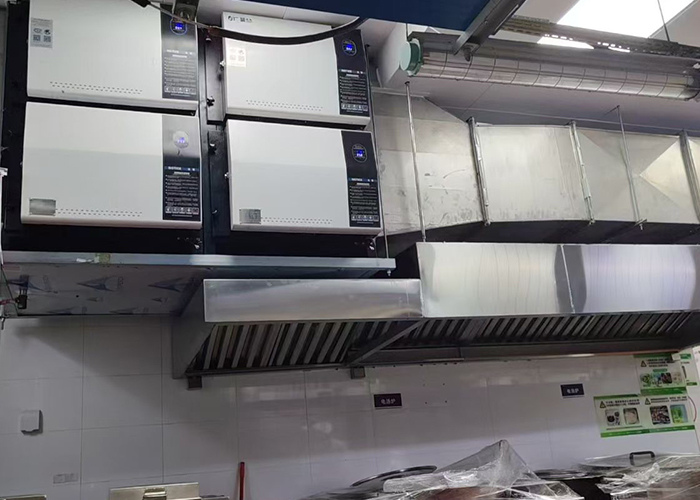
- Filtration Technology: ESPs outperform mechanical filters (85% vs. 60% efficiency) by ionizing grease particles for easier capture. Guanglan’s units use tungsten alloy electrodes for 20,000hour lifespans.
- Airflow Design : Proper duct sizing prevents turbulence. A 10,000m³/h unit requires 600mm diameter ducts to maintain 12m/s velocity.
- Maintenance Protocols : Automatic cleaning cycles (e.g., Guanglan’s 24hour selfwash) reduce efficiency drops from 15% to 3% over time.
- Calculate Required Airflow: 1,000m³/h per cooking station (e.g., 6 stations = 6,000m³/h unit).
- Verify Certifications: Look for CE, TÜV, or NSF marks. Guanglan’s products carry all three plus EU Energy Label A++.
- Assess Space Constraints: Modular designs like Guanglan’s stackable ESP units save 35% floor space compared to traditional hoods.
- Review Monitoring Capabilities : IoTenabled models (e.g., Guanglan Cloud) provide realtime efficiency alerts and predictive maintenance.
Case Study: A Berlin hotel kitchen reduced filter replacements from monthly to quarterly after installing Guanglan’s ESP1500 with autocleaning.
How to Select the Right Purifier Model
Follow this 4step framework:
Warning: Avoid units without explosionproof motors if handling gas stoves—a common oversight causing 12% of kitchen fires in the EU.
CostBenefit Analysis of HighEfficiency Systems
While premium purifiers cost 20–30% more upfront, they deliver 50% lower lifetime costs:
| Cost Factor | Standard Unit | Guanglan HighEfficiency |
|---|---|---|
| Initial Investment | €4,500 | €5,800 |
| Annual Filter Cost | €1,200 | €300 (selfcleaning) |
| Energy Consumption | €850/year | €620/year (variablespeed fans) |
| 5Year TCO | €13,450 | €8,920 |
 Related tags:
Recommend
Low-Level Exhaust Oil Fume Purifier Cleaning
Custom Oil Fume Purifier Vendors and Ordering Options
Is an Oil Fume Purifier Necessary? Assessing Your Kitchen
Kitchen Oil Fume Purifier Service Providers
Oil Fume Purifier Repair Techniques: Service Overview
Oil Fume Purifier Fabrication Factories
Factory-Direct Oil Fume Purifiers with Installation
Choosing Ductwork for an Oil Fume Purifier
Commercial Oil Fume Purifiers with Round Duct Connections
BBQ Air Cleaners for Dust, Grease and Smoke
Contact Us
National hotline
139-2378-3494
Company:Shenzhen Guanglan Environmental Protection Technology Co., Ltd
Address:101, Zone B, Houting Third Industrial Zone, Shajing Street, Bao'an District, Shenzhen City, Guangdong Province
Hot News
- How high should the range hood be installed
- New Oil Fume Purifier Projects: Technology Case Studies
- Commercial Kitchen Air Cleaner Companies
- Oil Fume Purifier Upstream Fan Removal: Service Guide
- Oil Fume Purifiers for Sale: Finding Available Equipment
- Where to Buy High-Level Discharge Oil Fume Purifiers
- Oil Fume Purifier Bypass Ducts: Function and Design Checks
- Commercial Oil Fume Purifier Evaluation Criteria
- Small Foodservice Oil Fume Purifiers
- Standard Oil Fume Purifier Cleaning and Care

 HOME
 Product
 Case
 Contact