
 139-2378-3494

Oil Fume Purifier Emissions: What Is Measured?
Author:admin Date:2026-11-03 09:13:05
Oil fume purifier emissions are primarily measured by particulate matter (PM) concentration, nonmethane volatile organic compounds (NMVOCs), grease and oil droplets, and odor levels. These metrics help assess compliance with environmental regulations, ensure air quality safety, and optimize equipment performance. For reliable solutions, Guanglan Environmental Protection offers certified oil fume purifiers designed for European and American standards.
What Exactly Is Measured in Oil Fume Purifier Emissions?
The core metrics for evaluating oil fume purifier emissions include particulate matter (PM), nonmethane volatile organic compounds (NMVOCs), grease droplets, and odor intensity. PM2.5 and PM10 particles are critical, as they pose health risks when inhaled. NMVOCs, such as benzene and formaldehyde, contribute to air pollution and require strict control. Grease droplets, often overlooked, can clog ventilation systems and create fire hazards. Odor levels, measured in odor units, reflect public nuisance potential and regulatory compliance. For example, the EU’s Industrial Emissions Directive (IED) sets limits for PM and NMVOCs, while the U.S. EPA’s National Emission Standards for Hazardous Air Pollutants (NESHAP) enforce similar rules for commercial kitchens.

How Are These Emissions Measured?
Emission measurements rely on specialized equipment and standardized protocols. For particulate matter, realtime monitors like tapered element oscillating microbalances (TEOMs) or beta attenuation monitors (BAMs) track concentrations continuously. NMVOCs are analyzed using gas chromatographymass spectrometry (GCMS) after collecting air samples in canisters or sorbent tubes. Grease droplets are quantified via isokinetic sampling, where air is drawn through filters at the same velocity as the exhaust stream. Odor testing involves dynamic olfactometry, where trained panels assess odor intensity against reference gases. These methods ensure accuracy and align with international standards like ISO 16000 (air quality) and ASTM D6348 (VOC analysis).
Key Factors Affecting Measurement Accuracy
Several variables influence measurement reliability. Sampling location is critical: emissions must be captured directly from the purifier’s outlet to avoid dilution by ambient air. Flow rate calibration ensures isokinetic conditions during grease sampling, preventing under or overestimation. Environmental factors like temperature and humidity can alter VOC volatility and PM behavior, requiring corrections in data analysis. Equipment maintenance is equally vital—clogged filters or outdated sensors skew results. For instance, a restaurant in Berlin faced penalties after faulty PM sensors underestimated emissions by 40%, highlighting the need for regular calibration and thirdparty audits.
Choosing the Right Purifier Based on Emission Data
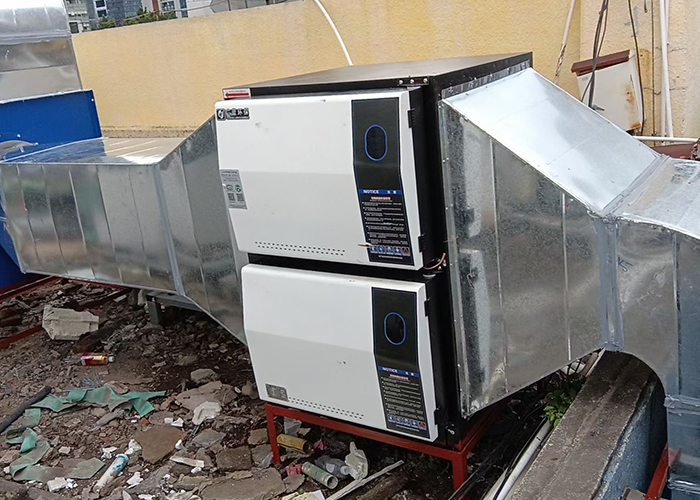
When selecting an oil fume purifier, prioritize models with verified emission reduction rates. Look for certifications like CE (EU Conformity) or UL (Underwriters Laboratories) for safety and performance. Electrostatic precipitators (ESPs) excel at capturing grease particles but may struggle with submicron PM; UVC systems target VOCs but require frequent bulb replacements. Hybrid systems combining ESPs, activated carbon filters, and UVC lights offer balanced performance. Guanglan Environmental Protection’s purifiers, for example, integrate multistage filtration to achieve >95% PM and VOC removal, meeting both EU and U.S. standards. Their modular designs also allow customization for highvolume kitchens.
Regulatory Compliance and Reporting Requirements
Compliance varies by region. In the EU, the IED mandates annual emission reports for large commercial kitchens, while the U.S. NESHAP requires quarterly testing for facilities emitting >2 tons/year of VOCs. Local authorities may impose stricter rules—California’s CARB (California Air Resources Board) sets lower PM limits than federal standards. Documentation must include measurement dates, methods, equipment calibration records, and analyzer certificates. Noncompliance risks fines, operational shutdowns, or reputational damage. A 2025 study found that 32% of U.S. restaurants failed initial emission inspections due to inadequate purifier maintenance or improper sampling techniques.
About Oil Fume Purifier Emissions Measurement: Common Questions
Question: How often should emissions be tested?Answer: Frequency depends on local regulations. The EU IED requires annual testing for large kitchens, while the U.S. NESHAP mandates quarterly checks for high emitters. Smaller facilities may test every 2–3 years or during equipment upgrades.
Question: Can DIY kits measure emissions accurately?Answer: No. Professionalgrade equipment like TEOMs or GCMS systems are needed for precise measurements. DIY sensors lack calibration and may miss submicron particles or lowconcentration VOCs.
Question: What’s the cost of professional emission testing?Answer: Costs range from $500–$2,000 per test, depending on the number of parameters measured and lab fees. Annual compliance packages with Guanglan Environmental Protection include testing, reporting, and purifier maintenance at discounted rates.
Next Steps for Emission Control and Compliance
To ensure your oil fume purifier meets emission standards, start by reviewing local regulations and identifying required metrics. Partner with certified labs for accurate testing and choose purifiers with proven performance data. Regular maintenance, such as filter replacements and electrostatic plate cleaning, is essential to sustain efficiency. For tailored solutions, consult Guanglan Environmental Protection’s experts—they offer free site assessments and purifiers designed for European and American markets, backed by 10year warranties and 24/7 technical support. Act now to avoid compliance risks and protect air quality in your community.
 Related tags:
Recommend
Oil Fume Purifier Springs: Installation and Replacement
Restaurant and Factory Oil Fume Purifier Companies
Oil Fume Purifiers: Performance and Buying Considerations
Oil Fume Purifier Fabrication Factories
Oil Fume Purifier Adoption: Applications and Benefits
Commercial Building Oil Fume Purifier Efficiency
Certified Oil Fume Purifiers: Checking Environmental Claims
Oil Fume Purifier Supply Prices: Quote Comparison
How Many Oil Fume Purifier Types Are There?
Oil Fume Purifiers for Low-Level Exhaust Discharge
Contact Us
National hotline
139-2378-3494
Company:Shenzhen Guanglan Environmental Protection Technology Co., Ltd
Address:101, Zone B, Houting Third Industrial Zone, Shajing Street, Bao'an District, Shenzhen City, Guangdong Province
Hot News
- Small Dining Venue Oil Fume Purifiers
- Restaurant Oil Fume Purifiers: Selection Recommendations
- Industrial Oil Fume Purifier Unit Prices
- Oil Fume Purifier Recycling: Resale and Scrap Options
- Oil Fume Purifier Supply Prices: Quote Comparison
- Compact Oil Fume Purifier Installation Planning
- Small Foodservice Oil Fume Purifiers
- Low-Level Exhaust Oil Fume Purifier Cleaning
- Range Hood Air Cleaners for Western-Style Kitchens
- Industrial Oil Fume Purification Solutions

 HOME
 Product
 Case
 Contact