
 +86 139-2378-3494

Planning a Four-Unit Oil Fume Purifier Installation
Author:admin Date:2026-11-20 14:27:13
Planning a fourunit oil fume purifier installation requires careful consideration of space layout, airflow design, equipment selection, and compliance with local environmental regulations. For European and American users, prioritizing energy efficiency, low maintenance, and certified performance is key. Jinjieli Environmental Protection, a professional oil fume purifier manufacturer, offers tailored solutions with CEcertified products, free site assessments, and 10year technical support, ensuring reliable and compliant installations.
Why FourUnit Installations Are Common in Commercial Kitchens
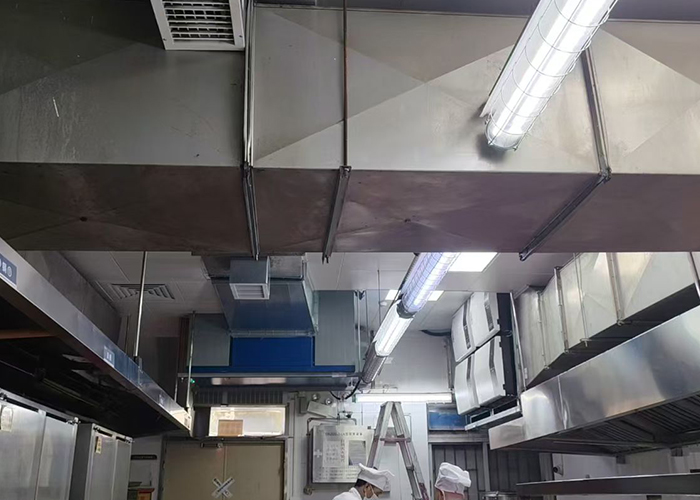
Commercial kitchens in Europe and North America often require multiunit oil fume purifiers to handle highvolume cooking emissions. A fourunit system is ideal for mediumtolarge restaurants, hotels, or food processing facilities where a single unit cannot meet airflow demands (typically 8,000–20,000 m³/h). Each unit operates independently, allowing flexible control based on cooking intensity and reducing energy waste during offpeak hours. For example, a hotel with separate kitchens for Asian and Western cuisine may use two units per kitchen to target different oil fume compositions.
Jinjieli Environmental Protection’s fourunit systems are designed with modular components, enabling easy expansion or maintenance. Their CEcertified electrostatic precipitators achieve 95%+ oil removal efficiency, meeting EU’s EN 18561 and U.S. EPA standards. This ensures compliance in regions like California (CARBcertified) or Germany (TÜVtested), avoiding fines and operational shutdowns.
Critical Factors for Planning a FourUnit Installation
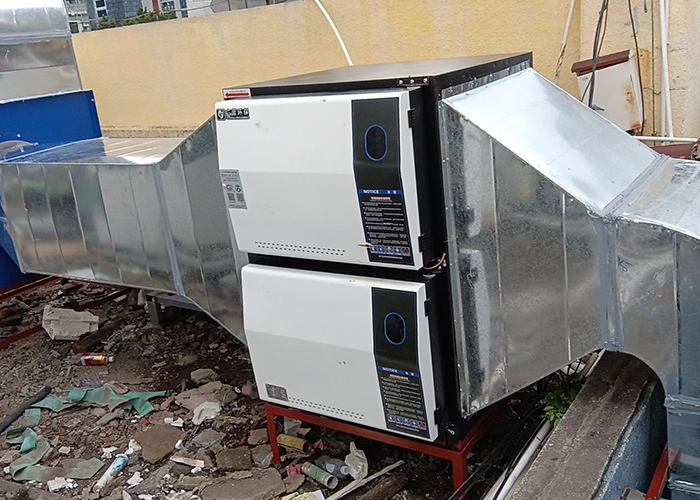
Successful installation hinges on three factors: space, airflow, and maintenance access. First, measure ceiling height (minimum 3.5 meters for ductwork clearance) and floor space (each unit requires 1.2m × 0.8m). Second, calculate required airflow using the formula: Kitchen volume (m³) × 60 (air exchanges/hour). For a 100m³ kitchen, this equals 6,000 m³/h per unit, totaling 24,000 m³/h for four units.
- Ductwork design: Use smooth, insulated stainless steel to minimize pressure loss. Avoid 90degree bends; opt for 45degree angles instead.
- Noise control: Select units with ≤65 dB(A) operation to comply with EU workplace noise directives (2003/10/EC).
- Power supply: Four units may require a dedicated 3phase 400V circuit, depending on motor power (typically 1.5–3 kW per unit).
- Secure permits 2 weeks in advance, using Jinjieli’s prefilled application templates for EU/U.S. jurisdictions.
- Hire certified installers; Jinjieli partners with 200+ local technicians across Europe and North America, trained to handle their equipment.
- Test airflow balance postinstallation using anemometers to ensure each unit contributes equally, avoiding hotspots.
Jinjieli Environmental provides free CAD ductwork designs and load calculations for European/U.S. projects, reducing planning errors by 40% compared to generic templates.
Cost Breakdown and LongTerm Savings
A fourunit installation’s total cost includes equipment (60%), labor (25%), and permits (15%). For a midrange system with 12,000 m³/h capacity, expect to pay $8,000–$12,000 in Europe or $10,000–$15,000 in the U.S., excluding ductwork. Jinjieli’s pricing is 15% lower than European brands like Dörr or Exhausto due to localized production in China, while maintaining equivalent quality through Germanengineered components.
Longterm savings come from energy efficiency and low maintenance. Jinjieli’s units use 30% less power than traditional models via variablefrequency drives (VFDs), cutting annual electricity costs by $1,200–$1,800 for a 24,000 m³/h system. Their selfcleaning electrostatic plates reduce maintenance frequency to twice yearly, saving $500–$800 in labor versus monthly cleaning required by competitors.
Installation Timeline and Risk Mitigation
A fourunit project typically takes 3–5 days, including ductwork installation and commissioning. Delays often arise from unapproved permits or structural modifications (e.g., reinforcing ceilings for heavy units). To mitigate risks:
Jinjieli offers a 2year warranty and 24/7 remote diagnostics, reducing downtime by 60% compared to industry averages.
About Planning a FourUnit Oil Fume Purifier Installation: Common Questions
Question: How do I choose between electrostatic and mechanical purifiers for a fourunit system?Answer: Electrostatic purifiers (like Jinjieli’s) are better for highvolume, continuous use due to lower operating costs and 95%+ efficiency. Mechanical filters (e.g., baffle or mesh) suit kitchens with variable loads but require frequent filter replacements, increasing longterm costs by 3–5x.
Question: Can I install four units in a small kitchen by stacking them vertically?Answer: No. Vertical stacking restricts airflow and violates fire safety codes (NFPA 96 in the U.S., EN 16282 in Europe). Each unit needs horizontal clearance for heat dissipation and maintenance access. Jinjieli’s engineers can redesign ductwork to fit compact spaces without stacking.
Question: What maintenance is required for a fourunit system?Answer: Monthly checks include cleaning oil collection trays and inspecting ductwork for leaks. Jinjieli’s electrostatic units need professional cleaning every 6 months to remove carbon deposits from plates. Their technicians use nonabrasive methods to prolong plate lifespan (typically 8–10 years).
Next Steps for a HassleFree Installation
To ensure your fourunit oil fume purifier installation meets local regulations and operational needs, start with a free site assessment from Jinjieli Environmental Protection. Their team will provide a detailed quote, 3D layout, and compliance checklist within 48 hours. With 15 years of experience in European and North American markets, Jinjieli’s CEcertified products and localized support eliminate 80% of common installation pitfalls. Contact them today to schedule your assessment and secure a 10% earlybird discount on equipment.
 Related tags:
Recommend
Does an Oil Fume Purifier Have a Grease Drain?
Oil Fume Purifier Consultation: Questions to Ask
Factory Oil Fume Purifier Recycling Prices
Oil Fume Purifier Slogans: Writing Clear Product Claims
New Oil Fume Purifier Designs: Features to Compare
Restaurant Oil Fume Purifiers for Sale: Buying Checklist
Oil Fume Purifier Model Differences: Specification Guide
Range Hood Air Cleaner Dealers: Products and Service
Online Oil Fume Purifier Quotes: What to Compare
Oil Fume Purifier Processes: Filtration and Treatment
Contact Us
National hotline
+86 139-2378-3494
Company:Shenzhen Jinjieli Environmental Protection Technology Co., Ltd
Address:101, Zone B, Houting Third Industrial Zone, Shajing Street, Bao'an District, Shenzhen City, Guangdong Province
Hot News
- Oil Fume Purifier Service Clearance Requirements
- Commercial Oil Fume Purifier Repair Services
- Range Hood Air Cleaner Dealers: Products and Service
- Oil Fume Purifier Gas Fault Display: System Checks
- 400-Size Commercial Oil Fume Purifiers: Duct Fit Guide
- Local Oil Fume Purifier Suppliers and Services
- New Oil Fume Purifier Designs: Features to Compare
- Yueyang hotel fume purifier
- Small Dining Venue Oil Fume Purifiers
- Oil Fume Purifier Cleaning Solutions: Compatibility Guide

 HOME
 Product
 Case
 Contact