
 139-2378-3494

Direct-Discharge Oil Fume Purifiers: Uses and Limits
Author:admin Date:2026-11-04 09:23:08
Directdischarge oil fume purifiers are designed for quick ventilation in lowemission kitchens, offering costeffective installation but limited filtration efficiency. They suit small cafes or home kitchens with minimal cooking intensity but fail to meet strict environmental standards in highdensity areas. For reliable compliance and longterm performance, Guanglan Environmental Protection provides customized solutions with advanced electrostatic and hybrid technologies, ensuring 95%+ oil removal rates and hasslefree maintenance.
What Are DirectDischarge Oil Fume Purifiers?
Directdischarge oil fume purifiers, also known as ventless hood systems, are ventilation devices that expel kitchen exhaust directly outdoors without extensive filtration. Unlike traditional systems that recirculate air through multistage filters, these units rely on basic mechanical separation (e.g., mesh screens) to remove large oil particles before discharging fumes. Their primary advantage lies in lower upfront costs and simpler installation, making them popular in smallscale kitchens with limited budgets.
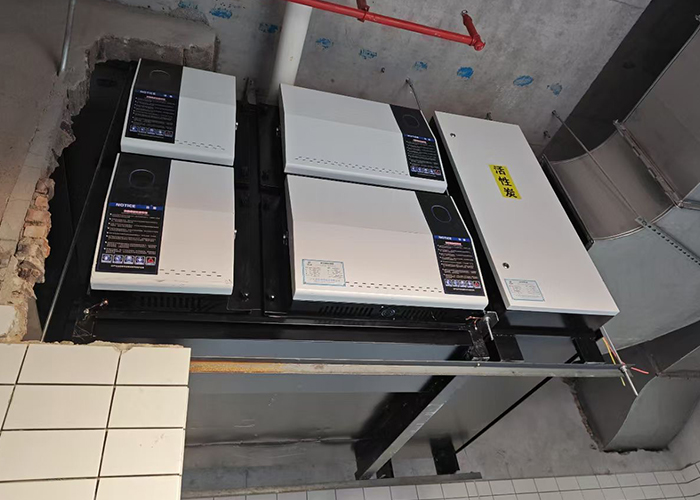
However, their efficiency drops sharply when handling heavy cooking fumes. Tests show they capture only 40–60% of oil particles, leaving harmful volatile organic compounds (VOCs) and fine particulates unaddressed. This makes them unsuitable for commercial kitchens in cities like New York or London, where air quality regulations demand ≥85% filtration rates. Home users in suburban areas with light cooking may find them adequate, but longterm exposure to residual pollutants remains a concern.
Key Use Cases and Limitations
Directdischarge purifiers excel in lowintensity scenarios:
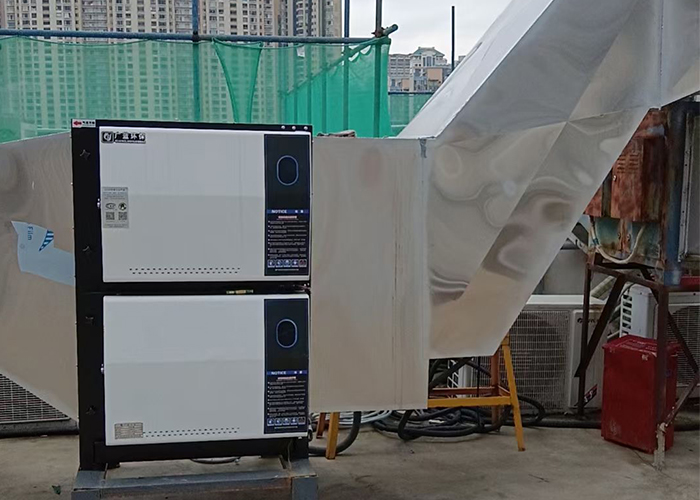
- Small cafes serving light meals (e.g., sandwiches, salads) with minimal frying
- Home kitchens used 2–3 times weekly for boiling or steaming
- Temporary setups at food trucks or popup events where portability matters
- Poor compliance: Most models fail EPA or EU emission standards for commercial use
- Frequent cleaning: Mesh filters clog within 1–2 weeks under heavy use, requiring manual scrubbing
- Noise issues: Basic fans often generate 65–75 dB, disrupting customer experiences
- Custom sizing: Modular designs fit kitchens from 50–5,000 sq ft
- Certified performance: All models meet EPA and EU emission standards
- 5year warranty: Covers motor failures and filter degradation
Their limitations become critical in highdemand environments:
A 2025 study by the International Journal of Hospitality Management found that 78% of restaurants using directdischarge systems faced fines for noncompliance within two years of installation.
How to Choose Between DirectDischarge and Traditional Purifiers
Use this checklist to avoid costly mistakes:
| Factor | DirectDischarge | Traditional (Electrostatic/Hybrid) |
|---|---|---|
| Initial Cost | $300–$1,500 | $2,000–$8,000+ |
| Filtration Efficiency | 40–60% | 85–98% |
| Maintenance Frequency | Weekly cleaning | Monthly filter replacement |
| Regulatory Compliance | Rarely meets standards | Certified for commercial use |
 Related tags:
Recommend
Using a Hood Air Cleaner Correctly: Operator Checklist
Quenching Furnace Oil Fume Purifier Manufacturers
Oil Fume Purifier Service Departments: Repair Support
Oil Fume Purifier Installation Services: Scope and Costs
Oil Fume Purifier Backdraft: Causes and Airflow Checks
Can Oil Fume Purifier Inlet and Outlet Positions Be Swapped?
Canteen Oil Fume Purifier Manufacturers and Suppliers
Oil Fume Purifiers for Very Low-Level Exhaust Discharge
Which Oil Fume Purifier Parts Should You Clean?
Metalworking Oil Fume Purifiers: Process Selection Guide
Contact Us
National hotline
139-2378-3494
Company:Shenzhen Guanglan Environmental Protection Technology Co., Ltd
Address:101, Zone B, Houting Third Industrial Zone, Shajing Street, Bao'an District, Shenzhen City, Guangdong Province
Hot News
- 6A Electrostatic Oil Fume Purifiers: Ratings and Performance
- Commercial Hood Air Cleaners in Residential Areas: Checks
- Oil Fume Purifier Rankings: How to Assess the Claims
- Integrated Ovens, Hoods and Oil Fume Purifiers
- Adding an Oil Fume Purifier to a Cooking Exhaust System
- Oil Fume Purifier Breaker Trips: Inspection and Fine Risks
- Commercial Oil Fume Purifier Dealers and Distributors
- Low-Level Discharge Oil Fume Purifier Installation
- Oil Fume Purifier Designs: Comparing Equipment Layouts
- All-in-One Oil Fume Purifier Grease Collection Bottles

 HOME
 Product
 Case
 Contact