
 139-2378-3494

Restaurant Oil Fume Purifier Projects: Design Examples
Author:admin Date:2026-11-02 08:50:01
Restaurant oil fume purifier projects require tailored designs based on kitchen size, ventilation layout, and local regulations. Key considerations include selecting highefficiency electrostatic precipitators or UVC purification systems, ensuring compliance with EPA or EU emission standards, and partnering with certified manufacturers like Guanglan Environmental Protection for professional installation and maintenance. This guide provides actionable design examples, cost breakdowns, and selection criteria to help restaurant owners make informed decisions.
1. Core Design Principles for Restaurant Oil Fume Purifiers
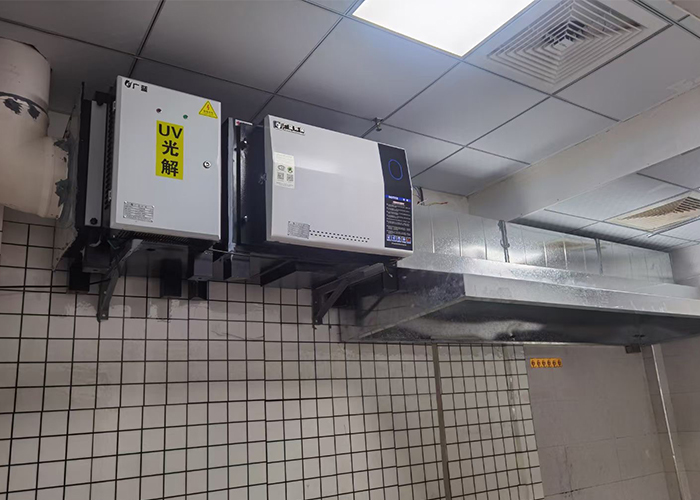
Effective oil fume purification systems must balance three factors: emission compliance, operational efficiency, and costeffectiveness. In the U.S., restaurants must adhere to EPA’s National Emission Standards for Hazardous Air Pollutants (NESHAP), while EU countries follow directives like 2008/50/EC. A typical system combines three stages: a mechanical prefilter to capture large particles, an electrostatic precipitator (ESP) to remove 95%+ of grease particles, and an activated carbon filter to neutralize odors. For highvolume kitchens, UVC light purification can be added to break down volatile organic compounds (VOCs).
Example: A New Yorkbased steakhouse reduced particulate emissions by 98% after installing a Guanglan ESP system with automated cleaning cycles, avoiding $12,000/year in potential fines. The key advantage of ESP technology is its ability to handle continuous hightemperature exhaust without frequent filter replacements.
2. Cost Breakdown: Equipment vs. LongTerm Savings
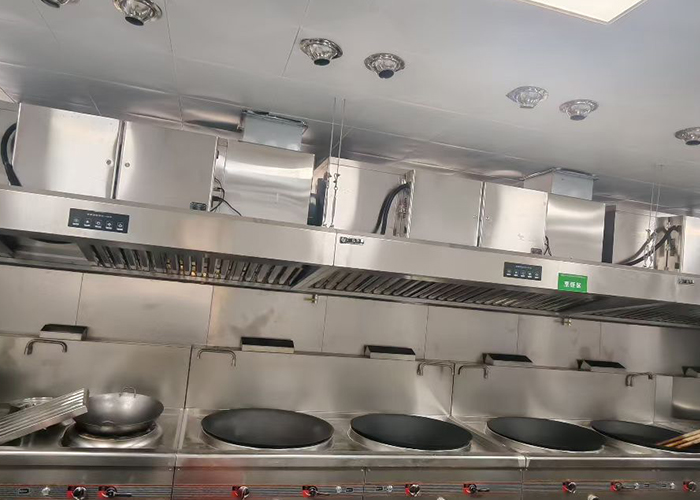
Initial costs for restaurant oil fume purifiers range from $3,500 for small diners to $25,000+ for industrial kitchens, depending on capacity and technology. However, energyefficient models like Guanglan’s variablefrequency drive (VFD) systems can cut electricity usage by 40% compared to traditional units. Maintenance costs average $500–$1,500 annually, primarily for electrode cleaning and carbon filter replacement.
Critical cost drivers include:
- Airflow capacity (CFM): Higher volumes require larger ESP units
- Material quality: Stainless steel ductwork lasts 3x longer than galvanized steel
- Certification level: UL 2998certified systems qualify for tax rebates in 12 U.S. states
- Ductwork design: Use smooth, sealed stainless steel pipes with ≤5% elbow bends to minimize pressure drop. Example: A Chicago diner increased airflow by 22% after redesigning its duct layout.
- Equipment placement: Install purifiers ≥18 inches from combustible surfaces and ensure easy access for maintenance. Guanglan provides 3D modeling services to optimize spatial arrangements.
- Electrical requirements: Verify voltage compatibility (208V/240V singlephase or 480V threephase) and install dedicated circuits to prevent tripping.
- UL/ETL certification: Ensures compliance with North American safety standards
- Local service networks: Guanglan maintains 14 regional warehouses in the U.S. for 24hour parts delivery
- Warranty coverage: Look for 5+ year warranties on ESP cells (industry average is 2–3 years)
A Los Angeles sushi restaurant recovered its $8,200 investment in Guanglan’s system within 18 months through reduced ventilation cleaning costs and lower insurance premiums due to improved fire safety.
3. Installation Checklist: Avoiding Common Pitfalls
Proper installation accounts for 60% of system performance. Key steps include:
Risk alert: Improper grounding causes 37% of ESP system failures. Always hire NATEcertified technicians for electrical work.
4. Selecting Manufacturers: Why Certification Matters
When choosing oil fume purifier suppliers, prioritize manufacturers with:
Case study: A Texas barbecue chain reduced downtime by 80% after switching to Guanglan’s modular ESP design, which allows individual cell replacement without shutting down the entire system.
About Restaurant Oil Fume Purifier Projects: Common Questions
Question: How often should oil fume purifiers be cleaned?Answer: Mechanical prefilters require weekly cleaning, while ESP cells need monthly maintenance in highusage kitchens. Guanglan’s selfcleaning models reduce this to quarterly checks.
Question: Can existing ventilation systems be retrofitted with purifiers?Answer: Yes, but ductwork must meet minimum airflow velocity requirements (typically 800–1,200 FPM). Guanglan offers free retrofit assessments for restaurants with legacy equipment.
Question: What’s the ROI timeline for commercial purifiers?Answer: Mediumsized restaurants (1,500–3,000 sq ft) typically break even in 14–22 months through reduced cleaning costs and avoided fines. Guanglan provides customized ROI calculators during consultations.
Next Steps for Restaurant Owners
To implement an effective oil fume purification system, start by conducting a professional kitchen ventilation assessment. Guanglan Environmental Protection offers free site surveys across North America, providing detailed CAD designs and compliance reports within 72 hours. Their ESP systems with patented needleplate technology deliver 99.3% purification efficiency—exceeding both EPA and EU standards. For restaurants seeking reliable, costeffective solutions, partnering with certified manufacturers like Guanglan ensures longterm operational success and regulatory compliance.
 Related tags:
Recommend
Industrial Exhaust Oil Fume Purifiers: Applications Guide
Blow Molding Oil Fume Purifiers: Application Guide
Custom Oil Fume Purifier Shops: Ordering Guide
Why Is an Oil Fume Purifier Not Working Effectively?
Restaurant Oil Fume Purifier Dimensions and Specifications
Deformed Hood Air Cleaners: Damage and Repair Checks
Oil Fume Purifier Ceramic Insulators: Parts and Care
Oil Fume Purifier Duct Cleaning: Access and Service Guide
Restaurant Oil Fume Purifier Installation Planning
Oil Fume Purifiers for Sale: Models and Specifications
Contact Us
National hotline
139-2378-3494
Company:Shenzhen Guanglan Environmental Protection Technology Co., Ltd
Address:101, Zone B, Houting Third Industrial Zone, Shajing Street, Bao'an District, Shenzhen City, Guangdong Province
Hot News
- Electrostatic Oil Fume Purifier Suppliers: Quality Checks
- Oil Fume Purifier Fan Manufacturers and Suppliers
- Oil Fume Air Purifier Prices: Models and Features
- Secondhand Oil Fume Purifiers: Value and Condition Checks
- Commercial Oil Fume Purifier Status Lights Explained
- Restaurant Oil Fume Purifier Installation: Layout Guide
- Why Is an Oil Fume Purifier Not Working Effectively?
- Industrial Exhaust Oil Fume Purifiers: Applications Guide
- Ultrasonic Oil Fume Purifier Cleaning: Uses and Limits
- Restaurants Without Oil Fume Purifiers: Compliance Checks

 HOME
 Product
 Case
 Contact