
 139-2378-3494

Oil Fume Purifier Air Velocity Calculation
Author:admin Date:2026-10-27 11:46:48
Calculating air velocity in oil fume purifiers requires measuring duct crosssectional area and airflow rate, then applying the formula V = Q/A. Accurate calculations ensure optimal purification efficiency, compliance with local regulations, and costeffective system design. For tailored solutions, Guanglan Environmental Protection offers professional airflow analysis and customized oil fume purifier installations.
Why Air Velocity Matters in Oil Fume Purification
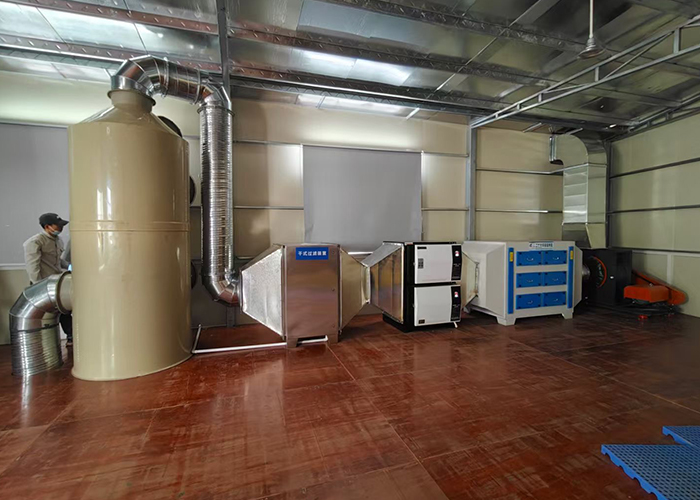
Air velocity directly impacts an oil fume purifier’s ability to capture grease particles and VOCs. Too low velocity leads to incomplete purification, while excessive velocity causes turbulence that reduces filtration effectiveness. The ideal range (typically 8–12 m/s) balances purification efficiency with energy consumption. Restaurants, commercial kitchens, and industrial food processing facilities must calculate air velocity to comply with EPA or local environmental standards and avoid fire hazards from grease accumulation.
How to Calculate Air Velocity: StepbyStep Formula
Use this formula: V = Q/A, where:
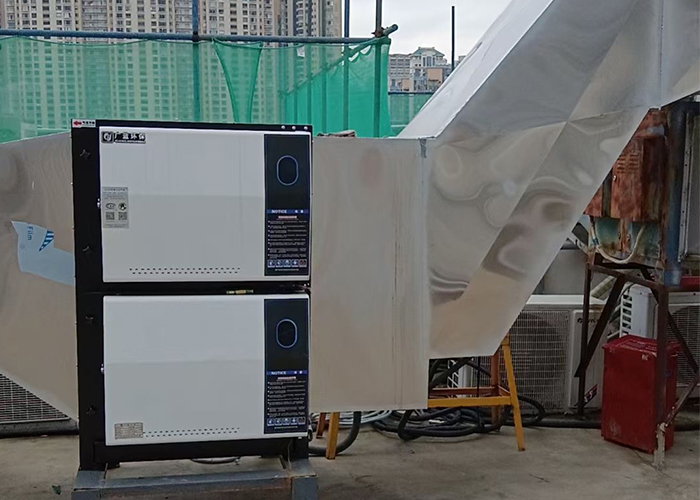
- V = Air velocity (m/s)
- Q = Airflow rate (m³/s)
- A = Duct crosssectional area (m²)
- Duct shape: Circular ducts require πr² calculations; rectangular ducts use length × width.
- System pressure: Highresistance filters or bends reduce effective airflow. Guanglan’s purifiers include pressure drop data to adjust calculations.
- Temperature fluctuations: Hot fumes expand, altering air density. Use corrected flow rates for temperatures above 20°C.
- Using nominal duct size instead of actual measurements (e.g., a “12inch duct” may have an inner diameter of 11.5 inches).
- Ignoring filter pressure drops when calculating effective airflow.
- Assuming uniform velocity across the duct crosssection (velocity peaks at the center and drops near walls).
Example calculation: A kitchen with a 0.5 m² duct and 6 m³/s airflow has V = 6/0.5 = 12 m/s. This falls within the optimal range for most commercial purifiers.
Tools required: Anemometer (for velocity measurement), tape measure (for duct dimensions), and airflow meter (for volumetric flow). For complex systems, Guanglan Environmental Protection provides CFD (Computational Fluid Dynamics) simulations to map airflow patterns accurately.
Critical Factors Affecting Air Velocity Calculations
Three variables determine accuracy:
Failure to account for these factors leads to 15–30% errors in velocity estimates, risking noncompliance or equipment damage.
Air Velocity vs. Purification Efficiency: Key Tradeoffs
| Velocity Range (m/s) | Purification Efficiency | Energy Cost |
|---|---|---|
| 5–7 | 60–75% | Low |
| 8–12 | 85–95% | Moderate |
| 13+ | 90–92% (with turbulence) | High |
 Related tags:
Recommend
Kitchen Electrostatic Oil Fume Purifier Costs
Oil Fume Purifier Loud at Startup: Causes and Checks
Commercial Oil Fume Purifier Status Lights Explained
Oil Fume Purifier Performance Testing: Key Measurements
Range Hood Air Cleaner Quotes: Equipment and Service
Oil Fume Purifier Identification Stamps: What to Verify
Quenching Furnace Oil Fume Purifier Producers
Restaurant Oil Fume Purifier Manufacturers
Disassembling Oil Fume Purifiers for Cleaning: Overview
Hotel Oil Fume Purifiers: Key Features and Selection
Contact Us
National hotline
139-2378-3494
Company:Shenzhen Guanglan Environmental Protection Technology Co., Ltd
Address:101, Zone B, Houting Third Industrial Zone, Shajing Street, Bao'an District, Shenzhen City, Guangdong Province
Hot News
- Oil Fume Purifiers: An Introduction to the Equipment
- Shopping Mall Oil Fume Purifier Repair Services
- Oil Fume Purifiers: Equipment Identification Guide
- How much does a heat treatment oil fume purifier cost
- Weinan oil fume purifier manufacturer
- Restaurant Oil Fume Purifier Manufacturers
- Wood-Fired Stew Kitchen Fume Control: Equipment Options
- BBQ Oil Fume Purifier Cleaning: Cells, Filters and Grease
- Oil Fume Purifier Fan Manufacturers and Suppliers
- Range Hood Air Cleaner Quotes: Equipment and Service

 HOME
 Product
 Case
 Contact