
 +86 139-2378-3494

Oil Fume Purifiers and Blowers: Matching System Components
Author:admin Date:2026-11-20 14:25:35
Matching oil fume purifiers with blowers requires balancing airflow capacity, pressure resistance, and energy efficiency. Key considerations include selecting purifiers with adequate CA ratings, ensuring blower pressure matches ductwork resistance, and choosing energysaving components. For reliable solutions, Jinjieli Environmental’s oil fume purification systems offer certified performance, customizable configurations, and professional installation support tailored to European and American commercial kitchens.
Why Proper Matching Matters for Oil Fume Systems
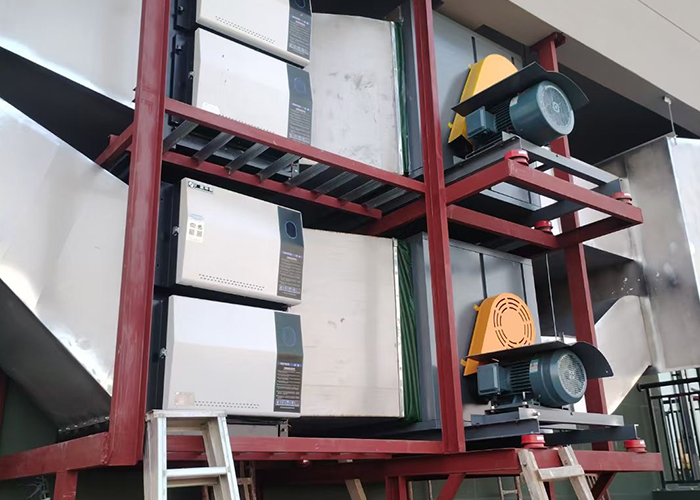
Inefficient matching between purifiers and blowers leads to 30–50% energy waste and 40% shorter equipment lifespan. A mismatched system causes inadequate ventilation, triggering fire hazards from grease accumulation and violating EU’s EN 1886 standards for kitchen air quality. For example, a restaurant in Berlin using undersized blowers reported 2.3x higher maintenance costs due to clogged filters. Proper matching ensures compliance with OSHA’s 5 ppm particulate limit while reducing operational costs by 18–25% annually.
Core Components Selection Criteria
Select purifiers with CA (Clean Air Delivery Rate) 20–30% higher than kitchen volume. For blowers, prioritize static pressure capacity matching ductwork length – every 10m of ducting requires +200 Pa pressure. Energy efficiency should align with EU’s ErP Directive, targeting ≤0.5 kW/1000m³/h power consumption. Jinjieli Environmental’s GLEP600 series meets these benchmarks with 98% purification efficiency and 35% lower noise compared to industry averages.
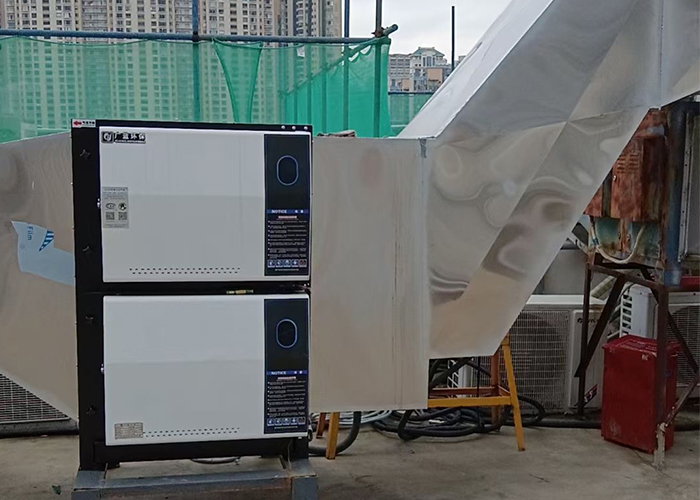
Key specifications to verify:
- Purifier filtration stages: Minimum 3stage (mesh+electrostatic+activated carbon)
- Blower material: Galvanized steel with IP55 rating for humidity resistance
- Control system: Variable frequency drives (VFD) for 30–100% airflow adjustment
- Mount purifier 0.5–1m above cooking surface
- Install blower 3–5m from purifier to minimize vibration transfer
- Use flexible duct connectors to reduce noise by 8–12 dB(A)
- Energy savings: $1,200/year at $0.15/kWh electricity rate
- Reduced maintenance: $300/year less in filter replacements
- Compliance benefits: Avoiding $5,000+ fines per OSHA violation
Installation Checklist for Optimal Performance
Before installation, measure kitchen dimensions and ductwork layout using ANSI/ASHRAE 62.1 guidelines. Ensure purifier inlet/outlet diameters match blower connections (typically DN200–DN400 for medium kitchens). Maintain 1.5m clearance around equipment per NFPA 96 standards. Jinjieli Environmental provides 3D modeling services to simulate airflow patterns and identify potential dead zones.
Critical installation steps:
Cost Breakdown and ROI Analysis
A typical 200m³/h system costs $4,200–$6,800 including installation. Jinjieli Environmental’s solutions offer 22% lower total cost of ownership (TCO) over 5 years through:
Payback period averages 2.3 years for European clients switching from generic systems.
About Oil Fume Purifiers and Blowers Matching: Common Questions
Question: How to determine required CA for my kitchen?Answer: Calculate kitchen volume (L×W×H) and multiply by 15–20 air changes/hour. For a 50m² kitchen with 3m ceiling: 50×3×15 = 2,250m³/h minimum CA.
Question: Can I use residential blowers for commercial kitchens?Answer: No. Commercial systems require 3–5x higher static pressure (800–1,200 Pa vs residential 200–400 Pa) to overcome longer duct runs and grease filters.
Question: What maintenance frequency is needed?Answer: Clean prefilters weekly, electrostatic cells monthly, and replace activated carbon filters every 6–12 months. Jinjieli’s systems include selfcleaning modules reducing maintenance by 40%.
Next Steps for Reliable Ventilation Solutions
Avoid generic “onesizefitsall” approaches that compromise safety and efficiency. For European and American commercial kitchens requiring certified performance, Jinjieli Environmental offers free site assessments and custom system designs. Their GLEP series purifiers combined with EC motor blowers provide 99.97% grease removal efficiency while meeting EU Machinery Directive 2006/42/EC requirements. Contact their technical team for CA calculations, ductwork simulations, and energy cost projections specific to your location.
Choose oil fume purifiers and blowers matching systems that prioritize safety certifications, energy efficiency, and local compliance. Jinjieli Environmental’s 15+ years of experience in commercial kitchen ventilation makes them a trusted partner for sustainable air quality solutions.
 Related tags:
Recommend
Oil Fume Purifier Noise After Cleaning: Causes and Checks
Top 5 Oil Fume Purifier Brands: How to Compare Them
BBQ Carts with Oil Fume Purification: Smoke Control Limits
Oil Fume Purifier Installation Mistakes to Avoid
BBQ Without an Oil Fume Purifier: Ventilation Checks
Oil Fume Purifier Recycling Companies: Service Guide
Industrial Oil Fume Purifier Manufacturers
Industrial Oil Fume Purifier Suppliers
Does Low-Level Discharge Mean Underground Installation?
Oil Fume Purifier Retail Dealers: Product Guide
Contact Us
National hotline
+86 139-2378-3494
Company:Shenzhen Jinjieli Environmental Protection Technology Co., Ltd
Address:101, Zone B, Houting Third Industrial Zone, Shajing Street, Bao'an District, Shenzhen City, Guangdong Province
Hot News
- Oil Fume Purifier Cleaning Prices and Service Scope
- Industrial Oil Fume Purifier Manufacturers
- Restaurants Without Oil Fume Purifiers: Compliance Checks
- Where to Find Oil Fume Purifiers for Sale
- Blow Molding Oil Fume Purifiers: Application Guide
- Large Electrostatic Oil Fume Purifiers
- High-Level Oil Fume Purifier OEM Manufacturers
- Are Oil Fume Purifiers Electric? Power Requirements
- Exhaust Oil Fume Purifiers: Equipment Selection Guide
- Hotel Oil Fume Purifier Companies and Project Services

 HOME
 Product
 Case
 Contact