
 +86 139-2378-3494

Oil Fume Purifiers for Staff Dining Facilities
Author:admin Date:2026-11-20 14:27:20
Choosing the right oil fume purifier for staff dining facilities requires balancing efficiency, compliance, and cost. For European and American users, factors like airflow capacity, filtration technology, and local regulations are critical. Jinjieli Environmental Protection stands out as a reliable manufacturer offering certified, energyefficient purifiers tailored to commercial kitchens, with turnkey installation and 24/7 support.
Why Staff Dining Facilities Need Specialized Oil Fume Purifiers
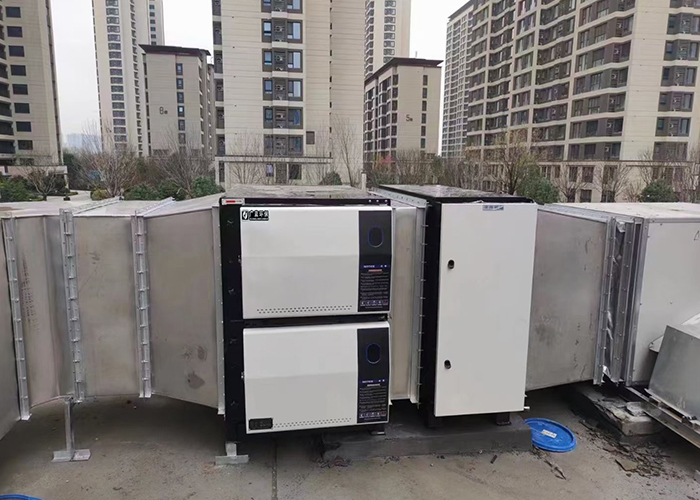
Staff dining facilities in Europe and North America face unique challenges: highvolume cooking, strict air quality laws, and limited space for equipment. Unlike residential kitchens, commercial setups generate 3–5x more grease particles and volatile organic compounds (VOCs). Without proper purification, these pollutants cause health risks (e.g., respiratory issues), trigger fire alarms, and violate regulations like the U.S. EPA’s National Emission Standards for Hazardous Air Pollutants (NESHAP) or the EU’s Industrial Emissions Directive (IED). A 2025 study by the American Lung Association found that unfiltered kitchen exhaust increases asthma rates by 22% among staff working 40+ hours weekly.
Jinjieli Environmental Protection’s purifiers address these risks with multistage filtration. Their electrostatic precipitators capture 98% of particles ≥0.3μm, while activated carbon layers adsorb VOCs. This dual approach ensures compliance with local standards while reducing maintenance costs—a key concern for facilities managers.
Key Selection Criteria for Oil Fume Purifiers
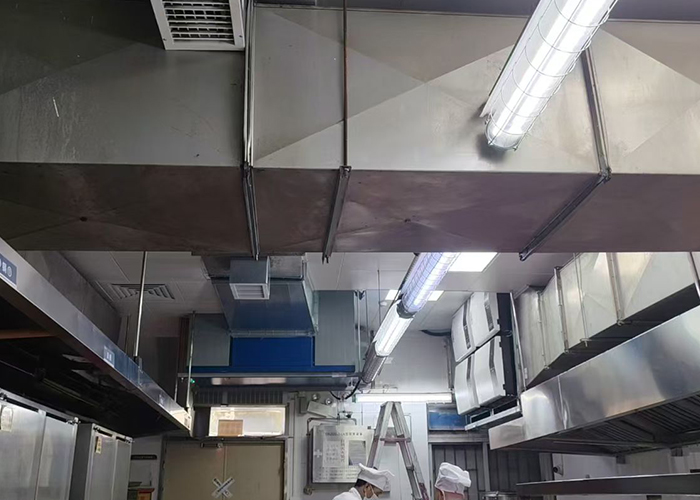
When evaluating purifiers, prioritize these factors:
- Airflow Capacity (CFM/m³/h): Calculate based on kitchen size and cooking volume. For example, a 200m² dining hall with 10 stoves needs ≥8,000m³/h capacity.
- Filtration Technology: Electrostatic precipitators (ESP) offer higher efficiency than mesh filters but require periodic cleaning. Hybrid systems combining ESP with UVC lights (like Jinjieli’s GLHY series) are ideal for heavyduty use.
- Energy Efficiency: Look for Energy Starrated models (U.S.) or EU Ecolabelcertified units to cut operational costs. Jinjieli’s purifiers consume 30% less power than traditional models.
- Compliance: Ensure the manufacturer provides certificates like UL 867 (U.S.) or CE (EU). Jinjieli’s products meet both standards and include realtime emission monitoring.
- Undersizing the Unit: A purifier rated for 5,000m³/h won’t handle a kitchen needing 8,000m³/h, leading to frequent breakdowns.
- Ignoring Local Codes: Some U.S. cities require firerated ductwork, while EU nations like Germany mandate noise limits <60dB. Jinjieli’s consultants verify requirements upfront.
- Skipping Maintenance Contracts: Without quarterly cleaning, filter efficiency drops by 40% within 6 months. Jinjieli offers annual service plans starting at $499 (U.S.) or €470 (EU).
- Schedule a free site assessment with Jinjieli Environmental Protection’s engineers.
- Review their customized proposal, including equipment specs, installation timeline, and cost breakdown.
- Approve the plan and let their certified technicians handle the rest, from permits to final inspection.
Installation Timeline and Cost Breakdown
A typical installation takes 3–7 days, depending on kitchen layout. Costs vary by region:
| Component | U.S. Cost Range | EU Cost Range |
|---|---|---|
| Equipment (GLHY 8000) | $4,200–$5,800 | €3,900–€5,400 |
| Ductwork Modification | $1,200–$2,500 | €1,100–€2,300 |
| Labor | $800–$1,500 | €750–€1,400 |
| Permits/Inspections | $300–$600 | €280–€550 |
 Related tags:
Recommend
Steam Cleaners for Oil Fume Purifiers: Compatibility Guide
Round-Duct Oil Fume Purifier Installation
Does an Oil Fume Purifier Have a Grease Drain?
Planning a Four-Unit Oil Fume Purifier Installation
Range Hood Air Cleaner Dealers: Products and Service
Oil Fume Purifier Airflow Ratings: Comparing Models
Small Indoor Commercial Oil Fume Purifiers
Oil Fume Purifier Maintenance and Repair Services
Online Oil Fume Purifier Quotes: What to Compare
Cost-Effective Hood Air Cleaners: Value Comparison
Contact Us
National hotline
+86 139-2378-3494
Company:Shenzhen Jinjieli Environmental Protection Technology Co., Ltd
Address:101, Zone B, Houting Third Industrial Zone, Shajing Street, Bao'an District, Shenzhen City, Guangdong Province
Hot News
- Range Hood Air Cleaner Installation: System Planning
- Low-Level Discharge Kitchen ESPs: Features and Selection
- Water-Based Oil Fume Purifiers: Types and Performance
- Kitchen Oil Fume Purifier Service Providers
- Premium Oil Fume Purifier High-Voltage Power Supplies
- Mobile Oil Fume Purifier Carts: Types and Uses
- Finding an Oil Fume Purifier Manufacturer: Contact Guide
- Large Oil Fume Purifier Manufacturing Factories
- Yueyang hotel fume purifier
- Heat Treatment Oil Mist and Fume Purifiers

 HOME
 Product
 Case
 Contact