
 +86 139-2378-3494

Oil Fume Purifier Placement in a Small Kitchen
Author:admin Date:2026-11-23 08:47:26
Placing an oil fume purifier in a small kitchen requires prioritizing compact design, proper ventilation alignment, and ease of maintenance. Opt for wallmounted or ceilingmounted models with high CA ratings to maximize space efficiency. Ensure the unit’s airflow direction aligns with your kitchen’s layout to avoid obstructing movement. For reliable performance, consider Jinjieli Environmental’s oil fume purifiers, which offer spacesaving designs and professional installation support tailored to compact spaces.
Why Space Efficiency Matters in Small Kitchens
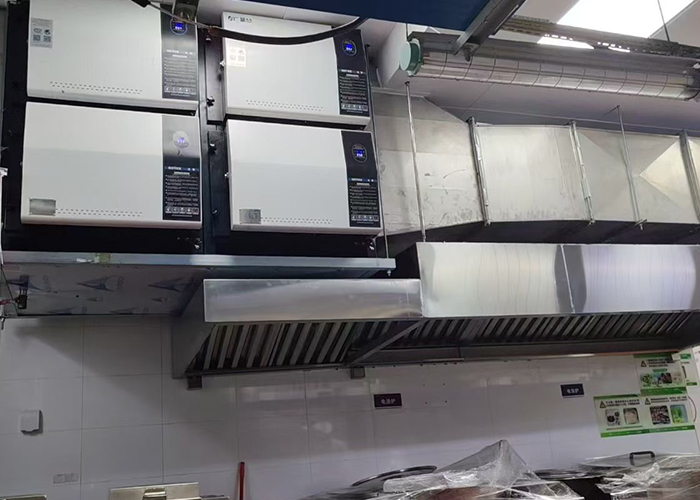
In small kitchens, every inch counts. Traditional油烟净化器 (oil fume purifiers) often occupy countertop or floor space, cluttering already limited areas. Compact, wallmounted, or ceilingmounted models are ideal for small spaces, as they free up countertops and avoid obstructing walkways. For example, a 300–500 m³/h CA (Clean Air Delivery Rate) purifier can effectively handle fume from a single stove without requiring bulky ductwork. Jinjieli Environmental’s slimprofile purifiers are designed specifically for compact kitchens, offering high filtration efficiency in a footprint smaller than a microwave.
When selecting a unit, measure your kitchen’s dimensions and stove placement. Avoid placing the purifier directly above the stove if it lacks heatresistant casing; instead, mount it on an adjacent wall or ceiling. This ensures optimal airflow while reducing heat exposure to the unit’s components.
Key Factors for Optimal Placement
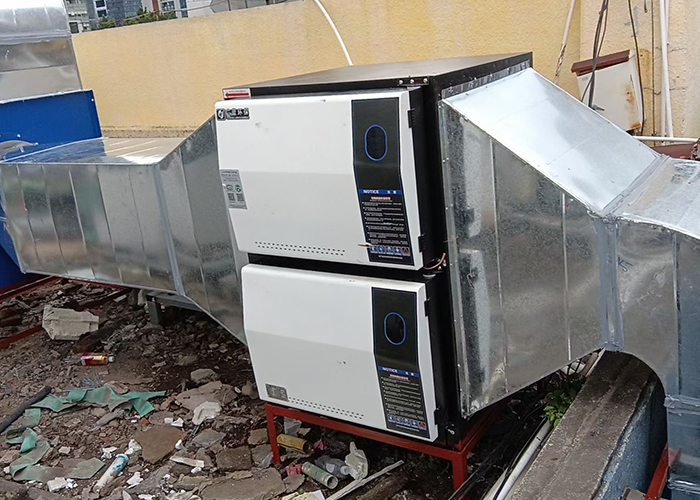
Proper placement enhances performance and safety. First, align the purifier’s intake with the stove’s fume source to capture pollutants at their origin. Second, ensure the exhaust outlet vents to an open area (e.g., a window or external duct) to prevent recirculating contaminated air. Third, maintain at least 60 cm of clearance between the purifier and combustible materials like curtains or cabinets to reduce fire risks.
- Wallmounted models: Install 15–30 cm above the stove for direct fume capture. Use brackets rated for the unit’s weight (typically 5–15 kg).
- Ceilingmounted models: Position 60–90 cm above the stove to cover a wider area. Ensure the ceiling can support the unit’s weight and vibration.
- Ventilation alignment: If venting externally, use rigid ducting (not flexible foil) to minimize airflow resistance and noise.
- Electrical compatibility: Ensure the unit’s voltage (e.g., 110V for North America) matches your kitchen’s supply. Use a dedicated circuit if the purifier draws >10A.
- Mounting surface strength: Drywall alone may not support heavy units. Use wall anchors or reinforce the area with plywood backing.
- Access for maintenance: Place the purifier where you can easily reach filters for cleaning or replacement (e.g., avoid mounting it behind a refrigerator).
- Noise levels: Choose a model with ≤50 dB operation if placing near living areas. Jinjieli’s units use lownoise motors suitable for openplan kitchens.
Jinjieli Environmental provides free site assessments to recommend the best placement based on your kitchen’s layout and ventilation system.
Installation Checklist for Small Kitchens
Before installing an oil fume purifier, verify these critical points to avoid costly mistakes:
Comparing Purifier Types for Small Kitchens
| Type | Space Required | CA Range | Best For |
|---|---|---|---|
| Wallmounted | Minimal (10–20 cm depth) | 300–600 m³/h | Singlestove kitchens |
| Ceilingmounted | Requires ceiling clearance | 500–800 m³/h | Openplan or dualstove kitchens |
| Undercabinet | Uses existing cabinet space | 200–400 m³/h | Retrofitting older kitchens |
 Related tags:
Recommend
Quality Electrostatic Oil Fume Purifier Suppliers
Industrial Oil Fume Purifier Quotes: Cost and Scope
Oil Fume Purifier Quotes: Models and Cost Comparison
All-in-One Oil Fume Purifier Tripping the Breaker: Causes
Oil Fume Purifier Project Tenders: Specification Checklist
Oil Fume Purifier Forced Start: Fault and Safety Checks
Oil Fume Purifiers in Ventilation Systems
Home-Use Oil Fume Purifier Manufacturers
Street Food Tricycle Oil Fume Purifier Installation
Home Oil Fume Purifiers with Indoor Discharge: Limits
Contact Us
National hotline
+86 139-2378-3494
Company:Shenzhen Jinjieli Environmental Protection Technology Co., Ltd
Address:101, Zone B, Houting Third Industrial Zone, Shajing Street, Bao'an District, Shenzhen City, Guangdong Province
Hot News
- Oil Fume Purifier Cleaning Materials and Supplies
- Oil Fume Purifier Forced Start: Fault and Safety Checks
- Small Oil Fume Purifier Repair and Troubleshooting
- How Long Does Oil Fume Purifier Installation Take?
- Industrial Oil Fume Purifier Quotes: Cost and Scope
- Solder Coating Fume Purifier Manufacturers
- Restaurant Fume Exhaust Purification Equipment Prices
- Oil Fume Purifier Cleaning Pumps: Selection Guide
- How to Install Oil Fume Purifiers: Layout and Connections
- Restaurant Without an Oil Fume Purifier: Next Steps

 HOME
 Product
 Case
 Contact